Best Medium Room Air Purifiers
The 200-360 sq ft class is the market's center of gravity and its best value neighborhood: the Coway AP-1512HH Mighty and Winix 5500-2 have spent a decade trading Wirecutter and air-purifier owner discussions crown here at $150-200, delivering three to four times the CADR-per-dollar of the design flagships. This is the right class for primary bedrooms and standard living rooms — 180-250 CFM of smoke CADR — and it's also the smart buy for smaller rooms, because a medium machine loafing at low speed is quieter than a small machine at full shriek while cleaning more air. The honest watch-items: several units here bundle switchable ionizers (fine — turn them off), and filter costs range 4x across machines that look identical on a shelf.
PurifierPicker tracks 12 medium room air purifiers from 11 brands, priced $90 to $1,200. The strongest airflow in the class belongs to the Samsung Bespoke Cube at 226 CFM, and the most affordable is the Winix A231 at $90. Compare them all below.
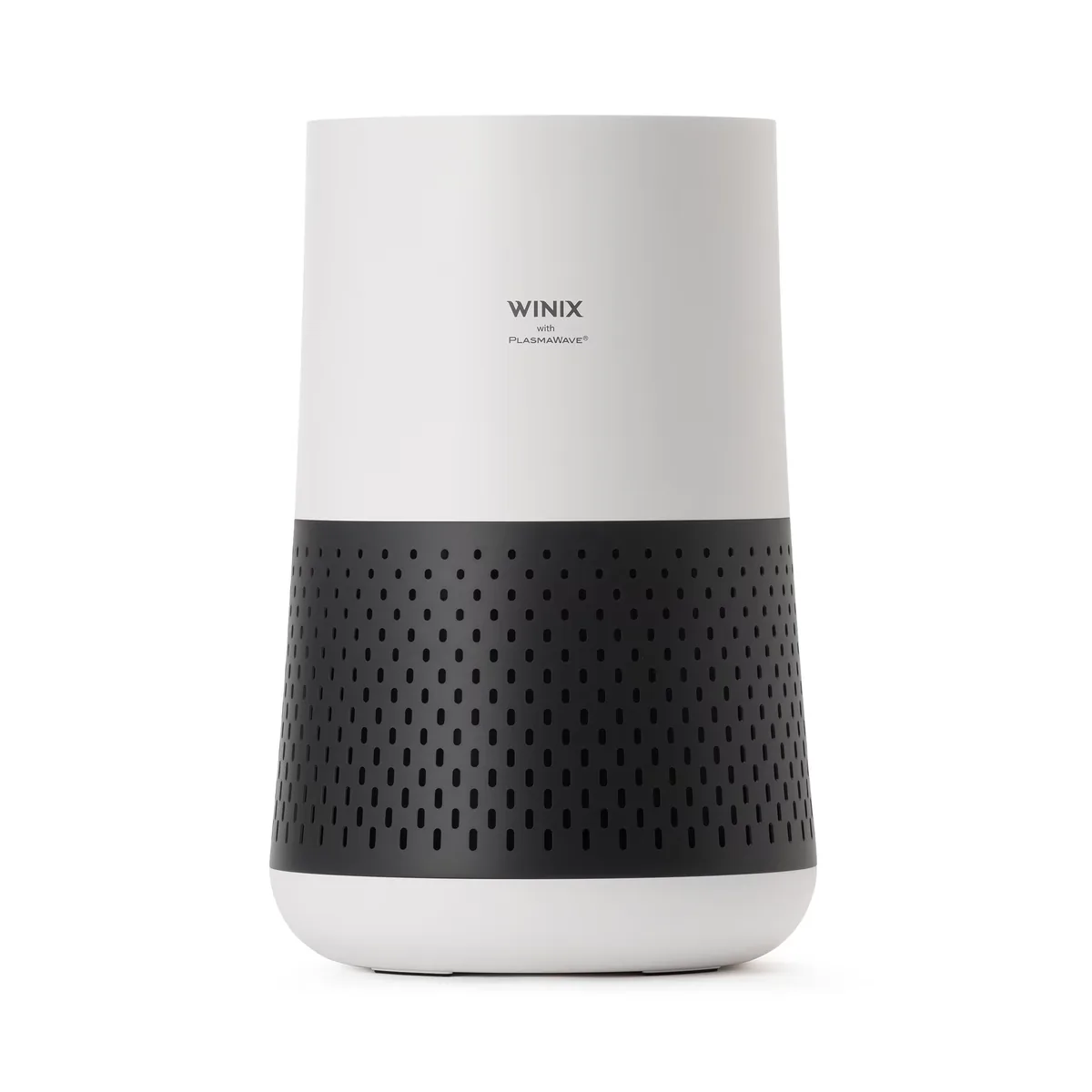
Winix
Winix A231
The A231 (sold as the A230 in a grey colorway) is Winix's compact cylinder, and it quietly beats the Levoit Core 300S at its own game. HouseFresh's independent test cleared their room of PM1 particles in 40 minutes - five minutes faster than the Core 300 - and the A231 does it with a 12-month filter instead of Levoit's 6-month cartridge, which halves the annual maintenance hassle. Its roughly 148 CFM CADR is AHAM-verified for 230 sq ft at the gold-standard 4.8 air changes per hour; ignore the '1,110 sq ft' Amazon headline, which is the usual one-air-change math. You also get a real particle sensor with auto mode at a price where Levoit charges extra for it, and air-purifier owner discussions regularly name it the best sub-$100 buy. Trade-offs are real but livable: the lowest speed is around 35 dB - audible where a Core 300S disappears - and top speed gets loud at 58 dB. PlasmaWave is Winix's plasma ionizer; it's switchable, though the unit forgets and re-enables it after a power loss, which annoys the ozone-cautious. No WiFi or app at all. If you want set-and-forget cleaning with the lowest total cost of ownership in the budget class, this is the one.
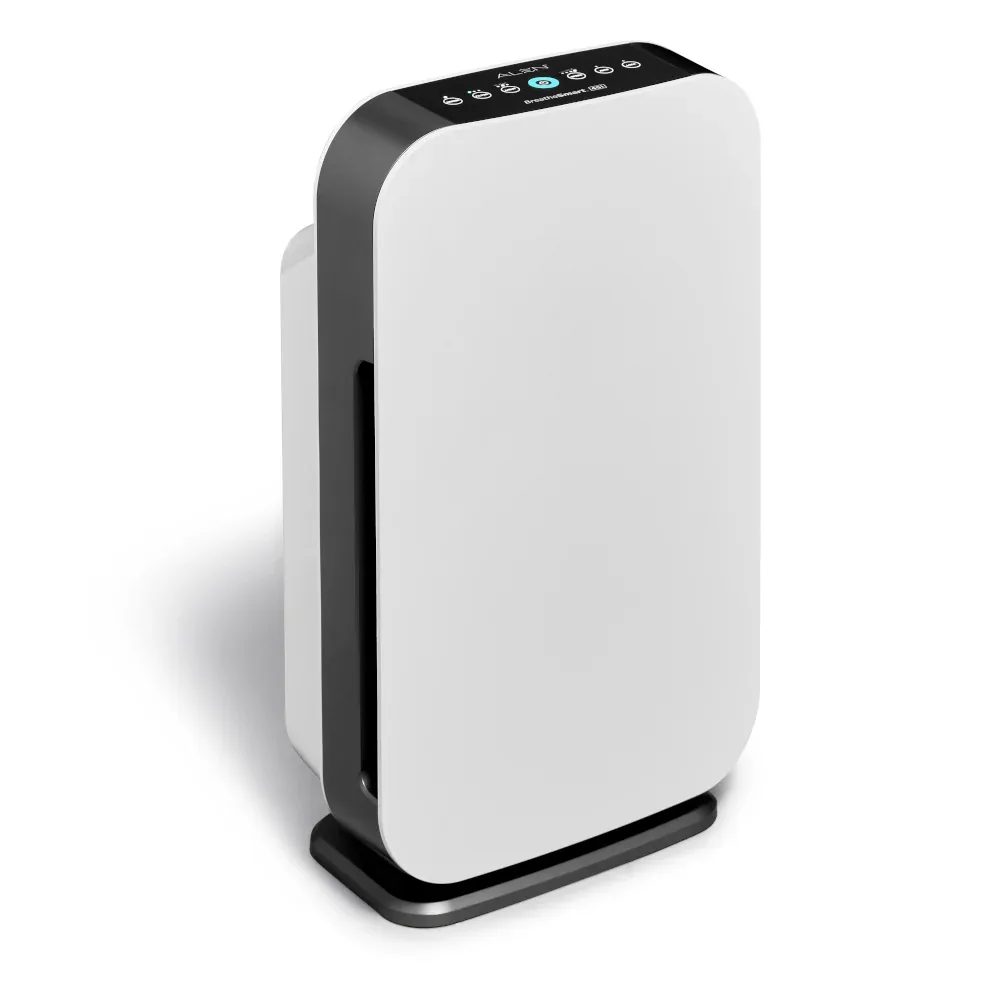
The 45i is a beautifully built, whisper-tuned purifier wrapped in the most inflated coverage claim in the mainstream market. Alen advertises 800 sq ft, but that's at a leisurely 2 air changes per hour; the AHAM smoke CADR is just 194 CFM, which works out to about 300 sq ft at the real 4.8 ACH standard - we classify it as a medium-room unit accordingly, and HouseFresh independently pegs it at 297 sq ft at 5 ACH. Their testing needed 30 minutes to clear the smoke test room, slower than a $150 Winix 5500-2 or Levoit Vital 200S. So why does it hold a 4.8-star average at Best Buy? Because what Alen actually sells is refinement: a 23 dB floor with pink-noise-tuned fan acoustics many owners run in bedrooms, a responsive laser sensor with app control, designer front panels, a switchable low-ozone ionizer, and a genuine lifetime warranty. That warranty has strings - it's void unless you maintain a filter subscription or use only Alen filters, which locks you into $70-120/yr B4 cartridges depending on variant. owner regulars respect the build but consistently note you're paying $430 for ~$180 of airflow. Buy it for the quiet, the looks, and the warranty relationship - not the square footage on the box.
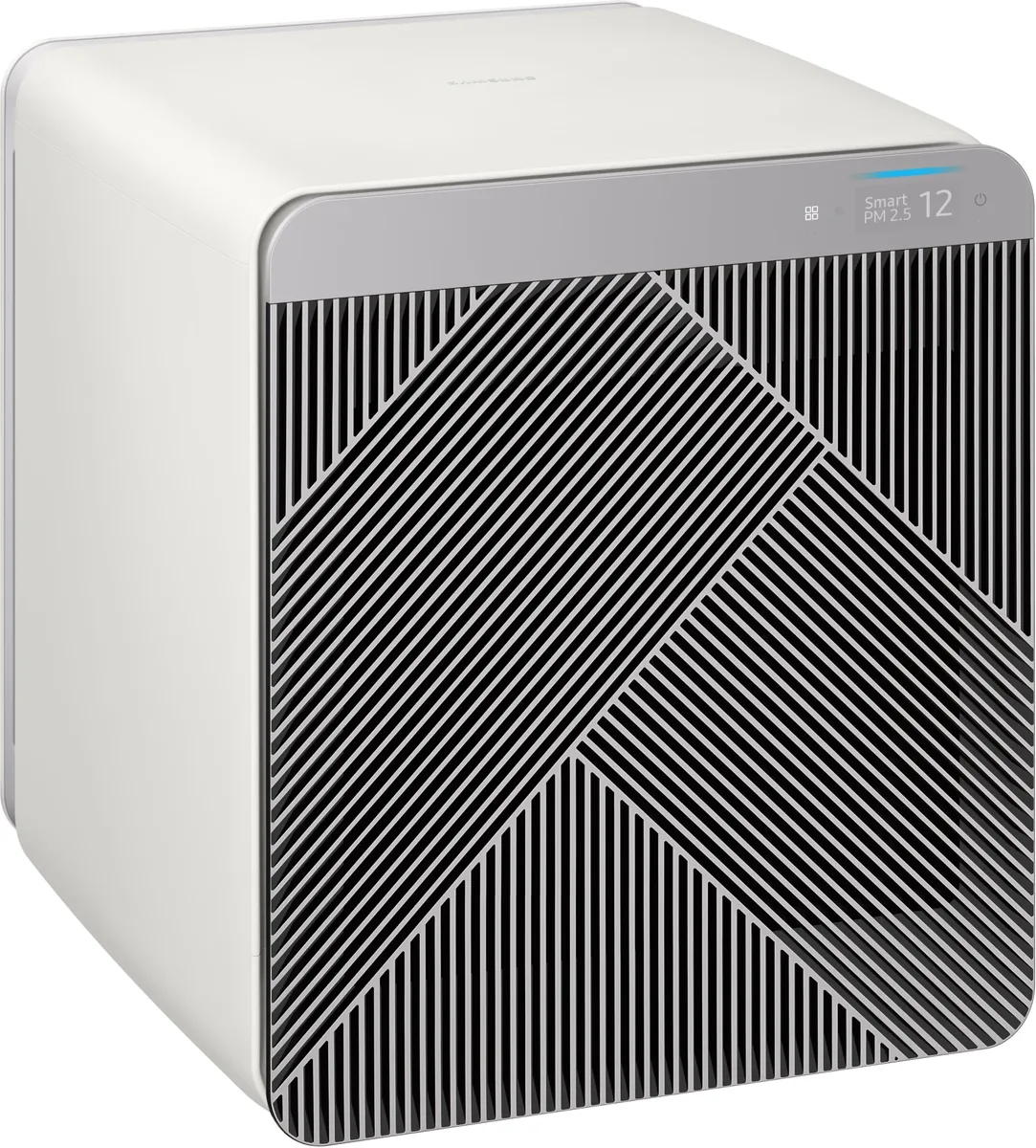
Samsung
Samsung Bespoke Cube
The Bespoke Cube is Samsung's furniture-first purifier: a fabric-wrapped 17-inch cube designed to pass as a side table, with a 'Wind-Free' mode that exhales air through thousands of micro-perforations so nothing blows on you while it cleans. Credit where it's genuinely due: the 350 sq ft rating is AHAM Verifide and Energy Star certified — Samsung claims exactly what the machine does (~226 CFM implied smoke CADR), which makes it nearly the only marketing-honest coverage number in this entire specialty batch. It's also spectacularly quiet at the bottom end: 18 dBA in sleep mode and 24 dBA in Wind-Free, inaudible in a way even the quiet Scandinavian brands can't match. The problems are price and commitment. $600 buys medium-room airflow that a $230 mainstream machine matches, SmartThings integration is lovely only if you live in Samsung's ecosystem, and the warranty is a thin 1 year. Most concerning, owners already report replacement-filter availability flickering at Samsung's parts channels — the classic appliance-giant pattern where a low-volume side product quietly loses consumables support. As a nightstand-adjacent bedroom machine for a Samsung household, it's genuinely pleasant. As clean-air value, an AirFanta 3Pro delivers 50% more measured CADR for a quarter of the price.
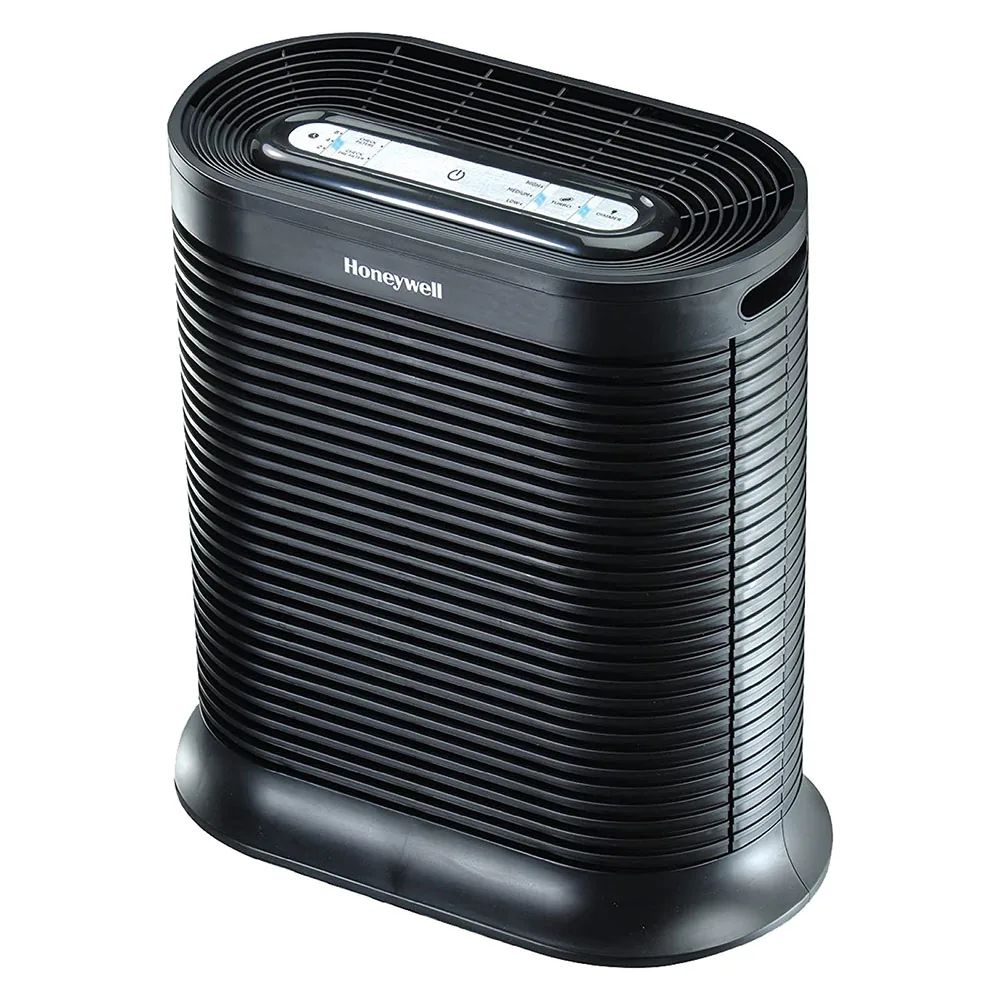
Honeywell
Honeywell HPA200
The HPA200 is the air purifier your parents own — a decade-plus-old workhorse still stocked at every Walmart, Target, and Home Depot in America, backed by an unmatched 5-year warranty. The fundamentals are legitimately good: AHAM-verified 200 CFM smoke CADR for an honest 310 sq ft, straightforward tap-button controls, and a particle-removal track record ConsumerAnalysis testing rates among the best per dollar. But this is a 2013 design in 2026: there's no air quality sensor, no auto mode, no app — you pick one of four speeds and walk away. The bigger livability issue is noise floor: its quietest 'Germ' setting runs about 45 dB, roughly what a Coway or Winix produces at medium — there is no true sleep mode, and turbo hits 64 dB while pulling a dated 87 watts. The carbon pre-filter is a thin coated sheet, so odor removal is minimal. The '1,500 sq ft in 1 hour' banner on current boxes is a 1-ACH number; treat this as a 310 sq ft machine. Air-purifier owner discussions consensus is that the Winix 5500-2 or Coway 200M beat it on noise, sensors, and running cost at the same price — but if you want dead-simple operation, in-store availability, ubiquitous cheap filters, and a warranty more than twice as long as anyone else's, the old Honeywell still earns its shelf space.
Levoit
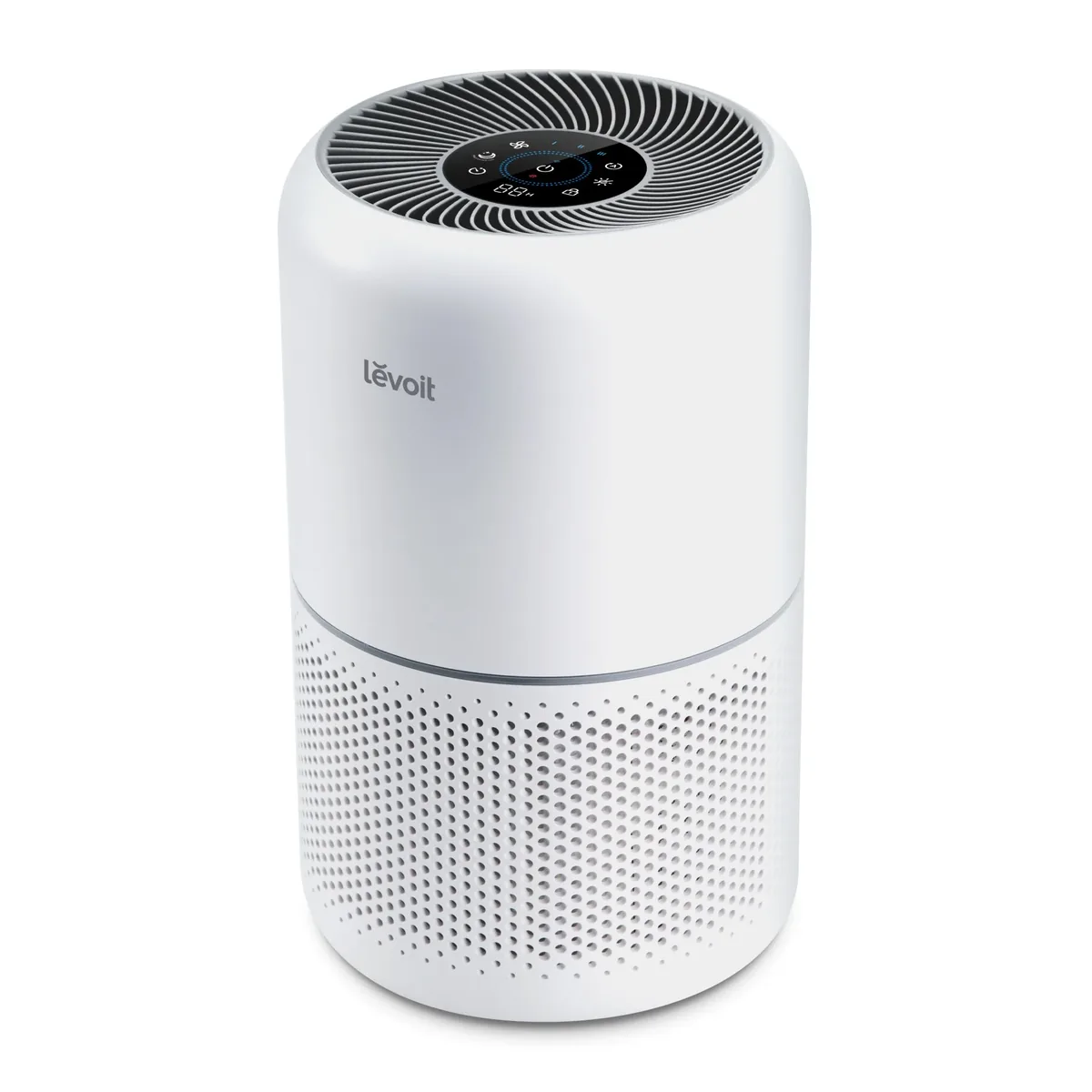
Levoit Core 300S
The Core 300S is the smart version of the best-selling air purifier in America, and it earns the throne on value rather than raw power. AHAM-verified 141 CFM smoke CADR from a $110, six-pound cylinder is genuinely good, and HouseFresh's independent testing cleared their test room in 45 minutes — quicker than most rivals at this price. The auto mode is the real upgrade over the base Core 300: the PM2.5 sensor kicks the fan up when you're cooking or the dog shakes off, then drops back to a 22 dB sleep mode you truly cannot hear. The catch is the marketing math — Levoit's '1,095 sq ft' claim is a one-air-change-per-hour fantasy; honest coverage is about 219 sq ft. Air-purifier owner discussions generally recommend it for bedrooms and offices but points buyers to the Vital 100S or Winix 5500-2 for living rooms. Owner gripes are consistent: speed 3 is loud enough (about 50 dB) that most people never use it, the VeSync app nags about filter life on a timer rather than actual usage, and genuine filters at $26-40 mean maintenance can hit half the purchase price annually. Still the default recommendation for a first purifier, and it's earned that.
Levoit
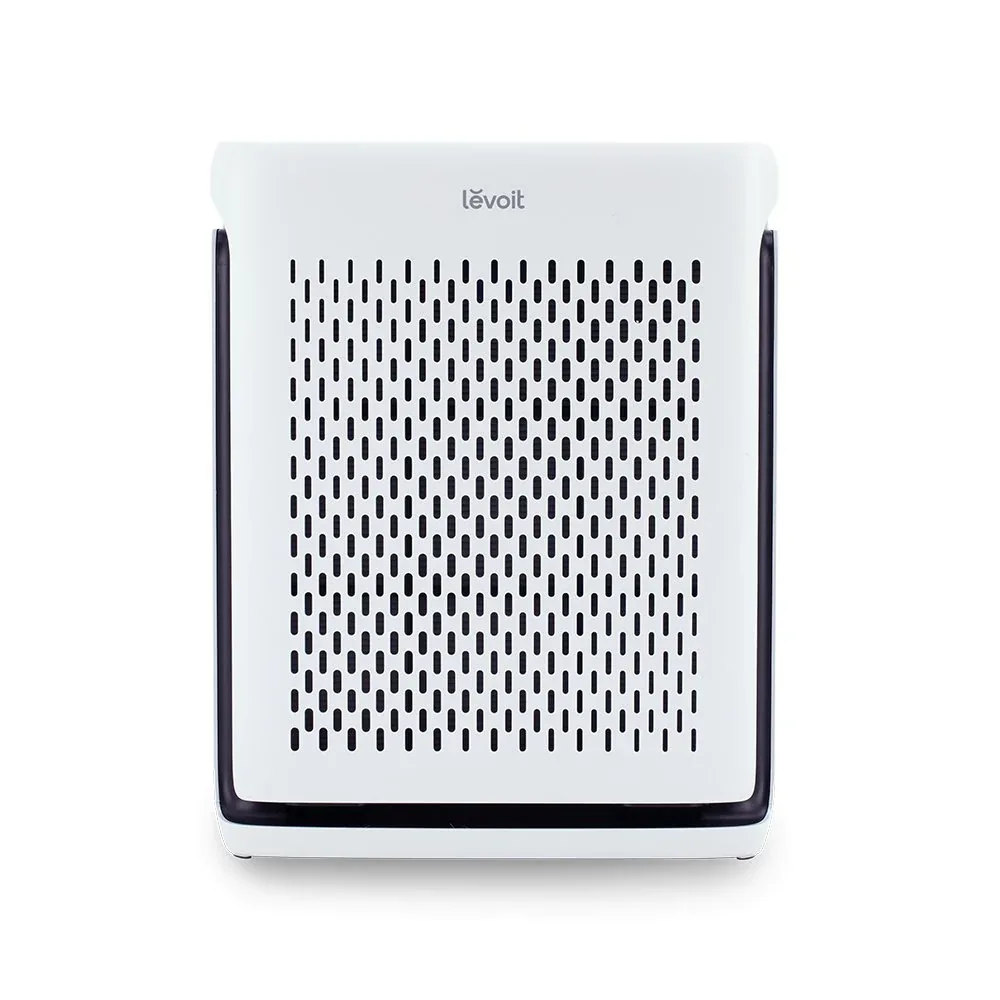
Levoit Vital 100S
The Vital 100S is the sleeper pick in Levoit's lineup and the unit HouseFresh has repeatedly pointed to as better value than the famous Core 300S. For $30 more you get the same 141 CFM smoke CADR in a boxier body with two upgrades that matter long-term: a washable pre-filter that meaningfully extends HEPA life (the Core series pre-filter is bonded to the disposable cartridge), and a front-panel filter swap that beats flipping a cylinder upside down. The infrared particle sensor drives a responsive auto mode with a color-coded ring plus real PM2.5 numbers in the VeSync app, and there's a pet mode that periodically ramps the fan to grab dander. The marketing claim of 1,110 sq ft is the usual 1-ACH nonsense — treat it as a solid 220 sq ft machine. Owner complaints center on the top-firing design being louder than expected at speed 3 (mid-50s dB), occasional VeSync pairing tantrums, and the sensor reading optimistically low after a few months if you never clean it. Air-purifier owner discussions regularly recommend it over the 300S for anyone with pets. If your room is closer to 300 sq ft, the Vital 200S is the same design with more fan for about $50 more.
Blueair
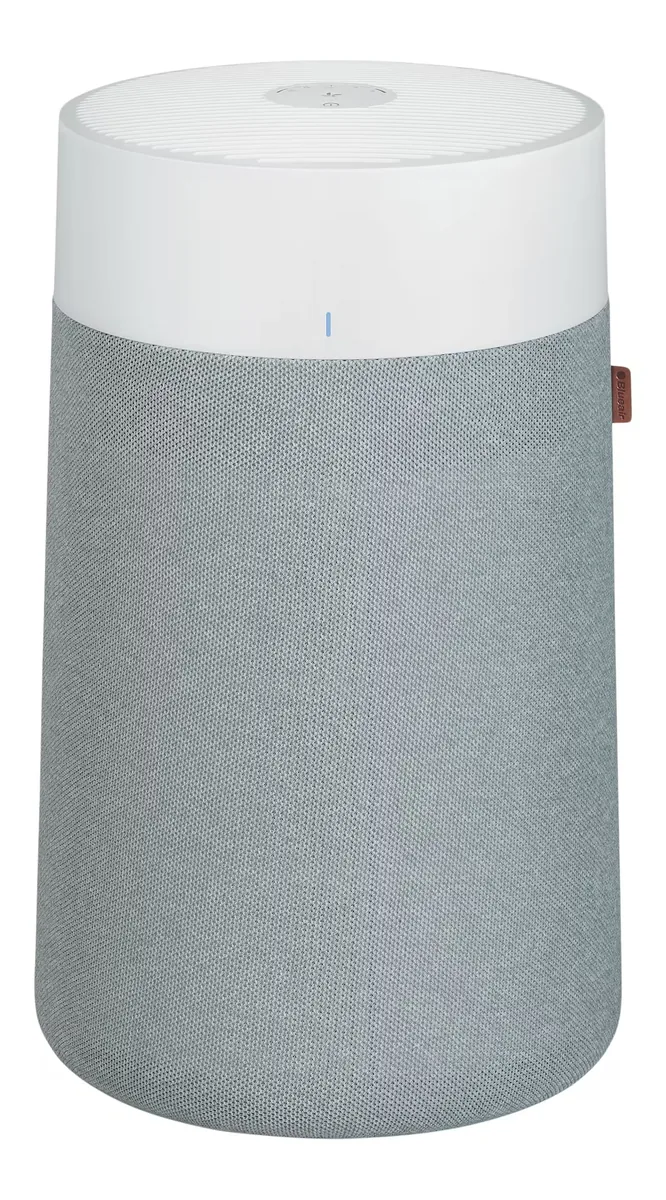
Blueair Blue Pure 411i Max
The 411i Max replaced Blueair's discontinued Blue Pure 411/411+ as the entry point to the brand's HEPASilent system, which pre-charges particles electrostatically so a looser, quieter filter can catch them. The payoff is a spec sheet nothing else in this class touches: 141 CFM AHAM-verified CADR - matching a Levoit Core 300S - at a claimed 18 dB minimum and single-digit wattage on low, quiet and efficient enough to run around the clock for pennies. Blueair's honest AHAM figure is 219 sq ft at 4.8 air changes; the '1,052 sq ft' retail headline is the usual one-hour math. You get an app, auto mode with a particle sensor, and a washable fabric pre-filter sleeve. Caveats: Live Science measured real-world noise closer to 23-53 dB than the spec, list price is $170 (it routinely discounts toward $120 - wait for that), and the electrostatic charging stage is technically mild ionization, though Blueair's ozone output tests below detection limits and CARB certifies it. The base 1-year warranty trails Levoit and Winix unless you register for the extension. Air-purifier owner discussions treat Blue Pure models as the default 'quiet bedroom' pick, and independent testing has consistently backed that reputation.
Instant
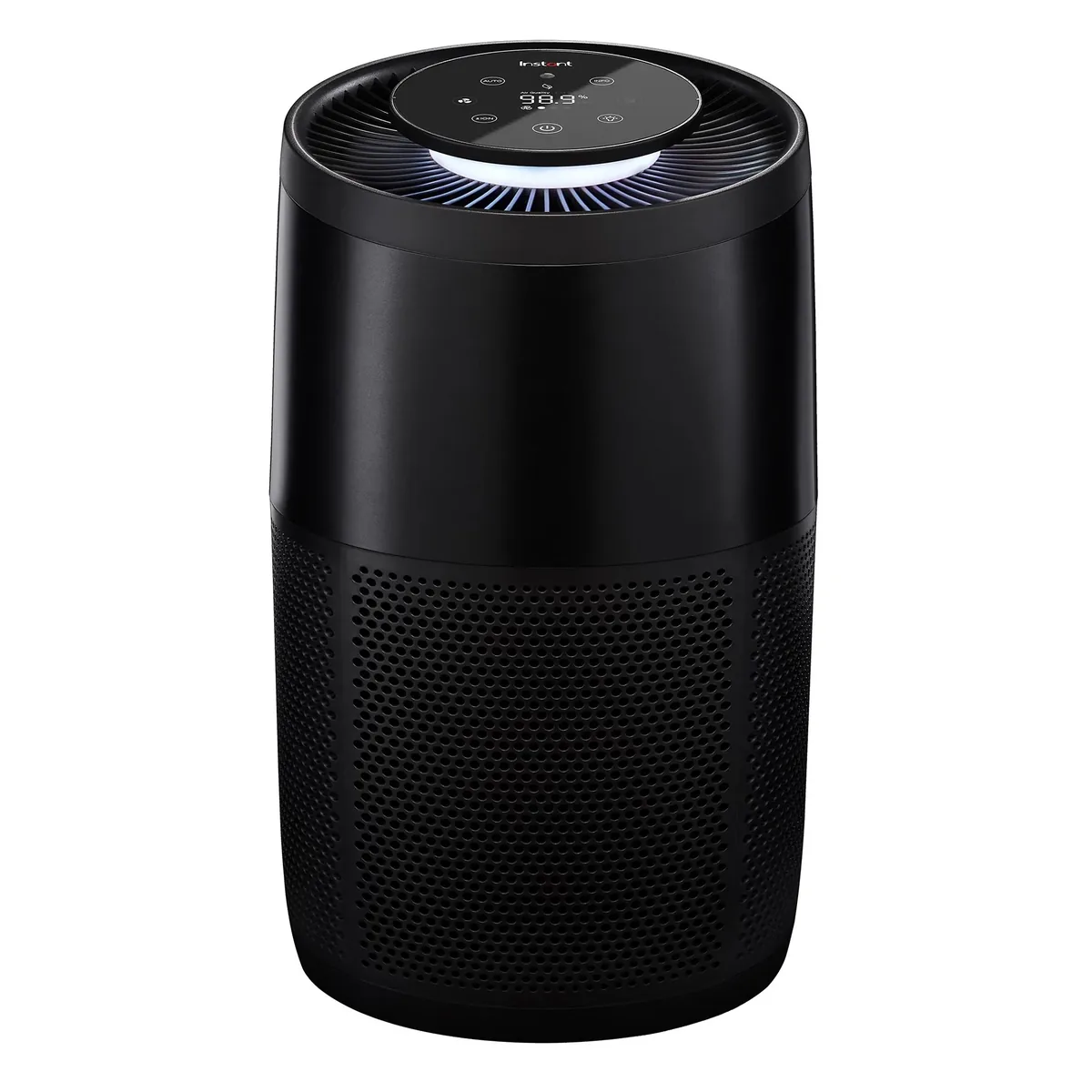
Instant AP200
The AP200 is the middle child of Instant Brands' (yes, the Instant Pot people) three-purifier lineup, and it's the honest-labeling surprise of the budget tier: the 228 sq ft coverage on the box is an AHAM-verified 4.8+ ACH number, not marketing fluff — the inflated '1,140 sq ft per hour' framing at 1 ACH is at least clearly labeled as such. Instant doesn't publish the underlying CADR in CFM (roughly 147 smoke CFM implied by the AHAM room size — flagged accordingly), which puts it a clear tier below the 230+ CFM Coway/Winix crowd; this is a true medium-room machine for a bedroom or office, not a living-room workhorse. What you get for the routinely-under-$100 street price is a lot: a quick auto mode with a color-coded AQ ring, an Energy Star-certified 38-watt motor, eco fan-cycling, a genuinely dark and near-silent night mode (21 dB low), and a light-sensing display that shuts itself off. The plasma ion generator is the one feature ozone-averse buyers should toggle off; night mode disables it automatically, and Instant's site notes the unit can't be sold in Indiana under state ion-device rules. The 1-year warranty is the shortest here, and long-term filter availability leans on third parties after Instant Brands' 2023 restructuring — both worth weighing against the excellent price.
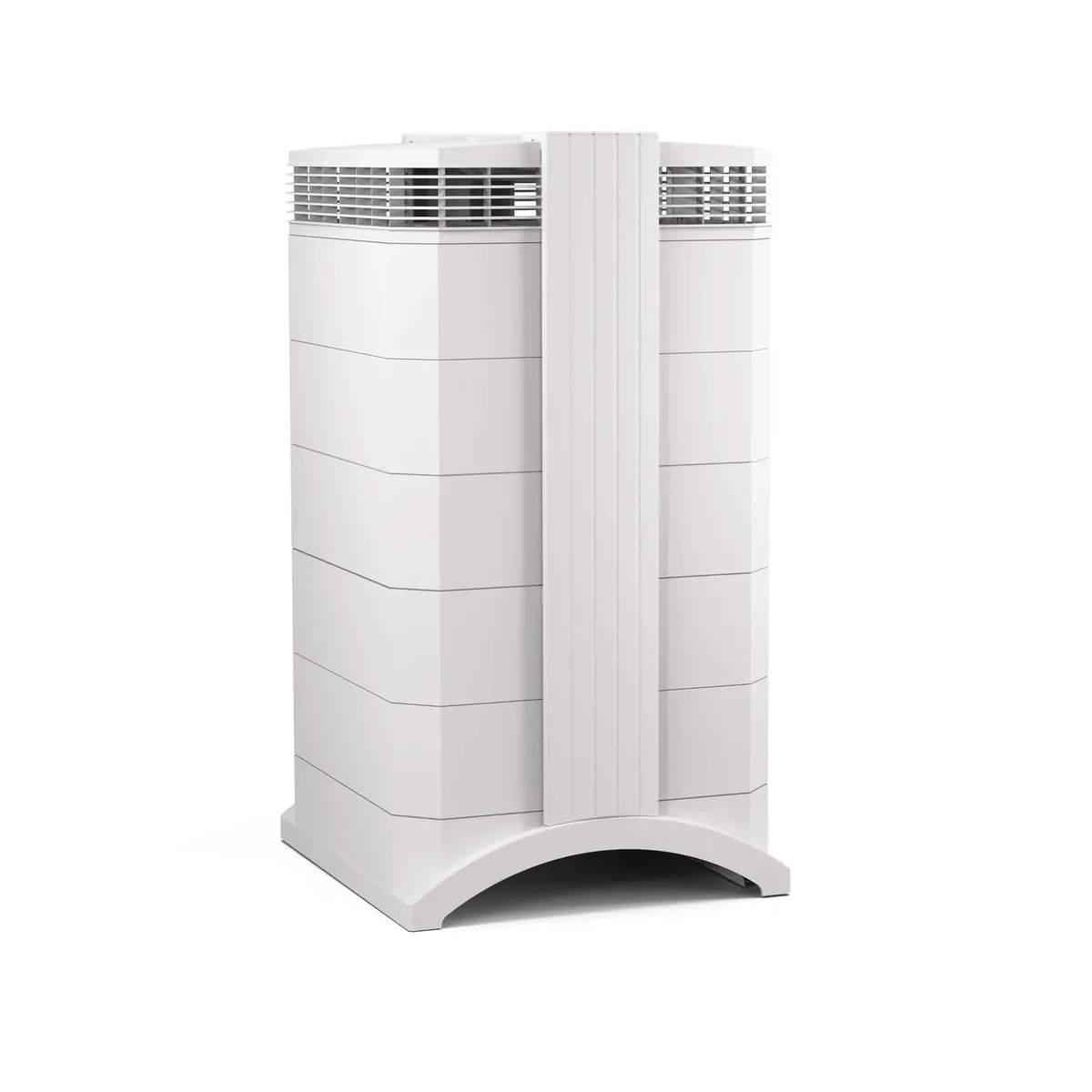
The HealthPro Plus is the machine allergists have name-dropped for two decades, now sold as the WiFi-equipped XE version at $1,199. The Swiss-designed, German-built tower is genuinely excellent at what it claims: a fully sealed system with HyperHEPA filtration independently tested down to 0.003 microns, plus five pounds of gas-phase media in the V5-Cell. HouseFresh, no fan of overpriced purifiers, still calls it the best pure HEPA-plus-carbon machine on the market. But the value math is brutal. IQAir refuses to publish AHAM CADR — HouseFresh measured 213 CFM of PM1 CADR at top speed, which works out to roughly 330 sq ft at a real 4.8 ACH, not the 1,125 sq ft on the box. Worse, its sub-45 dBA CADR is just 86 CFM: run it at livable volume and you forfeit about 70% of its capacity. An AirFanta 3Pro delivers more measured clean air for about a fifth of the price, and running costs here exceed $400 a year. You are paying for build quality, gas filtration depth, a 10-year warranty, and the medical pedigree — not for CADR-per-dollar.
Austin Air
Austin Air HealthMate
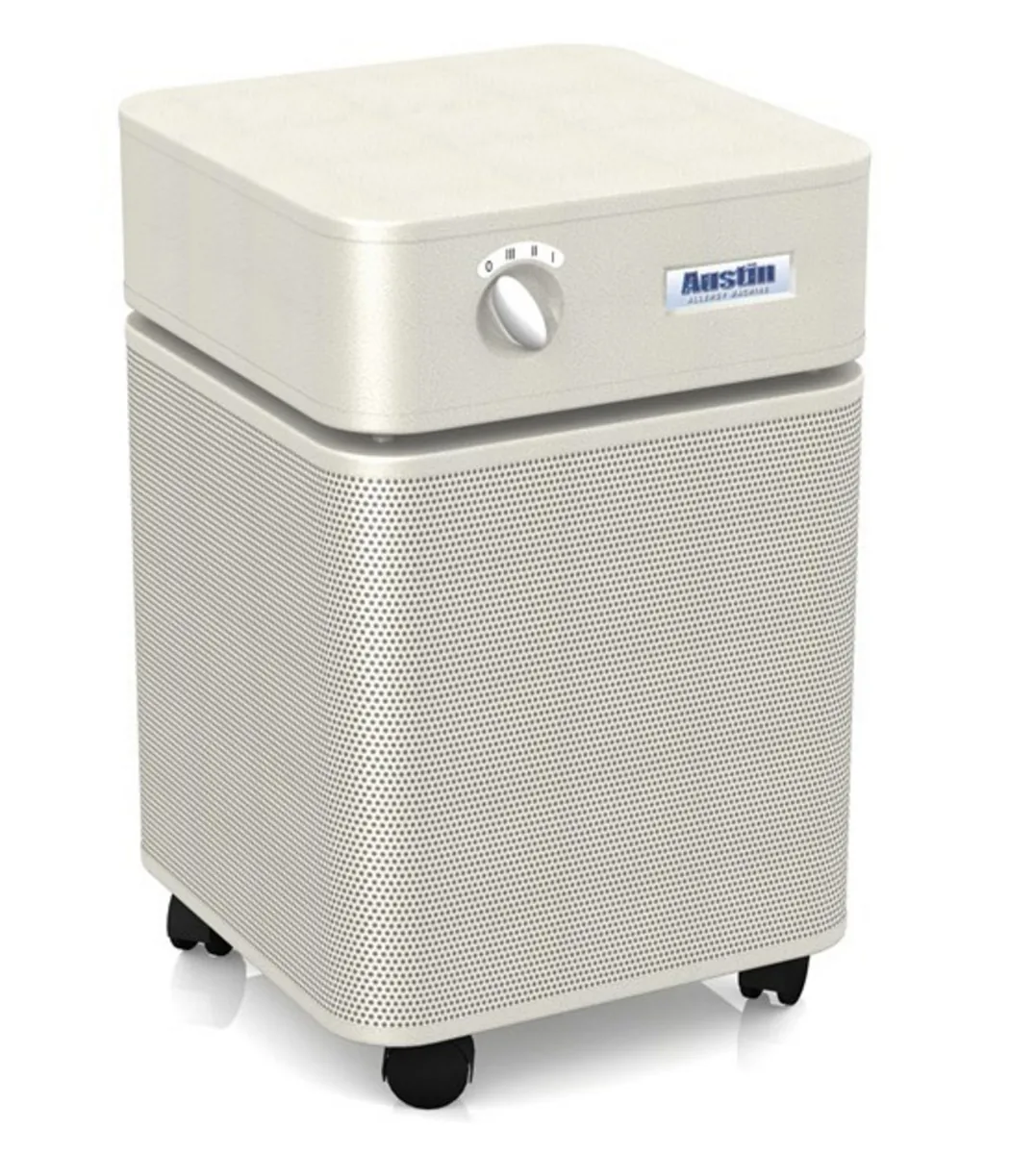
The HealthMate is the steel-box legend: hand-built in Buffalo since the 1980s, used in FEMA and Red Cross deployments after 9/11, and beloved by the chemically sensitive because its filter canister packs roughly 15 pounds of activated carbon and zeolite — more gas-phase media than almost anything else you can plug into a wall outlet. That's the entire pitch, and for VOCs, wildfire smoke odor, and off-gassing it genuinely delivers. For ordinary particles, the math is rough: Austin refuses CADR testing, and HouseFresh measured just 156 CFM of PM1 CADR — it took 52 minutes to clear their test room, performance they compared to a $99 purifier. That makes the 1,500 sq ft claim absurd; realistic coverage at 4.8 ACH is about 240 sq ft. There's no auto mode, no air quality sensor, no timer — three fan speeds on a rotary dial, 47 pounds of powder-coated steel, and a motor that runs loud (42-62 dB measured). The saving grace is ownership cost: one $315 filter every five years is $63/year, cheaper than most $200 purifiers. Buy it for chemical and odor filtration you can't get elsewhere; buy almost anything else for dust and pollen.
Windmill
Windmill Air Purifier
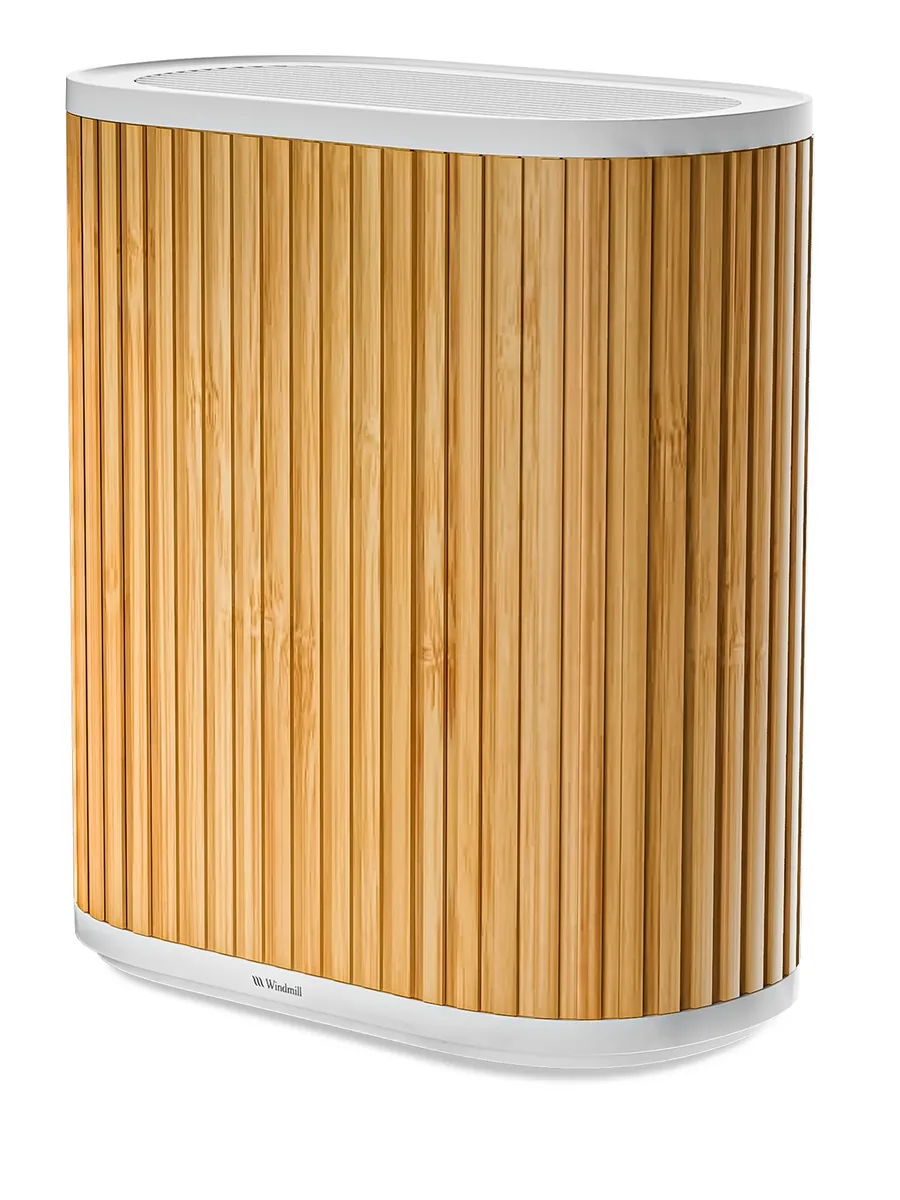
Windmill is the Brooklyn design brand that made window air conditioners Instagram-worthy, and this purifier applies the same playbook: soft grille, muted colors, wood-look top, and a UI your grandmother could operate. To their genuine credit, the spec sheet is AHAM Verifide and refreshingly honest — Windmill itself publishes 202 sq ft at a real 4.8 ACH, even while the marketing tops out at a '975 sq ft' whole-room number. The measured reality is modest: 130 CFM smoke CADR is Levoit-Core-300-class airflow at roughly double the price, so you are unambiguously paying a design premium per unit of clean air. Where it earns some of that back is livability: reviewers at Tom's Guide and CNN Underscored consistently praise the near-silent low end (Windmill claims 16 dB Whisper mode; independent reviewers measure roughly 23 dB), the polished app with Eco auto mode, and a form factor that doesn't look like lab equipment. The catch worth naming: the 'lifetime warranty' is contingent on an active $49-every-6-months filter subscription — warranty-as-retention-tool, the same trick Mila plays with softer branding. As a bedroom or office machine for design-driven buyers it's likable; value nerds should note an AirFanta 3Pro moves 2.7x the air for less money.
Coway
Coway Airmega IconS
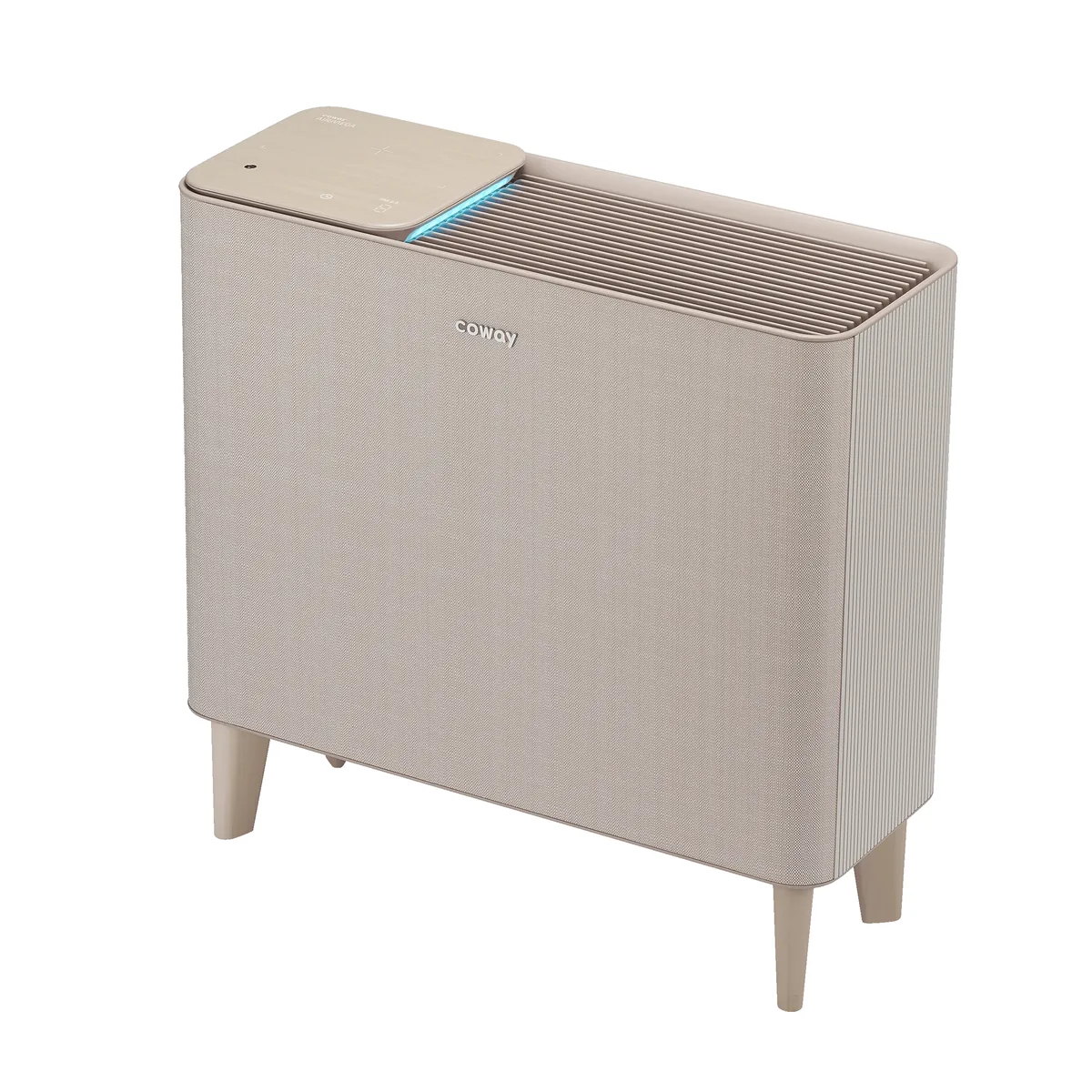
The IconS answers a question mostly asked in design magazines: what if an air purifier looked like a mid-century console table and charged your phone? It's Coway's design-line flagship — a slanted-leg cabinet with a Qi wireless charging pad on top and the WiFi/app/voice features the plain Icon lacks. The catch is that you know exactly what Coway airflow costs, because Coway sells it to you cheaper elsewhere: this is 173 CFM of smoke CADR for $749, while the company's own dowdier Airmega 300S delivers roughly double the airflow for hundreds less, and the legendary Mighty (AP-1512HH) gets within shouting distance for a fifth of the price. Reviewers at TechHive and Reviewed liked the thing itself — build quality is real, the particle sensor is responsive, Eco mode shuts the fan off when air stays clean, and 21 dB on low is bedroom-grade silent. But the 649 sq ft claim leans on a 2 ACH assumption; honest 4.8 ACH coverage is about 268 sq ft, medium-room duty. Air-purifier owner discussions' shorthand for this machine is 'the Coway you buy with your eyes.' If the IconS's furniture act is what gets a purifier allowed into your living room, it's a competent, well-supported machine. If not, Coway's own catalog is the strongest argument against it.