Blueair
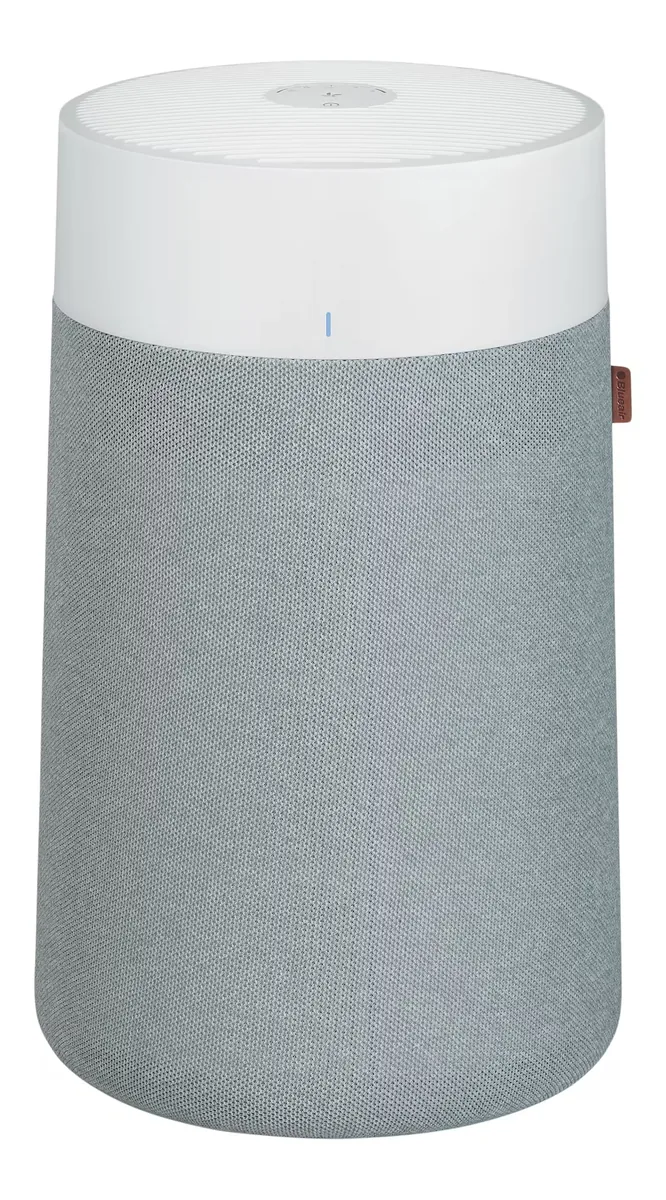
Blueair Blue Pure 411i Max
The 411i Max replaced Blueair's discontinued Blue Pure 411/411+ as the entry point to the brand's HEPASilent system, which pre-charges particles electrostatically so a looser, quieter filter can catch them. The payoff is a spec sheet nothing else in this class touches: 141 CFM AHAM-verified CADR - matching a Levoit Core 300S - at a claimed 18 dB minimum and single-digit wattage on low, quiet and efficient enough to run around the clock for pennies. Blueair's honest AHAM figure is 219 sq ft at 4.8 air changes; the '1,052 sq ft' retail headline is the usual one-hour math. You get an app, auto mode with a particle sensor, and a washable fabric pre-filter sleeve. Caveats: Live Science measured real-world noise closer to 23-53 dB than the spec, list price is $170 (it routinely discounts toward $120 - wait for that), and the electrostatic charging stage is technically mild ionization, though Blueair's ozone output tests below detection limits and CARB certifies it. The base 1-year warranty trails Levoit and Winix unless you register for the extension. Air-purifier owner discussions treat Blue Pure models as the default 'quiet bedroom' pick, and independent testing has consistently backed that reputation.
Specifications
Highlights
Pros
- ✓AHAM-verified 141 CFM CADR ties the Levoit Core 300S
- ✓Claimed 18 dB low speed - among the quietest purifiers made
- ✓HEPASilent tech delivers big CADR from tiny wattage
- ✓9-month filter life tracked by real usage, not a dumb timer
- ✓Washable, machine-friendly fabric pre-filter in swappable colors
- ✓Full app with auto mode, particle sensor, and scheduling
- ✓Filters only ~$23 - lowest running cost in its class
- ✓Energy Star certified for true 24/7 operation
Cons
- ✗1,052 sq ft claim is one-hour marketing - honest coverage ~219 sq ft
- ✗$170 list is steep; only a strong buy at its frequent ~$120 sale price
- ✗Base 1-year warranty trails rivals unless you register for extension
- ✗Proprietary filter means no cheap third-party option
- ✗Real-world noise measured higher than spec (23-53 dB per Live Science)
- ✗Electrostatic stage is mild ionization - spec-sheet purists may object
Common Questions
Is it really as quiet as Blueair claims?
What room size does it honestly cover?
What are the filter costs, and is there any DRM?
How much power does 24/7 operation use?
Is the electrostatic stage an ionizer?
Compare the Blueair Blue Pure 411i Max
Related air purifiers
More from Blueair →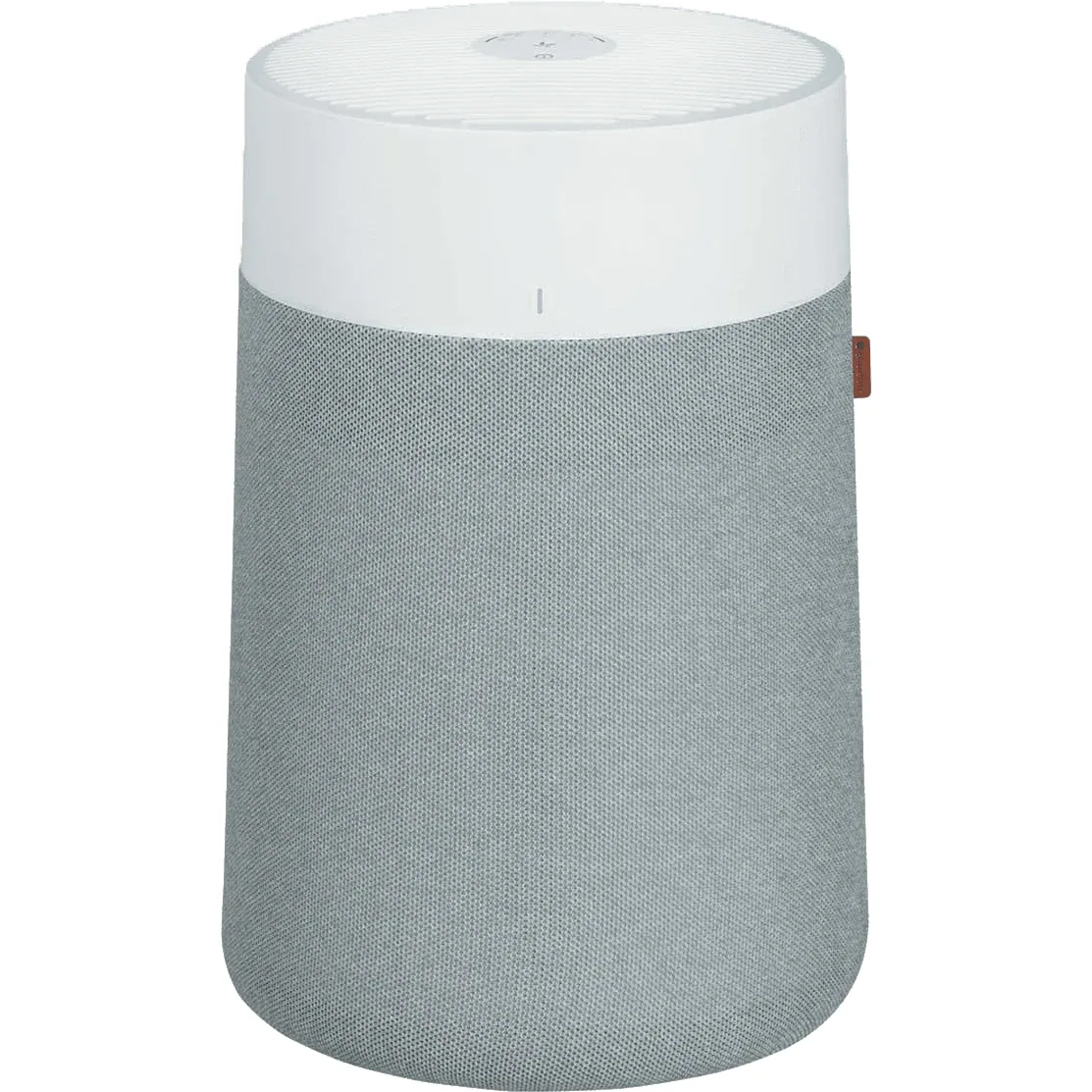
Blueair
Blueair Blue Pure 311i Max
The 311i Max is the quiet-per-CFM champion of the mid-size class. Blueair's HEPASilent design charges particles electrostatically before a lower-density filter catches them, which lets the fan spin slower for the same clean-air output: 250 CFM smoke CADR from a machine that measures 23 dB on low, tops out around 50 dB, weighs 8 lbs, and sips 29 watts flat-out — Energy Star and QuietMark certified. HouseFresh and TechGearLab both found it clears rooms about as fast as the Coway/Winix 232-CADR crowd while being dramatically easier to live with at night, and the honest AHAM number is actually higher: 387 sq ft at 4.8 ACH. The 2,107 sq ft headline is 1-ACH marketing at its most aggressive — ignore it. The particle-charging happens entirely inside the unit (it is not a room ionizer and there's nothing to switch off; Blueair publishes near-zero ozone results). Caveats: the combo filter runs ~$60/yr and there's no cheap third-party ecosystem yet, the LED indicator shows color-coded quality rather than a PM2.5 number (details live in the app), and the 1-year warranty only becomes 3 if you register within 60 days. Watch for sales — it dips well under $200, where it's arguably the best bedroom-first pick here.
Blueair
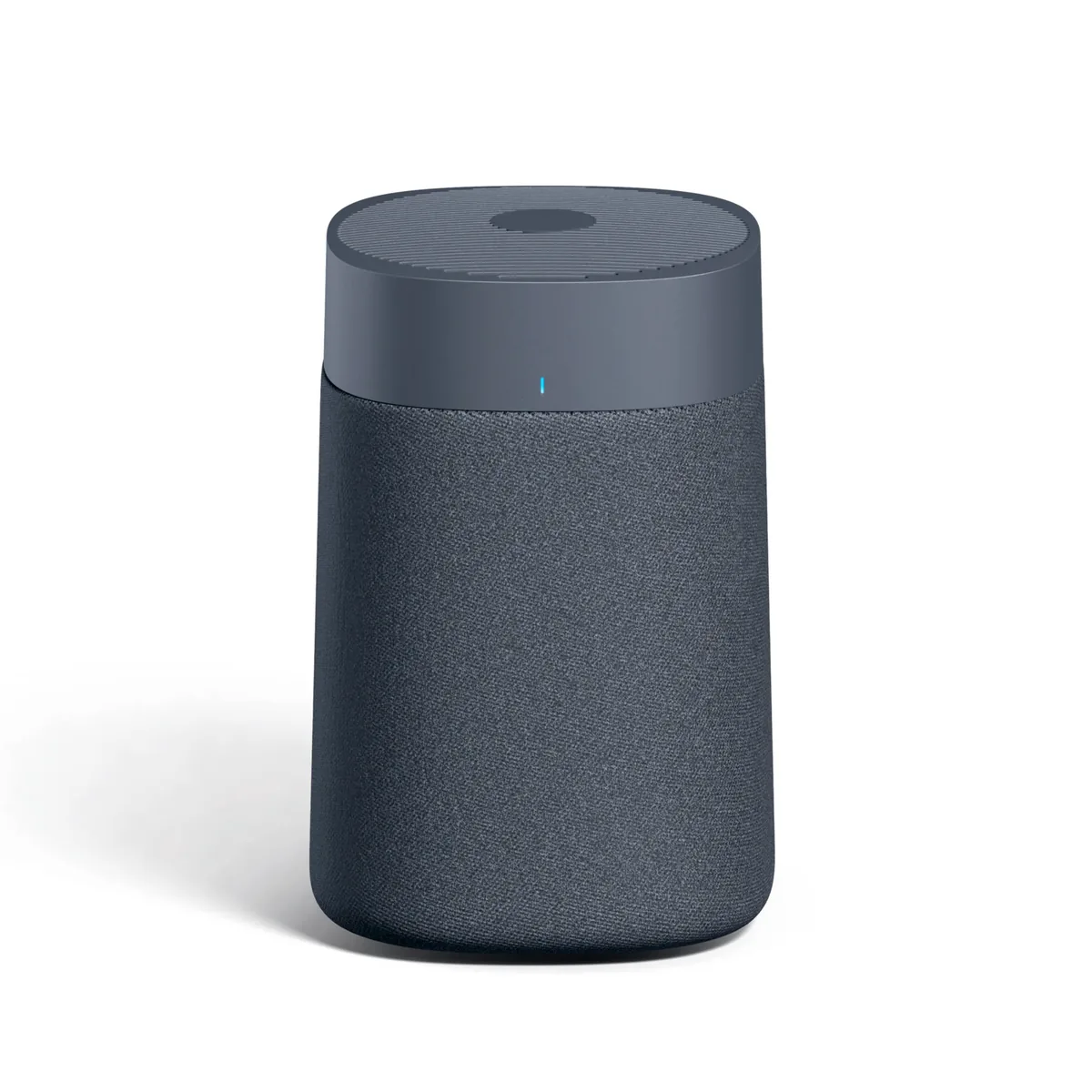
Blueair Blue Pure 211i Max
The 211i Max is why Blueair retired the Classic 605: it delivers flagship airflow - 435 CFM smoke CADR, more than a Levoit Core 600S - from a 16-lb fabric-wrapped drum that sips 46 W and idles at 23 dB. The trick is HEPASilent, which electrostatically charges particles before a looser, lower-resistance filter catches them, so Blueair gets big CADR without big fan noise. That's also the asterisk: the charging stage is a form of ionization that cannot be disabled. It's CARB-certified and independent testing of Blueair's implementation measures ozone below detection thresholds, but strictly-mechanical purists should look at Levoit or Coway instead. Coverage marketing is the usual game - Amazon listings tout 3,235 sq ft, which is the 1-air-change-per-hour figure; Blueair's own honest spec is 674 sq ft at 4.8 ACH, still comfortably extra-large. Consumer Reports rates the 211i Max highly, air-purifier owner discussions treat it as the quiet-large-room default alongside the 600S, and the Amazon base (4.5 stars, 11,000+ ratings) is consistent with that. Weak points are modest: a single-number air quality readout, filters that cost ~50% more per year than Levoit's, and a stingy 1-year base warranty you must register to extend.
Blueair
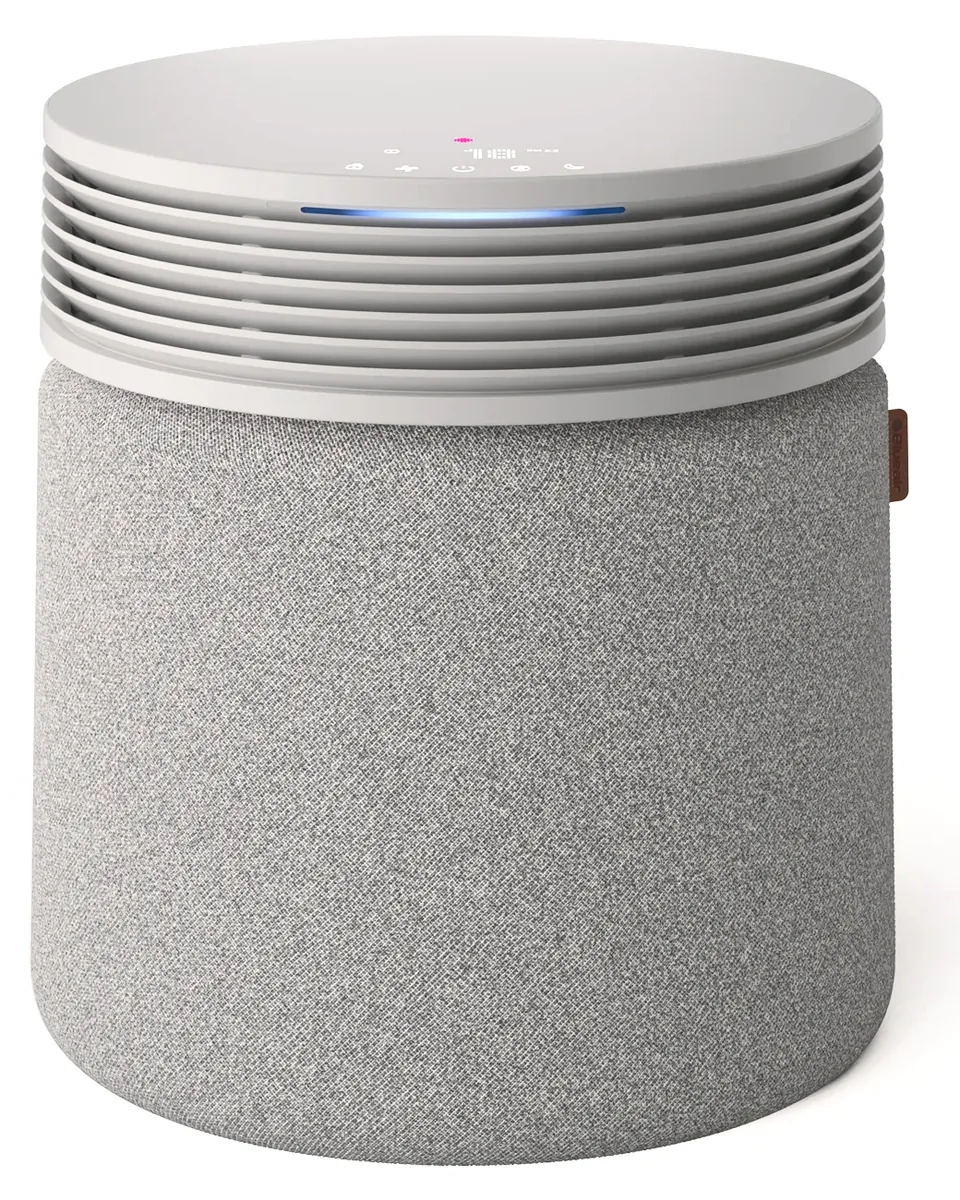
Blueair Blue Signature
Substitution note: this replaces the discontinued HealthProtect 7470i and Classic 605 on our list - Blueair retired both, and the Blue Signature is the brand's current 2026 flagship. It's the rare premium purifier where independent testing beats the skepticism: HouseFresh measured a 400 CFM PM1 CADR at top speed, cleared their test room in 15 minutes, and - crucially - found it still moved ~229 CFM at its 40 dB Speed 2, meaning it cleans seriously fast at a volume you can live with. Official AHAM figures are 455 CFM smoke CADR and 705 sq ft at ~5 air changes per hour; Amazon's 3,385 sq ft headline is the 1-ACH fiction, off by nearly 5x. The furniture-style flat top doubles as a side table, it weighs a startling 13 lbs, and max power draw is just 40 W. The pelletized carbon layer is more substantial than the token dusting in the Blue Pure line. Caveats: at $450 you're paying a design premium over a Core 600S with similar airflow, the bipolar ionization stage cannot be disabled (HouseFresh's main criticism, though they measured ozone at a negligible 3 ppb), filters run ~$100 every 9-12 months, and the product is new enough that no retailer rating base has matured - we show no rating rather than guess.
Honeywell
Honeywell HPA200
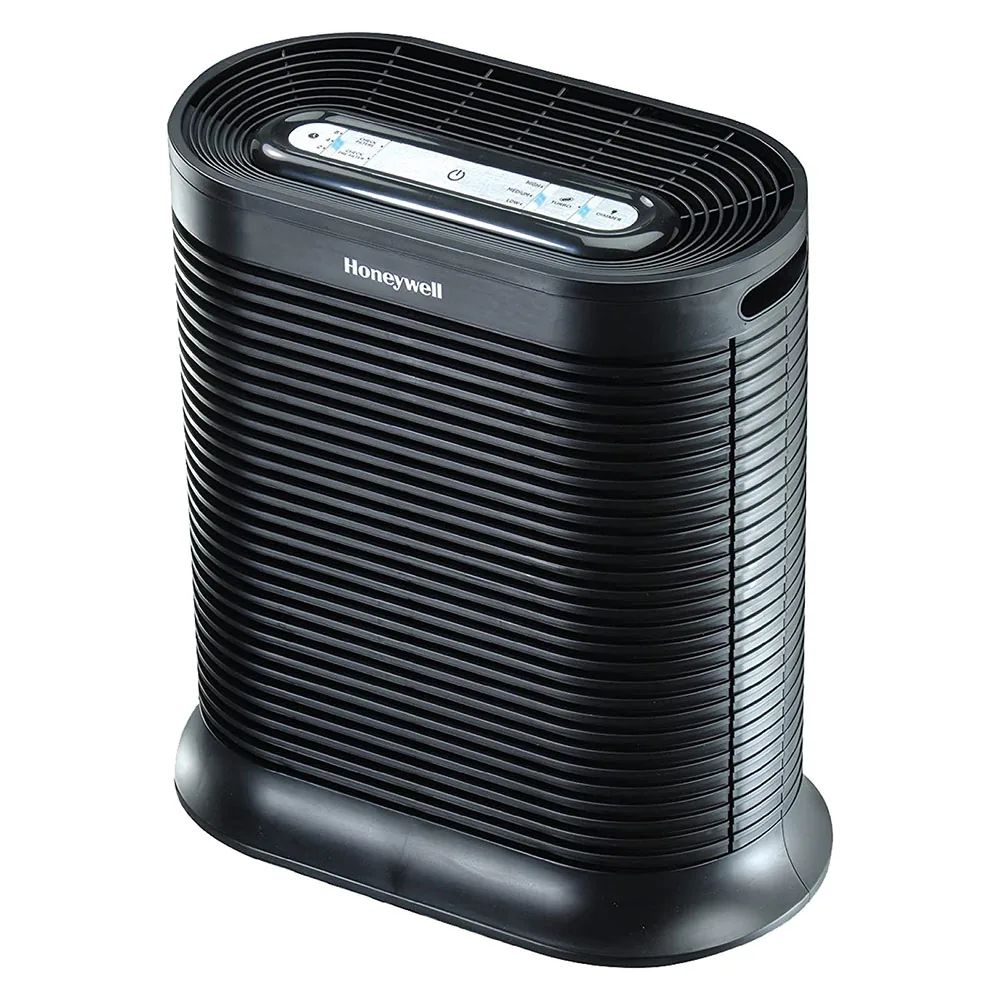
The HPA200 is the air purifier your parents own — a decade-plus-old workhorse still stocked at every Walmart, Target, and Home Depot in America, backed by an unmatched 5-year warranty. The fundamentals are legitimately good: AHAM-verified 200 CFM smoke CADR for an honest 310 sq ft, straightforward tap-button controls, and a particle-removal track record ConsumerAnalysis testing rates among the best per dollar. But this is a 2013 design in 2026: there's no air quality sensor, no auto mode, no app — you pick one of four speeds and walk away. The bigger livability issue is noise floor: its quietest 'Germ' setting runs about 45 dB, roughly what a Coway or Winix produces at medium — there is no true sleep mode, and turbo hits 64 dB while pulling a dated 87 watts. The carbon pre-filter is a thin coated sheet, so odor removal is minimal. The '1,500 sq ft in 1 hour' banner on current boxes is a 1-ACH number; treat this as a 310 sq ft machine. Air-purifier owner discussions consensus is that the Winix 5500-2 or Coway 200M beat it on noise, sensors, and running cost at the same price — but if you want dead-simple operation, in-store availability, ubiquitous cheap filters, and a warranty more than twice as long as anyone else's, the old Honeywell still earns its shelf space.
Levoit
Levoit Vital 100S
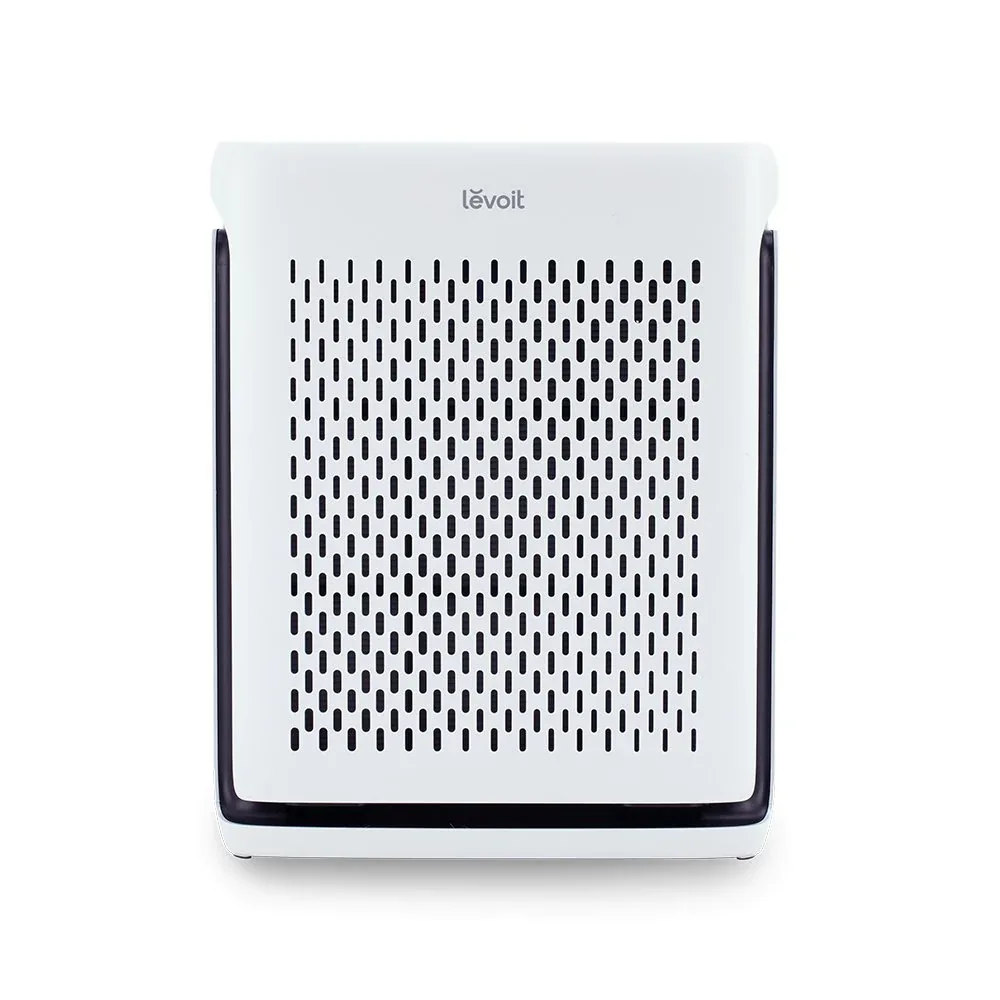
The Vital 100S is the sleeper pick in Levoit's lineup and the unit HouseFresh has repeatedly pointed to as better value than the famous Core 300S. For $30 more you get the same 141 CFM smoke CADR in a boxier body with two upgrades that matter long-term: a washable pre-filter that meaningfully extends HEPA life (the Core series pre-filter is bonded to the disposable cartridge), and a front-panel filter swap that beats flipping a cylinder upside down. The infrared particle sensor drives a responsive auto mode with a color-coded ring plus real PM2.5 numbers in the VeSync app, and there's a pet mode that periodically ramps the fan to grab dander. The marketing claim of 1,110 sq ft is the usual 1-ACH nonsense — treat it as a solid 220 sq ft machine. Owner complaints center on the top-firing design being louder than expected at speed 3 (mid-50s dB), occasional VeSync pairing tantrums, and the sensor reading optimistically low after a few months if you never clean it. Air-purifier owner discussions regularly recommend it over the 300S for anyone with pets. If your room is closer to 300 sq ft, the Vital 200S is the same design with more fan for about $50 more.
Levoit
Levoit Core 300S
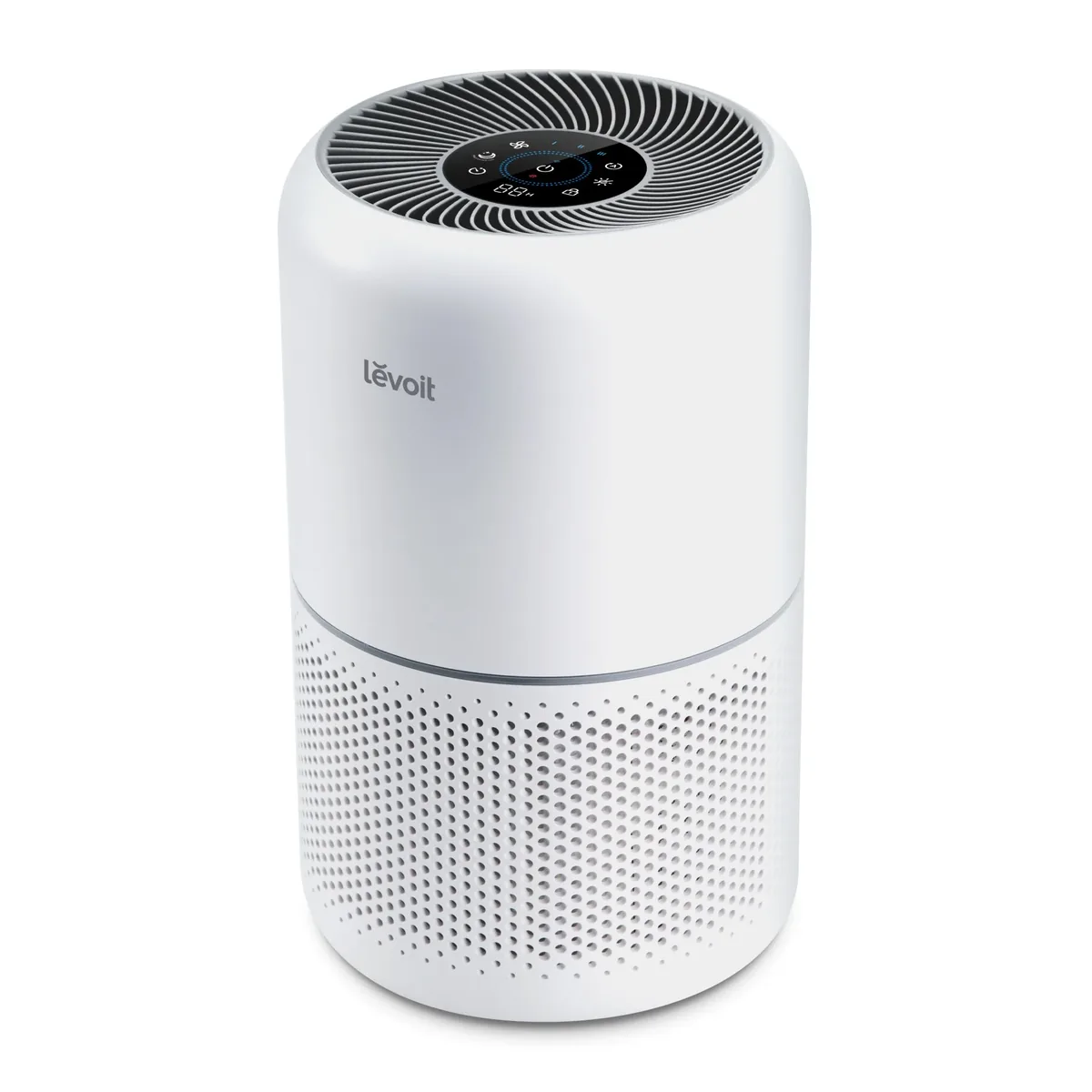
The Core 300S is the smart version of the best-selling air purifier in America, and it earns the throne on value rather than raw power. AHAM-verified 141 CFM smoke CADR from a $110, six-pound cylinder is genuinely good, and HouseFresh's independent testing cleared their test room in 45 minutes — quicker than most rivals at this price. The auto mode is the real upgrade over the base Core 300: the PM2.5 sensor kicks the fan up when you're cooking or the dog shakes off, then drops back to a 22 dB sleep mode you truly cannot hear. The catch is the marketing math — Levoit's '1,095 sq ft' claim is a one-air-change-per-hour fantasy; honest coverage is about 219 sq ft. Air-purifier owner discussions generally recommend it for bedrooms and offices but points buyers to the Vital 100S or Winix 5500-2 for living rooms. Owner gripes are consistent: speed 3 is loud enough (about 50 dB) that most people never use it, the VeSync app nags about filter life on a timer rather than actual usage, and genuine filters at $26-40 mean maintenance can hit half the purchase price annually. Still the default recommendation for a first purifier, and it's earned that.