Blueair
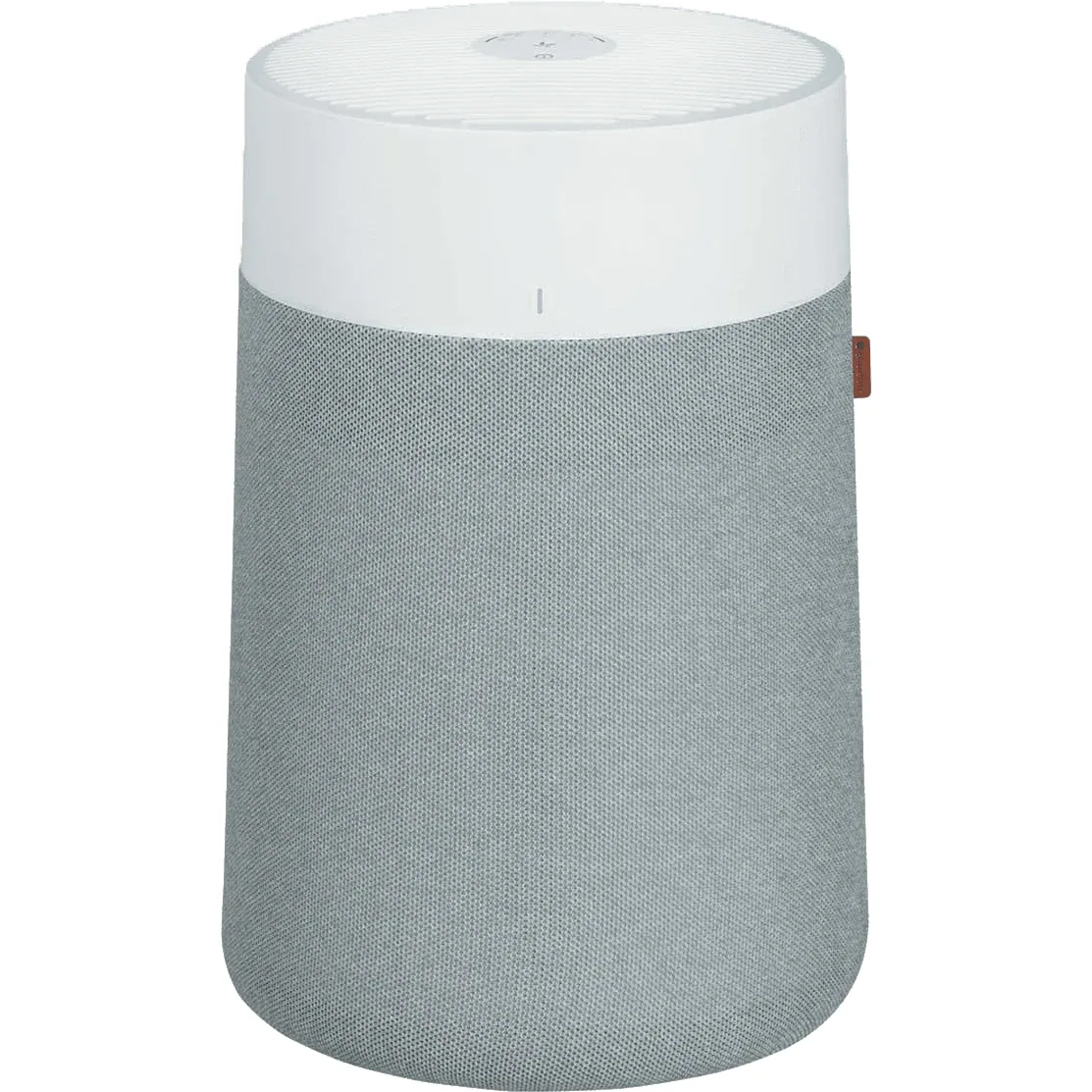
Blueair Blue Pure 311i Max
The 311i Max is the quiet-per-CFM champion of the mid-size class. Blueair's HEPASilent design charges particles electrostatically before a lower-density filter catches them, which lets the fan spin slower for the same clean-air output: 250 CFM smoke CADR from a machine that measures 23 dB on low, tops out around 50 dB, weighs 8 lbs, and sips 29 watts flat-out — Energy Star and QuietMark certified. HouseFresh and TechGearLab both found it clears rooms about as fast as the Coway/Winix 232-CADR crowd while being dramatically easier to live with at night, and the honest AHAM number is actually higher: 387 sq ft at 4.8 ACH. The 2,107 sq ft headline is 1-ACH marketing at its most aggressive — ignore it. The particle-charging happens entirely inside the unit (it is not a room ionizer and there's nothing to switch off; Blueair publishes near-zero ozone results). Caveats: the combo filter runs ~$60/yr and there's no cheap third-party ecosystem yet, the LED indicator shows color-coded quality rather than a PM2.5 number (details live in the app), and the 1-year warranty only becomes 3 if you register within 60 days. Watch for sales — it dips well under $200, where it's arguably the best bedroom-first pick here.
Specifications
Highlights
Pros
- ✓Class-leading noise-to-CADR ratio: 250 CFM topping out at ~50 dB
- ✓387 sq ft honest AHAM rating — higher than Coway/Winix rivals
- ✓29-watt max draw, 2.8 watts in sleep mode
- ✓Washable fabric pre-filter shell doubles as the design
- ✓Featherweight 8 lbs — trivial to move room to room
- ✓Solid app with auto mode, scheduling, and filter tracking
- ✓No room ionizer at all — internal charging with near-zero published ozone
Cons
- ✗2,107 sq ft claim is the most inflated marketing number in the class
- ✗~$60/yr filter cost with no established third-party alternative
- ✗Warranty is only 1 year unless you register within 60 days (then 3)
- ✗LED shows color codes, not a PM2.5 number — details require the app
- ✗$230 list is steep; only buy on the frequent sub-$200 sales
Common Questions
How inflated is the 2,107 sq ft claim?
What makes it the light-sleeper pick?
What will filters cost me?
Can I see PM2.5 numbers on the unit itself?
Any warranty fine print?
Compare the Blueair Blue Pure 311i Max
Related air purifiers
More from Blueair →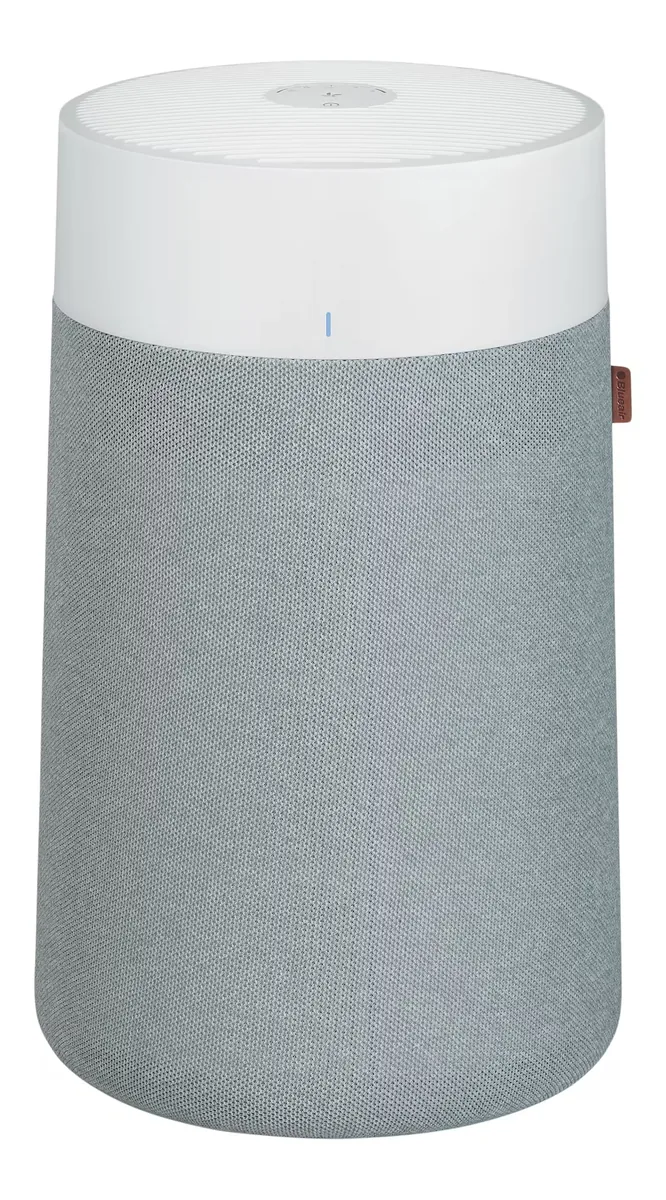
Blueair
Blueair Blue Pure 411i Max
The 411i Max replaced Blueair's discontinued Blue Pure 411/411+ as the entry point to the brand's HEPASilent system, which pre-charges particles electrostatically so a looser, quieter filter can catch them. The payoff is a spec sheet nothing else in this class touches: 141 CFM AHAM-verified CADR - matching a Levoit Core 300S - at a claimed 18 dB minimum and single-digit wattage on low, quiet and efficient enough to run around the clock for pennies. Blueair's honest AHAM figure is 219 sq ft at 4.8 air changes; the '1,052 sq ft' retail headline is the usual one-hour math. You get an app, auto mode with a particle sensor, and a washable fabric pre-filter sleeve. Caveats: Live Science measured real-world noise closer to 23-53 dB than the spec, list price is $170 (it routinely discounts toward $120 - wait for that), and the electrostatic charging stage is technically mild ionization, though Blueair's ozone output tests below detection limits and CARB certifies it. The base 1-year warranty trails Levoit and Winix unless you register for the extension. Air-purifier owner discussions treat Blue Pure models as the default 'quiet bedroom' pick, and independent testing has consistently backed that reputation.
Blueair
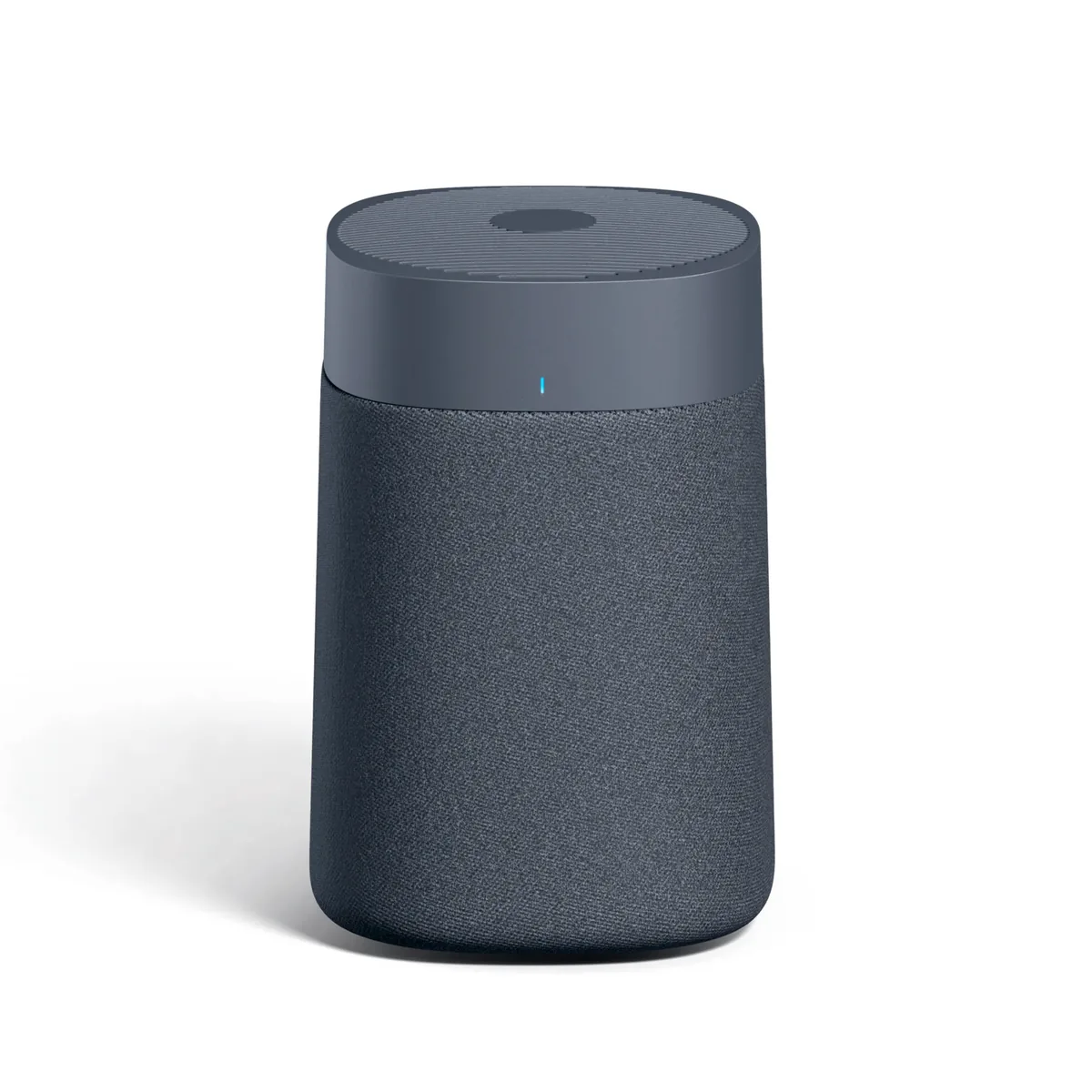
Blueair Blue Pure 211i Max
The 211i Max is why Blueair retired the Classic 605: it delivers flagship airflow - 435 CFM smoke CADR, more than a Levoit Core 600S - from a 16-lb fabric-wrapped drum that sips 46 W and idles at 23 dB. The trick is HEPASilent, which electrostatically charges particles before a looser, lower-resistance filter catches them, so Blueair gets big CADR without big fan noise. That's also the asterisk: the charging stage is a form of ionization that cannot be disabled. It's CARB-certified and independent testing of Blueair's implementation measures ozone below detection thresholds, but strictly-mechanical purists should look at Levoit or Coway instead. Coverage marketing is the usual game - Amazon listings tout 3,235 sq ft, which is the 1-air-change-per-hour figure; Blueair's own honest spec is 674 sq ft at 4.8 ACH, still comfortably extra-large. Consumer Reports rates the 211i Max highly, air-purifier owner discussions treat it as the quiet-large-room default alongside the 600S, and the Amazon base (4.5 stars, 11,000+ ratings) is consistent with that. Weak points are modest: a single-number air quality readout, filters that cost ~50% more per year than Levoit's, and a stingy 1-year base warranty you must register to extend.
Blueair
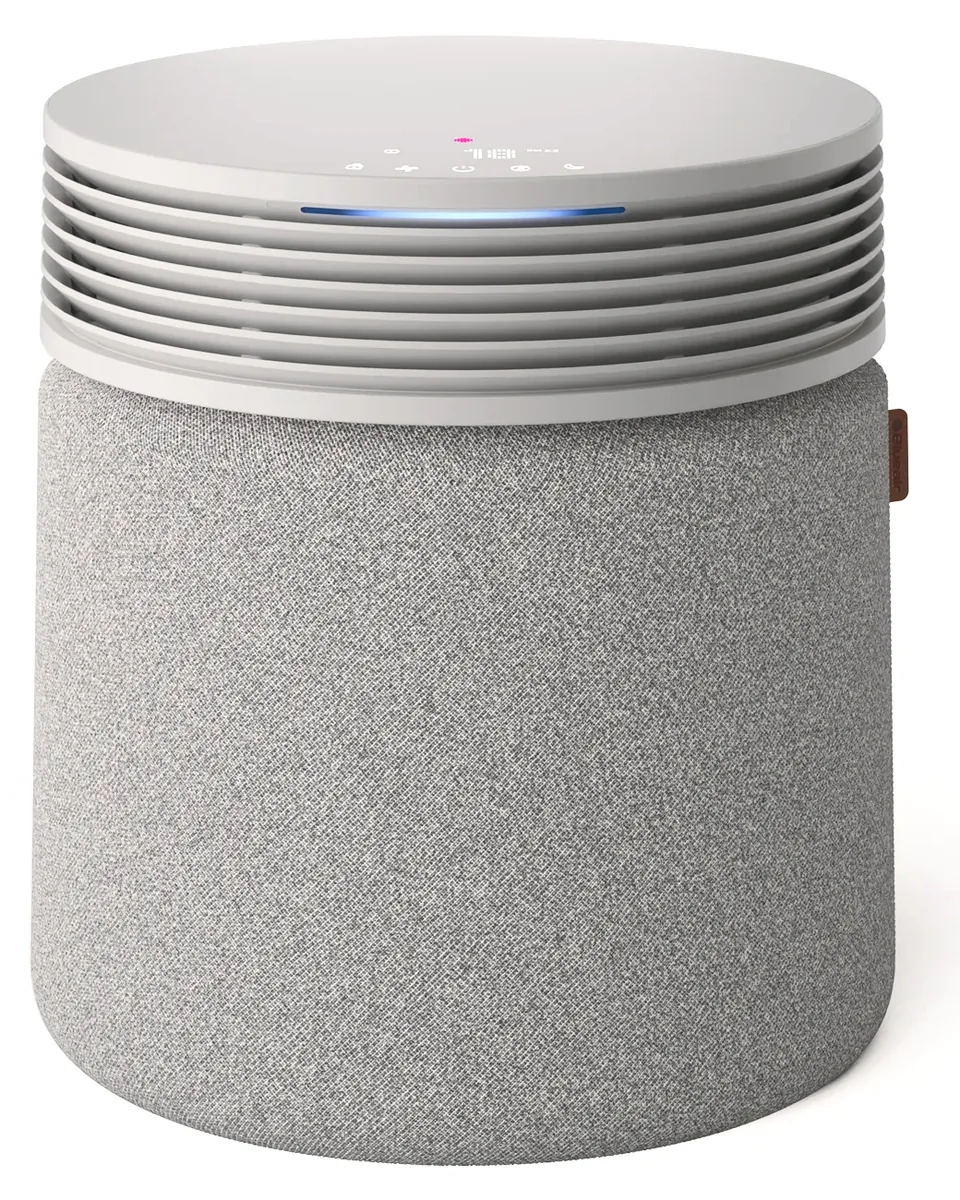
Blueair Blue Signature
Substitution note: this replaces the discontinued HealthProtect 7470i and Classic 605 on our list - Blueair retired both, and the Blue Signature is the brand's current 2026 flagship. It's the rare premium purifier where independent testing beats the skepticism: HouseFresh measured a 400 CFM PM1 CADR at top speed, cleared their test room in 15 minutes, and - crucially - found it still moved ~229 CFM at its 40 dB Speed 2, meaning it cleans seriously fast at a volume you can live with. Official AHAM figures are 455 CFM smoke CADR and 705 sq ft at ~5 air changes per hour; Amazon's 3,385 sq ft headline is the 1-ACH fiction, off by nearly 5x. The furniture-style flat top doubles as a side table, it weighs a startling 13 lbs, and max power draw is just 40 W. The pelletized carbon layer is more substantial than the token dusting in the Blue Pure line. Caveats: at $450 you're paying a design premium over a Core 600S with similar airflow, the bipolar ionization stage cannot be disabled (HouseFresh's main criticism, though they measured ozone at a negligible 3 ppb), filters run ~$100 every 9-12 months, and the product is new enough that no retailer rating base has matured - we show no rating rather than guess.
Levoit
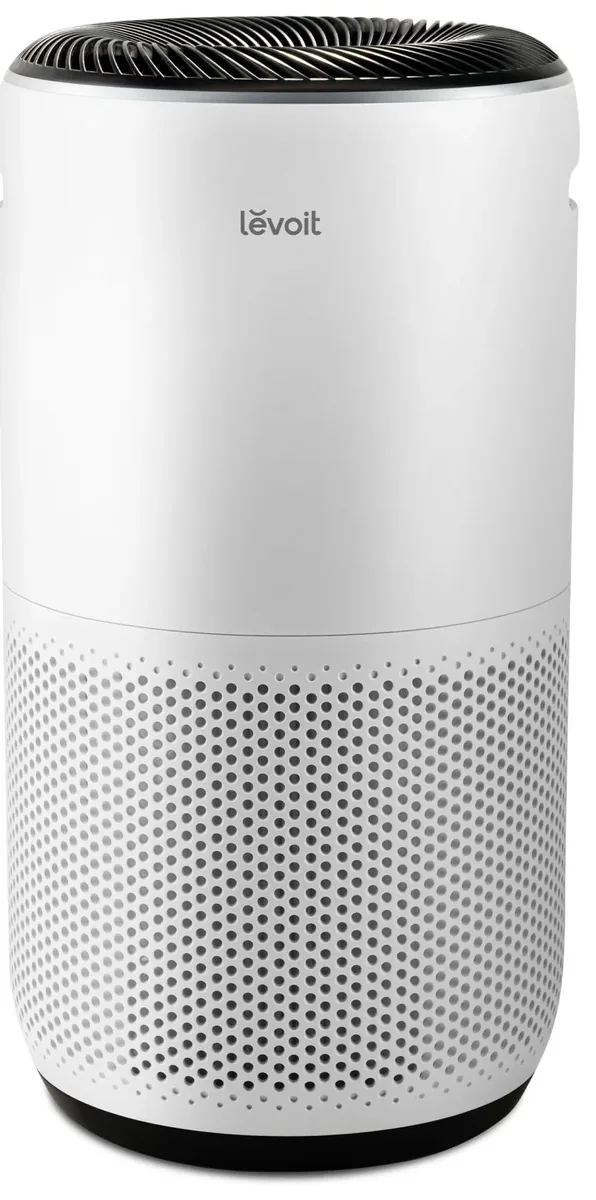
Levoit Core 400S
The Core 400S is Levoit's mid-size flagship and the machine that made the brand a serious Coway/Winix rival rather than a budget also-ran. The spec sheet is honest where it counts: AHAM-verified 231 CFM smoke CADR (358 sq ft at 4.8 ACH), Energy Star certification, and a measured 24-52 dB range that HouseFresh and Air Purifier First both found unusually pleasant — the cylindrical design pushes air up and out with less of the whoosh you get from boxy rivals, and it sips just 38 watts. The laser particle sensor is quicker and more granular than Coway's dated sensor, the color AQ display shows an actual PM2.5 number, and the VeSync app is the best in this class: scheduling, air-quality history, and Alexa/Google control with no subscription. So why isn't it the default air-purifier owner discussions pick? Running cost. The all-in-one cartridge is rated 6-8 months at $42-50 a pop, roughly $70/yr versus ~$50 for Coway and Winix, and the carbon layer is modest — fine for light odors, outclassed by the 5500-2 on serious cooking or pet smells. The 1,733 sq ft claim is 1-ACH marketing. Current stock is the 400S-P hardware revision; performance is unchanged. If app polish and quiet matter more than lifetime cost, this is the smart-home pick of the class.
Medify Air
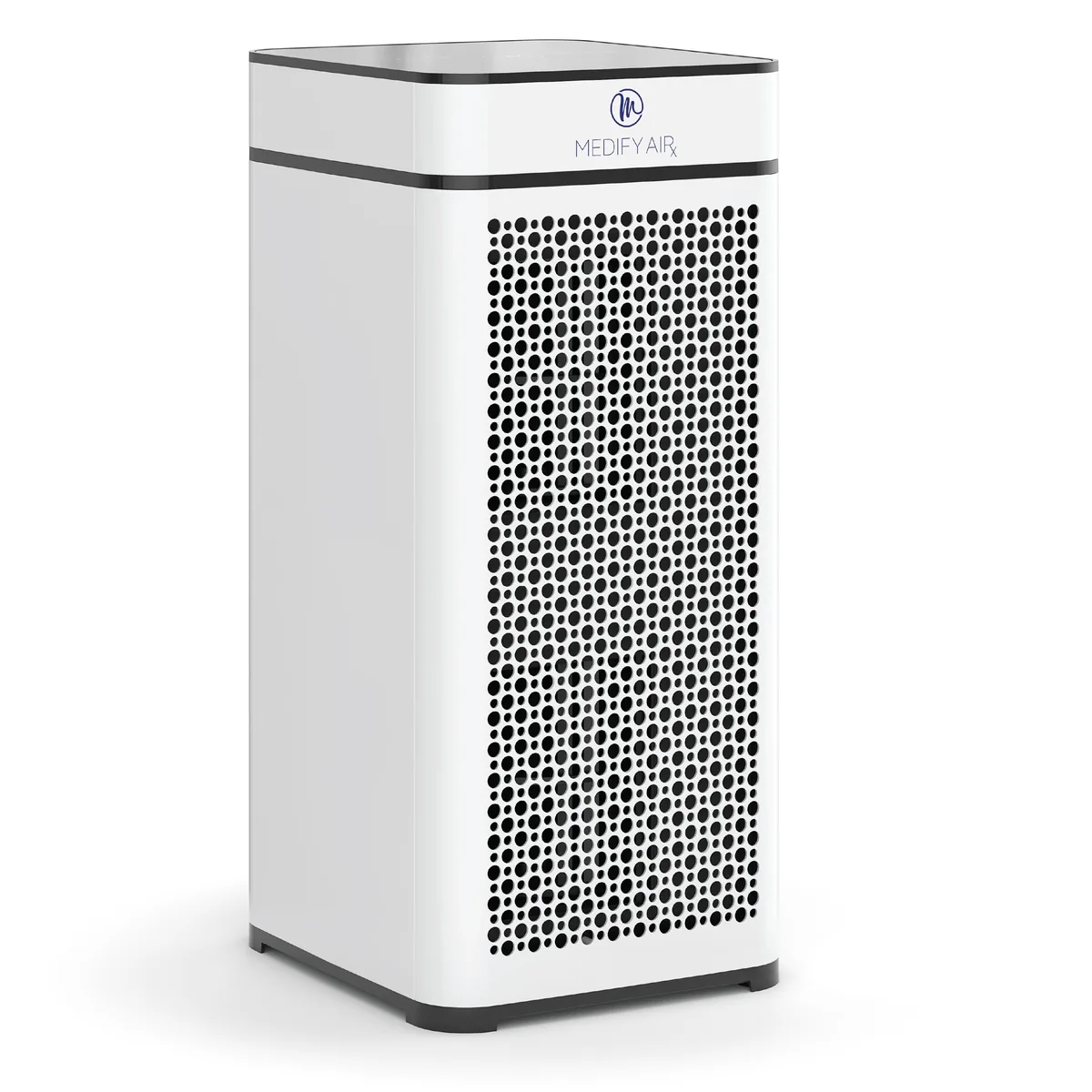
Medify MA-40
The MA-40 is a decent mid-size purifier wearing extra-large marketing. Amazon listings headline '1,793 sq ft in 1 hour' - the 1-air-change fiction - and Medify's own 840 sq ft figure still assumes only 2 changes per hour. The AHAM-style smoke CADR is 241 CFM, which honestly covers about 374 sq ft at 4.8 ACH; Medify's unlabeled 'CADR 380' spec adds confusion by mixing metric and imperial units. The 'medical grade' branding deserves similar scrutiny: H13 media in a loosely gasketed consumer tower doesn't make it a cleanroom device, and some variants advertise 'H14' with no independent verification - air-purifier owner discussions regularly flags the brand for exactly this. What the MA-40 actually offers: a sleek glass-touch tower HouseFresh found pleasant to live with, a switchable ionizer, child lock, timer, and a lifetime warranty (conditional on registration and genuine filters). The running costs undercut the sticker appeal - 6-month filter life at $59.99 means ~$120/yr, and the 46 dB minimum speed is louder than many rivals' mediums, with 66 dB at max. The strong owner sentiment is real, but so is the math: a Winix 5500-2 or Core 600S delivers equal or more verified airflow for less money and half the filter cost. Buy it on deep discount, for the looks, or not at all.
Honeywell
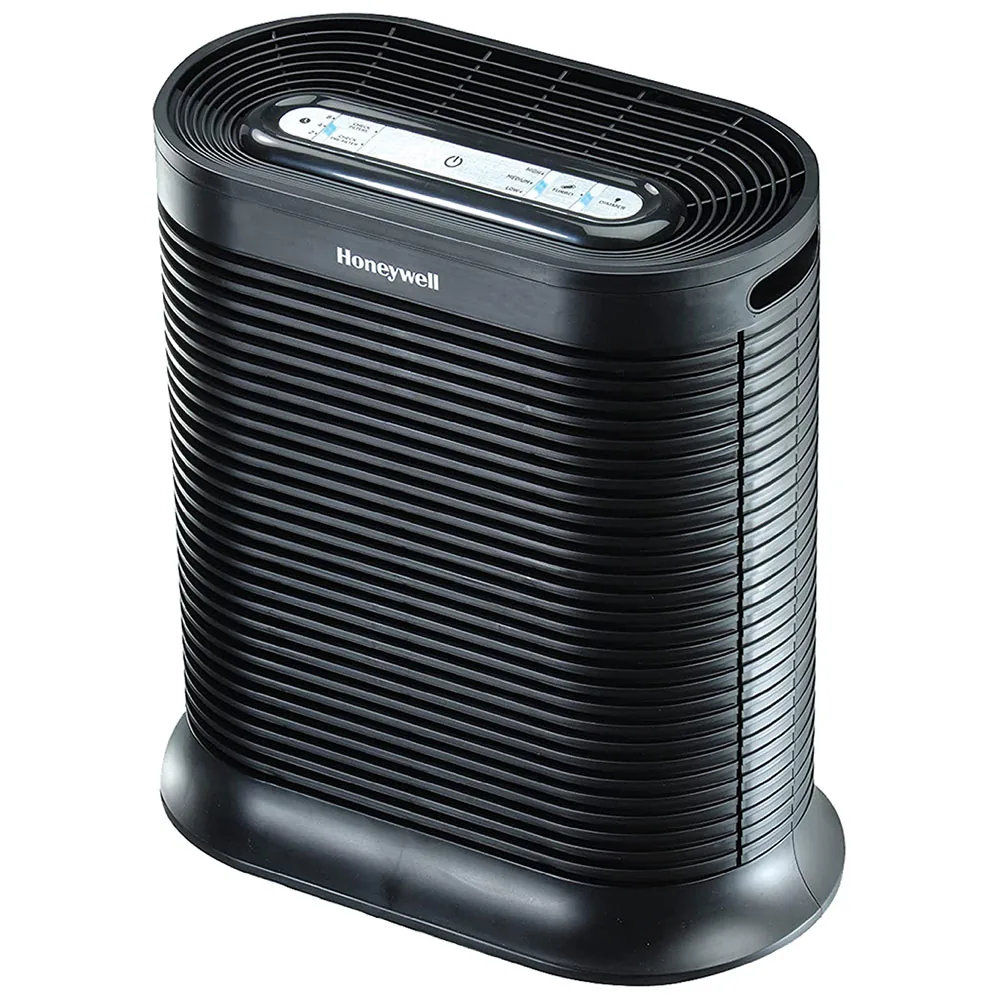
Honeywell HPA300
The HPA300 has been the big-box default for over a decade, and the core numbers are legitimately honest: Honeywell's own 465 sq ft figure IS the AHAM number (300 CFM smoke CADR x 1.55), a rare case of a brand not inflating - though Amazon's listing still tacks on a '2,250 sq ft in 1 hour' banner, which is the usual 1-air-change fiction. HouseFresh's test backs the hardware: 20 minutes to clear their smoke-filled room on Turbo, within two minutes of the fastest unit they'd tested at the time and matching purifiers near twice the price. What you give up is everything else. There's no particle sensor, no auto mode, no Wi-Fi, no remote - just four buttons and a loud fan: 44 dB at minimum (louder than most rivals' mid speeds) climbing to about 60 dB on Turbo, with an older motor design pulling 76 W. Consumer Reports has long scored it well for raw performance, and the Amazon base holds a 4.6-star average across tens of thousands of ratings. Filter upkeep is quarterly (carbon pre-filter) plus annual (three HEPA cartridges) at ~$89/yr genuine, with a thriving third-party market that halves it. If you want a proven, warrantied (5-year) workhorse and don't mind noise or babysitting speeds manually, it's still a solid buy at its frequent sub-$200 sale price.