HEPA, Ionizers, UV, PECO: What Actually Works and What's a Light Show
The air purifier industry has a physics problem: the thing that works — a good fan pushing air through a good filter — is a commodity, and commodities don't support premium pricing. So the category grows technologies with better stories: ions, plasma, photocatalysis, UV. Some are harmless garnish, one famously attracted the FTC's attention, and a few actively emit the lung irritant you bought the machine to remove. Here's the field, sorted by evidence.
Mechanical filtration: boring, victorious
True HEPA filtration is settled engineering: 99.97% capture at 0.3 microns — the hardest particle size, with both larger and smaller particles caught at even higher rates, a counterintuitive fact courtesy of Brownian motion that marketing for 'small particle' technologies hopes you don't know. Every credible health body — EPA, CDC, ASHRAE — builds indoor air guidance on mechanical filtration and ventilation, and every machine at the top of every independent test is, at its core, a fan and a HEPA filter. The differentiators that matter between them are prosaic: CADR per dollar, noise per CFM, filter economics, and sensor quality. That's the whole reveal. A brand leading its pitch with anything more exotic than 'we move a lot of air through a very good filter' is answering a question physics didn't ask.
One honest nuance: filter grade is not the lever consumers think it is. H13 'medical grade' media in a slow, leaky budget tower cleans less air than H11-grade media in a machine engineered for airflow — the system number (CADR) already integrates grade, seal, and fan, which is why it, and not the filter's letter class, is the number to shop.
Ionizers and 'plasma': the ozone problem
Ionizers charge particles so they clump and settle — onto your floor, walls, and lungs' larger-particle defenses rather than into a filter. Modest effect, cheap to add, great-sounding name (PlasmaWave, Plasmacluster, bipolar ionization), and one genuine catch: corona-discharge ionization produces ozone, a lung irritant with no safe role indoors — the thing smog alerts are about. Well-engineered implementations stay under the 50 ppb regulatory limit (California's CARB list certifies compliance, and everything sold there must pass); cheap ones historically didn't, and the Sharper Image Ionic Breeze — an ozone-emitting filterless tower that dominated 2000s mall retail until Consumer Reports measured it — remains the category's cautionary tale.
The practical guidance is simpler than the chemistry: an ionizer bundled into a good HEPA machine (Winix's PlasmaWave is the famous case) adds little and risks little, and the good brands make it switchable — air-purifier owner discussions conventional wisdom is 'buy the Winix, turn PlasmaWave off,' which costs you nothing. A machine whose primary technology is ionization, with no meaningful filter, deserves outright avoidance regardless of price. Every unit on this site carries an ionizer flag so sensitive buyers (asthma especially — ozone is a trigger) can filter accordingly.
UV, photocatalysis, and the Molekule saga
UV-C genuinely kills microbes — given intensity and dwell time, which is precisely what a purifier can't provide: air crossing a small lamp at 200 CFM gets a fraction of a second of exposure against the seconds-to-minutes germicidal doses require. Independent testing consistently finds purifier UV lamps contribute approximately nothing beyond the HEPA filter already catching microbes mechanically; the lamp adds cost, a replacement consumable, and in some designs a little ozone. Photocatalytic oxidation (PCO) reactors promise to destroy VOCs with UV-activated catalysts and in real-world implementations can generate formaldehyde as an incomplete-oxidation byproduct — trading a smell for an actual carcinogen.
Which brings us to Molekule, the category's morality play: a beautiful $800 aluminum tube built on 'PECO' photocatalysis, marketed as making HEPA obsolete — until independent reviewers measured particle performance far below $100 machines (Wirecutter's 'worst air purifier we've ever tested'), the NAD ordered ad claims pulled, the company settled a class action, and the brand traveled through bankruptcy into new ownership, still selling the same pitch. The generalizable lesson is the two-check rule for any purification technology: (1) does it publish a CADR, and (2) is there peer-reviewed, third-party evidence at consumer airflow rates — not chamber studies at the manufacturer's lab? HEPA passes both. Nothing else in the consumer market currently does. Spend accordingly, and treat 'our technology is beyond CADR' as the sales pitch it is.
Units mentioned in this guide
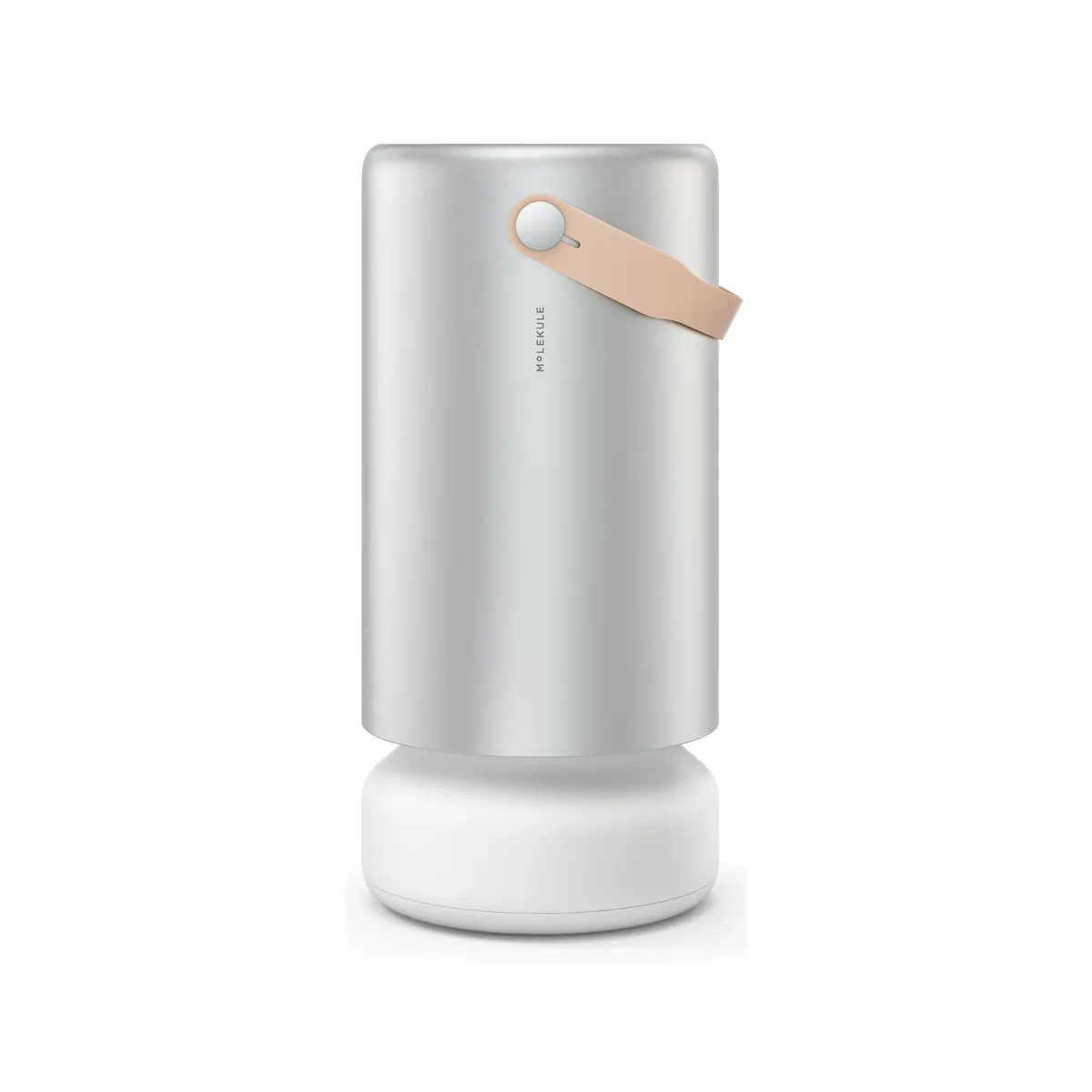
Molekule
Molekule Air Pro
No purifier requires more disclosure than this one. Molekule built a billion-dollar buzz on PECO, a photo-electrochemical process claimed to 'destroy' pollutants. Then Wirecutter named the original Molekule Air among the worst purifiers it had ever tested, Consumer Reports ranked the brand third-from-last of 48 machines, and the BBB's National Advertising Division twice ordered Molekule to discontinue core advertising claims. Class-action settlements followed, and in October 2023 the company filed Chapter 11 before relaunching under new ownership. The Air Pro itself is the most defensible product of the lineup — the Tri-Power filter added a real HEPA layer, it's FDA-cleared as a Class II device, and reviewers like TechRadar concede it filters particulates competently. But Molekule still won't submit to AHAM CADR testing; its own commissioned Intertek numbers (~234 CFM smoke) have never been independently replicated, so the 1,000 sq ft claim rests on the company's word. Meanwhile you pay $1,015 up front and ~$350 a year for proprietary 6-month filters. An AirFanta 3Pro delivers verified clean air for a fifth of the purchase price and a tenth of the running cost. The design is gorgeous; the value proposition is not.
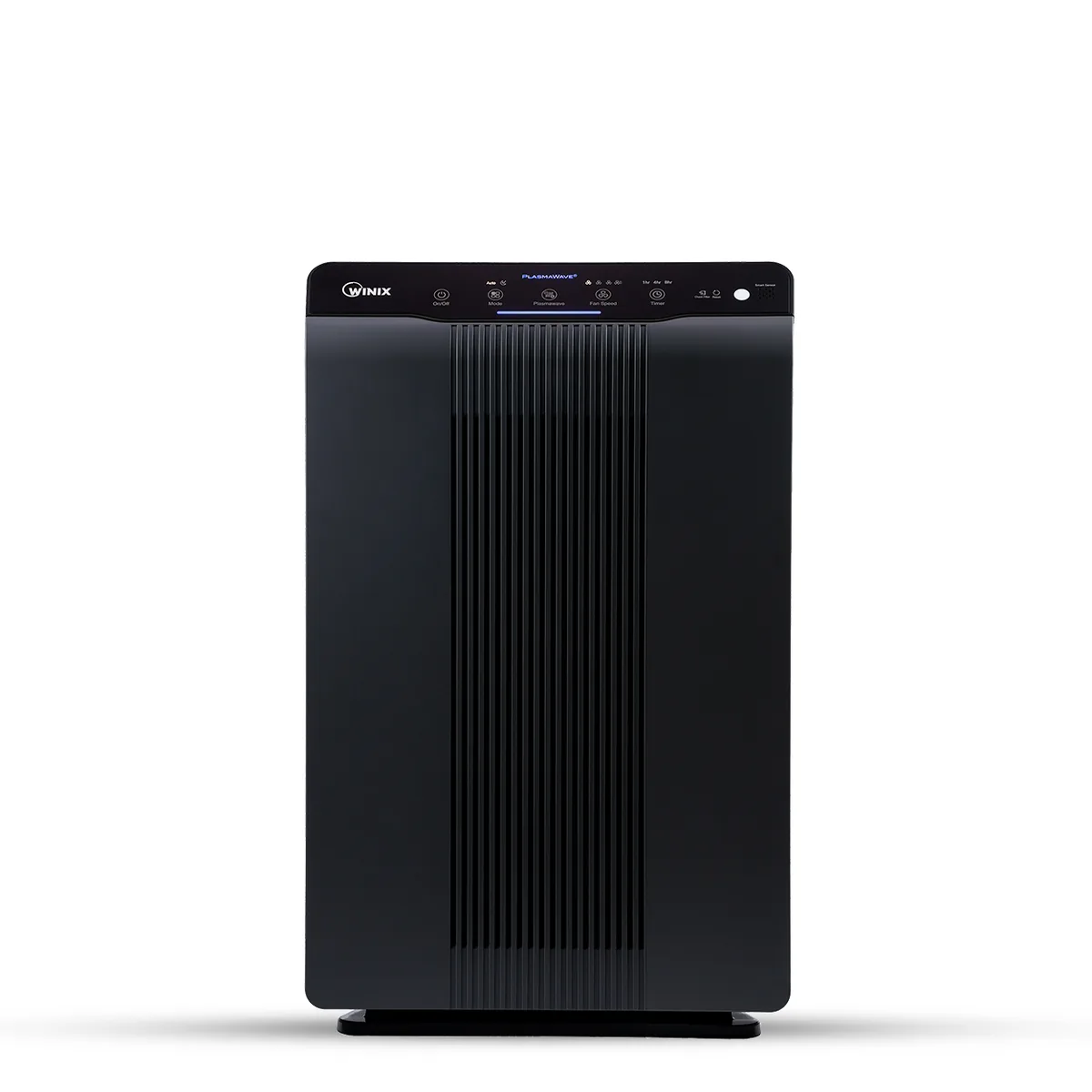
Winix
Winix 5500-2
The 5500-2 is air-purifier owner discussions' undisputed value king — the answer to roughly every third 'what should I buy' thread for years. Its AHAM-verified 232 CFM smoke CADR matches the Coway Mighty, but it adds a genuinely useful washable AOC carbon filter (real pelletized-carbon odor removal, not a dusted sheet) and one of the best auto modes at any price, backed by HouseFresh testing that clocked it clearing their test chamber faster than machines costing $100 more. Now the asterisk: Winix confirmed in 2025 that the 5500-2 and 5300-2 are discontinued in North America once inventory sells through, replaced by the Winix 5510. Filters will keep shipping until 2032, so buying one today is still safe, and street prices around $160 (often $130 on sale) remain the class's best CADR-per-dollar. Compared with the Coway you give up a year of warranty and a few dB at the top end (65 dB turbo is loud), and gain better odor handling and the superior sensor. PlasmaWave is Winix's plasma ionizer — it's switchable, and most owners run with it off. If you see it on clearance, this is still the smart-money buy of the entire mid-size class.
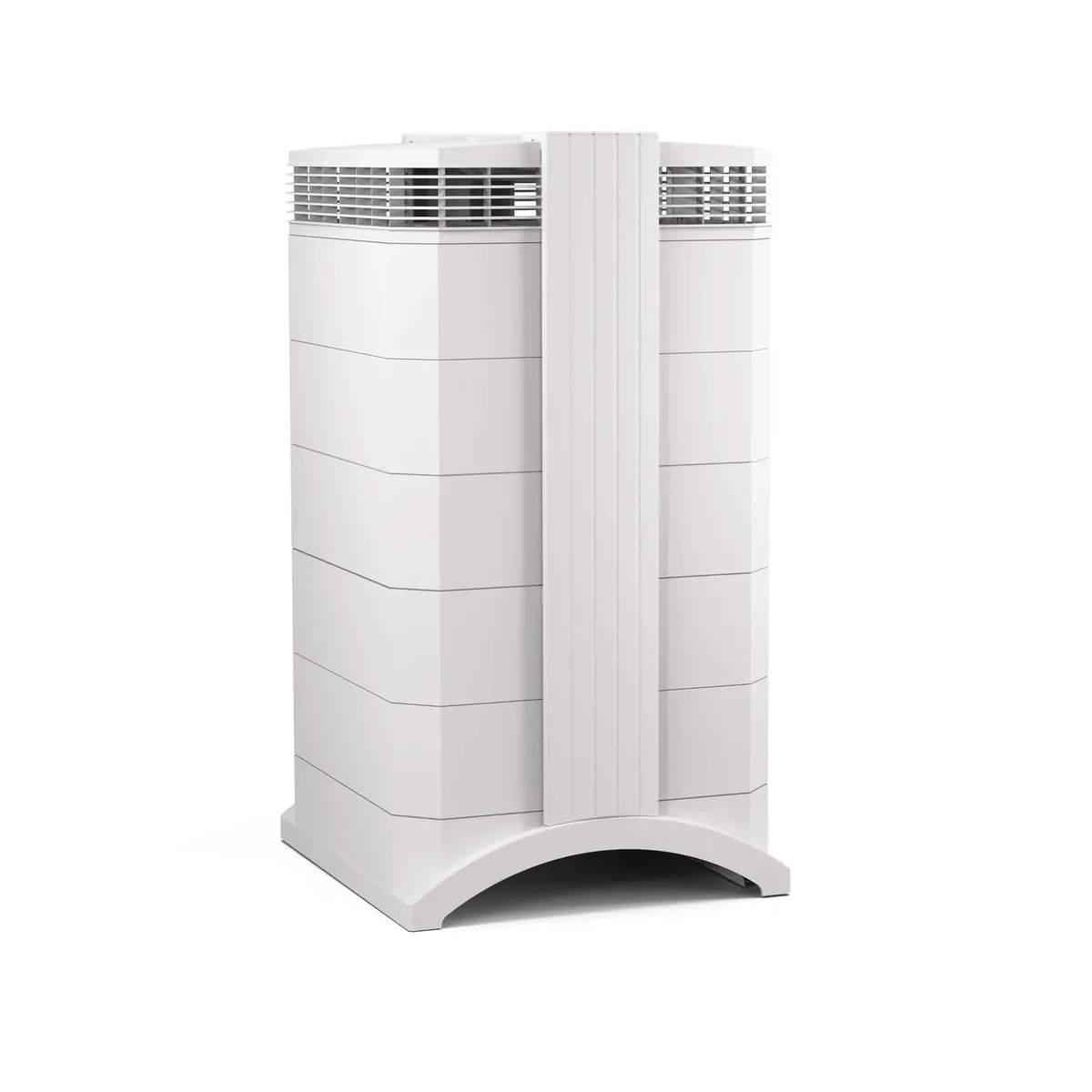
The HealthPro Plus is the machine allergists have name-dropped for two decades, now sold as the WiFi-equipped XE version at $1,199. The Swiss-designed, German-built tower is genuinely excellent at what it claims: a fully sealed system with HyperHEPA filtration independently tested down to 0.003 microns, plus five pounds of gas-phase media in the V5-Cell. HouseFresh, no fan of overpriced purifiers, still calls it the best pure HEPA-plus-carbon machine on the market. But the value math is brutal. IQAir refuses to publish AHAM CADR — HouseFresh measured 213 CFM of PM1 CADR at top speed, which works out to roughly 330 sq ft at a real 4.8 ACH, not the 1,125 sq ft on the box. Worse, its sub-45 dBA CADR is just 86 CFM: run it at livable volume and you forfeit about 70% of its capacity. An AirFanta 3Pro delivers more measured clean air for about a fifth of the price, and running costs here exceed $400 a year. You are paying for build quality, gas filtration depth, a 10-year warranty, and the medical pedigree — not for CADR-per-dollar.