Molekule
Molekule Air Pro
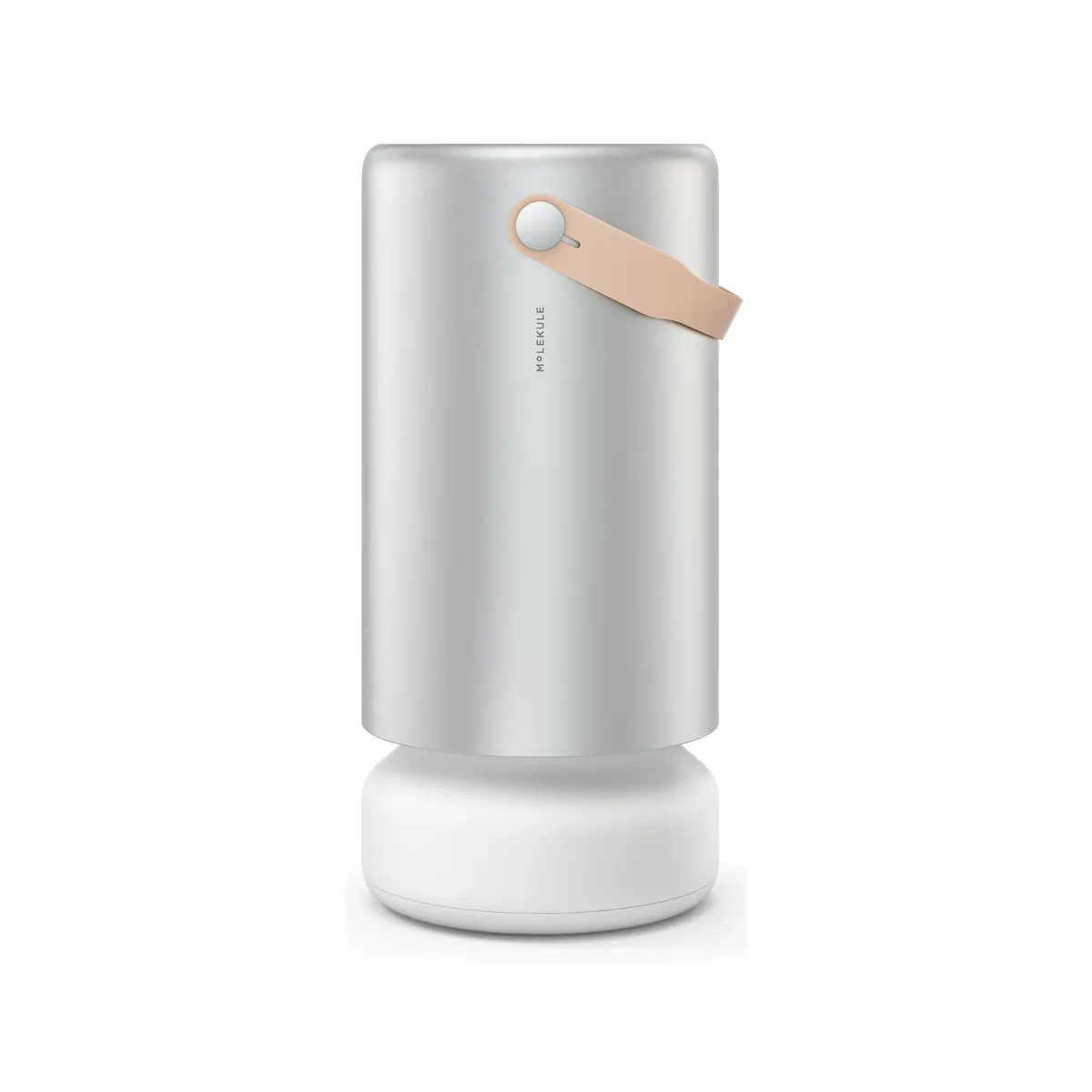
No purifier requires more disclosure than this one. Molekule built a billion-dollar buzz on PECO, a photo-electrochemical process claimed to 'destroy' pollutants. Then Wirecutter named the original Molekule Air among the worst purifiers it had ever tested, Consumer Reports ranked the brand third-from-last of 48 machines, and the BBB's National Advertising Division twice ordered Molekule to discontinue core advertising claims. Class-action settlements followed, and in October 2023 the company filed Chapter 11 before relaunching under new ownership. The Air Pro itself is the most defensible product of the lineup — the Tri-Power filter added a real HEPA layer, it's FDA-cleared as a Class II device, and reviewers like TechRadar concede it filters particulates competently. But Molekule still won't submit to AHAM CADR testing; its own commissioned Intertek numbers (~234 CFM smoke) have never been independently replicated, so the 1,000 sq ft claim rests on the company's word. Meanwhile you pay $1,015 up front and ~$350 a year for proprietary 6-month filters. An AirFanta 3Pro delivers verified clean air for a fifth of the purchase price and a tenth of the running cost. The design is gorgeous; the value proposition is not.
Specifications
Highlights
Pros
- ✓Striking, furniture-grade design with a leather handle — nothing else looks like it
- ✓Tri-Power filter's HEPA + carbon layers filter particulates competently in recent third-party reviews
- ✓FDA Class II clearance for destruction of viruses and bacteria
- ✓Effective auto mode with particle and VOC sensing via app
- ✓No ionizer; independent tests found no ozone generation
- ✓Relatively portable at 23 lbs with a carry handle
Cons
- ✗Refuses AHAM CADR certification; company-commissioned numbers never independently replicated
- ✗~$350/year in proprietary filters with a strong subscription push — highest running cost per sq ft here
- ✗Brand history: NAD rulings against ad claims, class actions, worst-tier Consumer Reports ranking, 2023 bankruptcy
- ✗Weak owner sentiment — poor for a $1,000 device
- ✗PECO's real-world benefit over plain carbon remains unproven at meaningful airflow
- ✗2-year warranty is thin for the price, and filters are single-source
Common Questions
Does PECO actually work, given Molekule's history?
What will filters cost me per year?
What room size can it actually handle?
Does it produce ozone?
Who should actually buy the Air Pro?
Compare the Molekule Air Pro
Related air purifiers
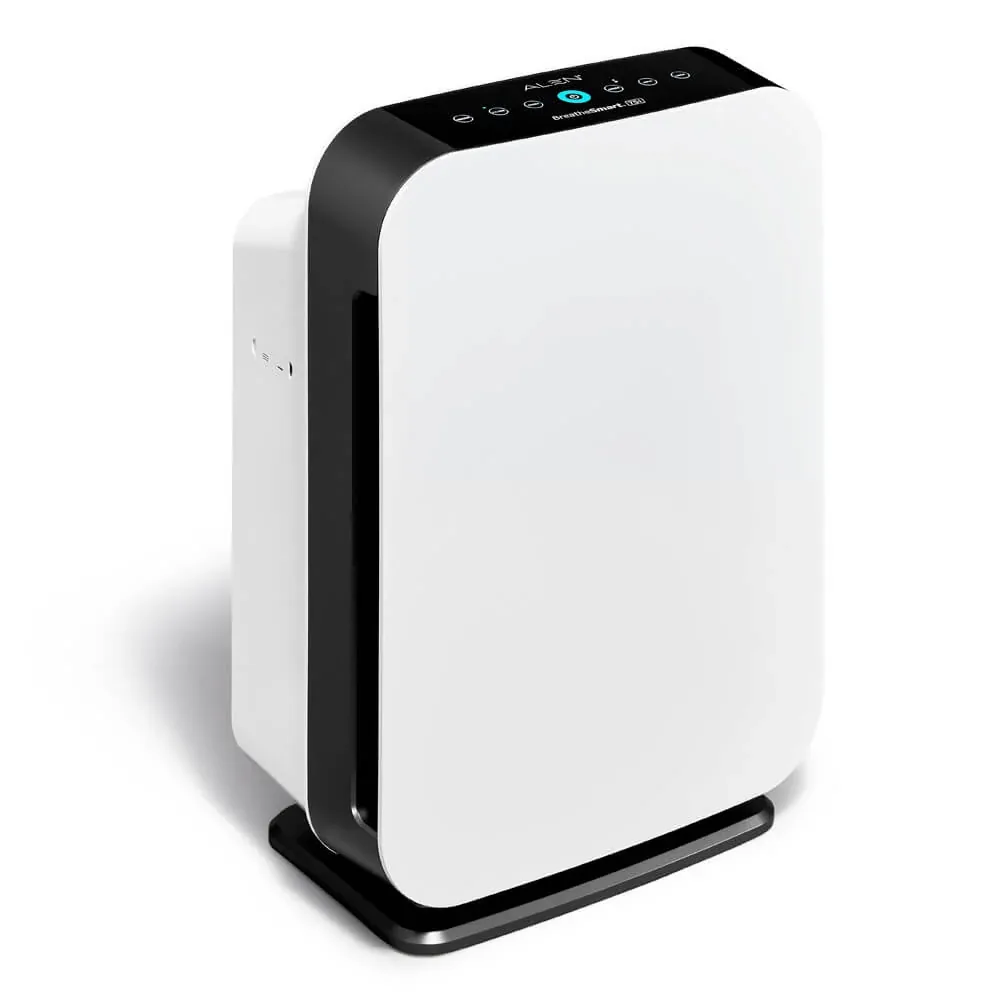
Unlike its little brother the 45i, the 75i has the airflow to back up at least some of Alen's swagger: HouseFresh measured a 333 CFM PM1 CADR at top speed and an 18-minute clear of their smoke test chamber - genuinely elite performance - while the AHAM-certified figures land around 350 CFM. That makes the honest coverage roughly 543 sq ft at the 4.8 ACH standard. Alen's marketing says 1,300 sq ft, which assumes a lazy 2 air changes per hour; divide accordingly. What you're really paying $799 for is the combination of that airflow with Alen's acoustic tuning: 36.5 dBA minimum measured, and at its 44.7 dBA speed 2 it still moves ~164 CFM, quieter at comparable output than an EverestAir or Rabbit Air A3. Add the laser sensor, solid app, switchable low-ozone ionizer, designer panels, and the lifetime warranty - conditional, as always with Alen, on registration and exclusive genuine-filter use. The obvious problem is value: a $250 Levoit Core 600S delivers more raw CADR, and even two of them cost less than one 75i. HouseFresh's verdict lands where air-purifier owner discussions do: it's a legitimate premium machine best justified when you need serious carbon (the HeavySmoke filter option) and near-silent large-room cleaning, not when you're shopping CADR per dollar. No major retailer shows a large enough verified rating base, so we list no rating.
Rabbit Air
Rabbit Air A3
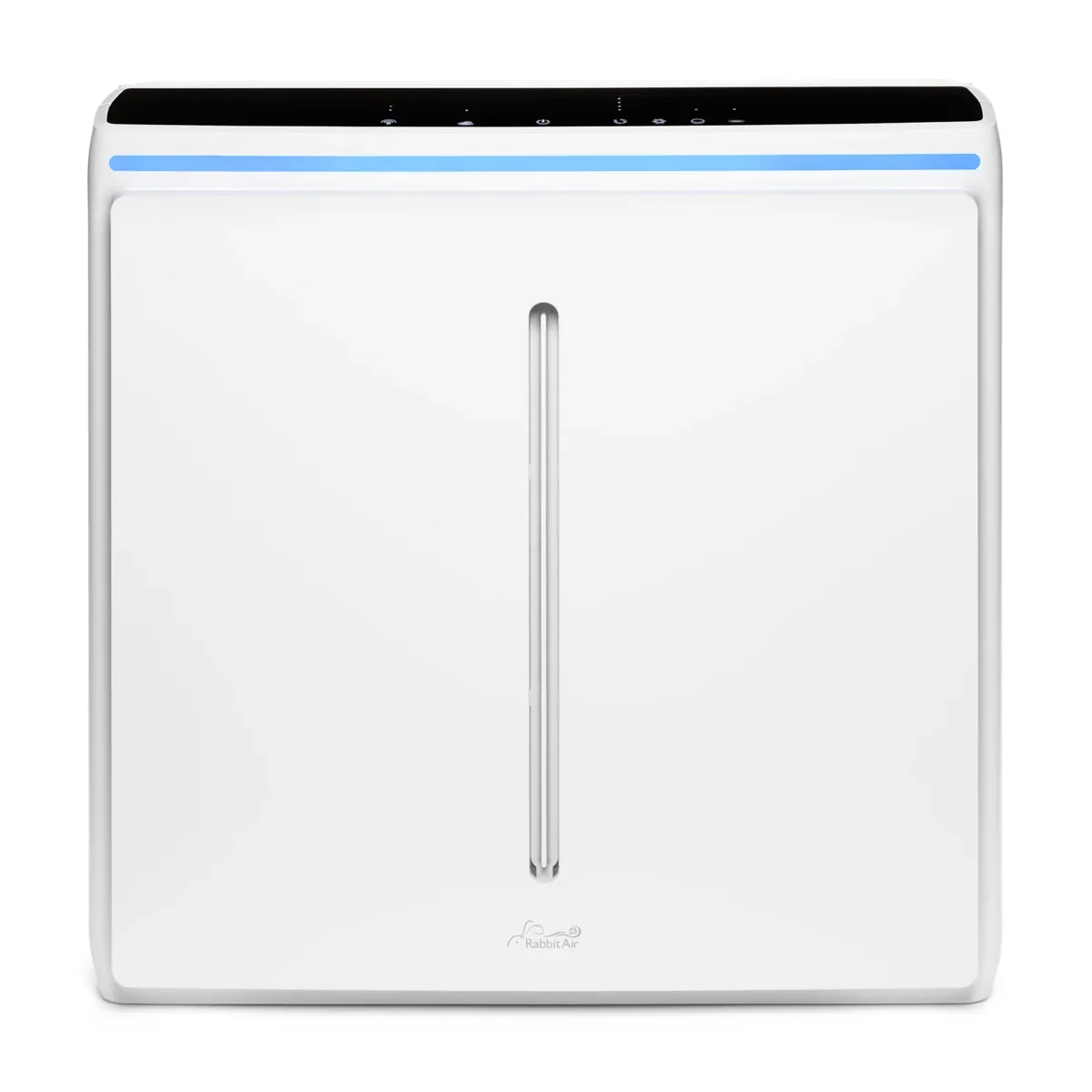
The A3 is the purifier you buy when you refuse to look at a plastic drum for the next five years: a wall-mountable slab with swappable designer front panels, a 20 dB whisper floor, and six filtration stages including a customizable middle filter you choose by problem (germs, pets, odors, or VOCs). The honest math is less romantic. Smoke CADR is 257 CFM - HouseFresh measured 249 CFM PM1 at top speed, so the spec is truthful - which covers about 398 sq ft at the 4.8 ACH standard. Rabbit Air's 1,070 sq ft claim assumes 2 air changes per hour, and their own fine print concedes ~535 sq ft for allergy sufferers. That means a $250 Levoit Core 600S moves 60% more air than this $750 machine; in air-purifier owner discussions the A3 is the canonical example of paying for design and silence rather than airflow. To its credit, everything it does, it does beautifully: the sound signature is arguably the best in the industry, the laser sensor and app are polished, the switchable ion stage measures a negligible 0.002 ppm ozone, it's Energy Star certified at 60 W max, and the 5-year warranty has no filter-subscription strings - a refreshing contrast with Alen and Medify. Filter sets are ~$115/yr with honest usage-based tracking. Verified Amazon average sits at 4.7 stars.
AirDoctor
AirDoctor 3000
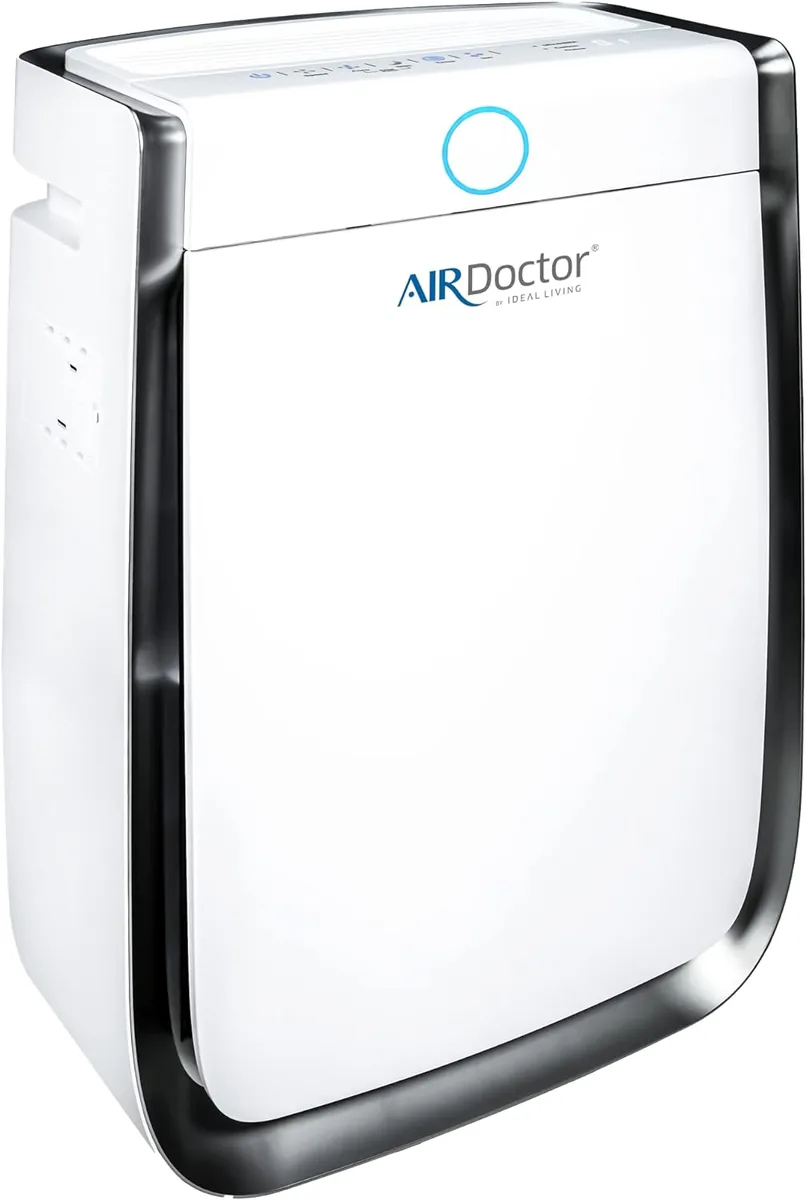
AirDoctor is the purifier of podcast ads and wellness-influencer affiliate links, and its marketing earns the skepticism: 'UltraHEPA captures particles 100x smaller than HEPA' is mostly a framing trick (ordinary HEPA also captures ultrafines via diffusion), the headline '1,274 sq ft' assumes just 2 air changes per hour, and the $629 list price exists mainly to be perpetually crossed out. Here's the fair part, though: the hardware checks out. HouseFresh independently verified the published CADR (336 CFM smoke), clearing their smoke test room in 14 minutes with the ionizer on and 16 without - a full minute faster than the Levoit Core 600S - and the honest AHAM coverage of 521 sq ft is genuinely large-room class. The dual-stage design also carries real pelletized carbon, not a token mesh, so it out-filters most rivals on VOCs and odors. The problem is what $519 doesn't buy: no Wi-Fi or app (that's the 3000i, $200 more), no Energy Star listing at a hefty 93 W, a loud 64 dB top speed, a bare 1-year warranty, and $157/yr in genuine filters. No major retailer shows a verifiable rating base since AirDoctor sells mostly direct. Verdict: a legitimately strong purifier wearing an overpriced infomercial costume - buy it on a real discount or buy the 600S.
Levoit
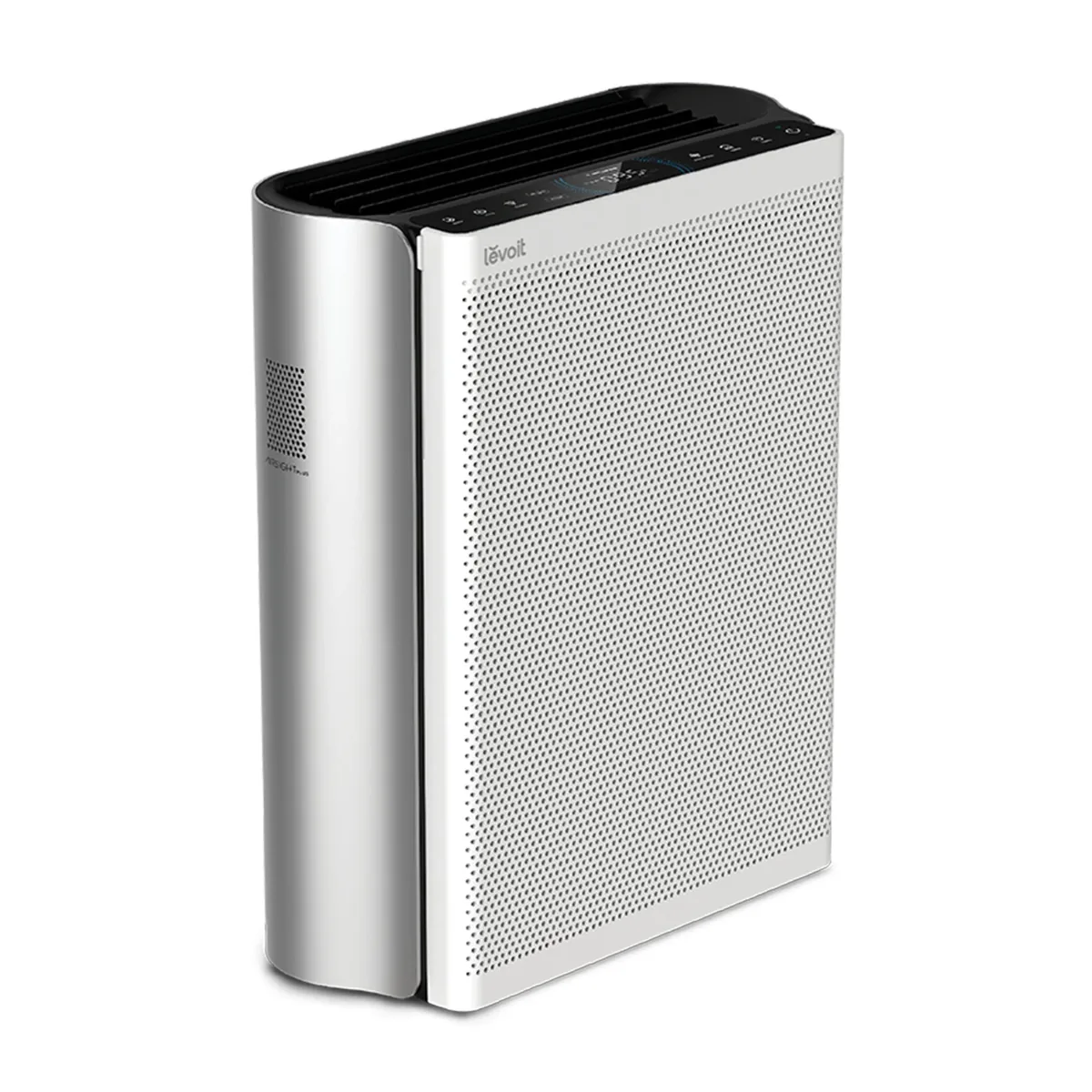
Levoit EverestAir
The EverestAir is Levoit's flagship, and HouseFresh's independent testing backs the hardware: 360 CFM smoke CADR from a side-intake tower that cleared their test room in 16 minutes, making it one of the fastest purifiers they'd tested. The design is genuinely premium - a tilted control deck, magnetic front panel, washable pre-filter, and a 3-channel laser sensor that displays PM1.0, PM2.5, and PM10 separately rather than a single vague number. The catch is the marketing math: Levoit advertises 2,790 sq ft, but that's at a meaningless 1 air change per hour. At the AHAM standard of ~4.8 changes per hour, honest coverage is 558 sq ft - still excellent, but a fifth of the claim. The bigger problem is price. At the $499 MSRP it competes with the Coway Airmega 400 and Blueair 211i Max; meanwhile Levoit's own Core 600S delivers more CADR (410 vs 360) for roughly half the money, trading only the nicer sensor suite, lower sleep-mode noise floor, and looks. The EverestAir is frequently discounted to $300-350, where it becomes an easy recommendation. At full price, air-purifier owner discussions consensus is that you're paying a steep premium for aesthetics over airflow.
Coway
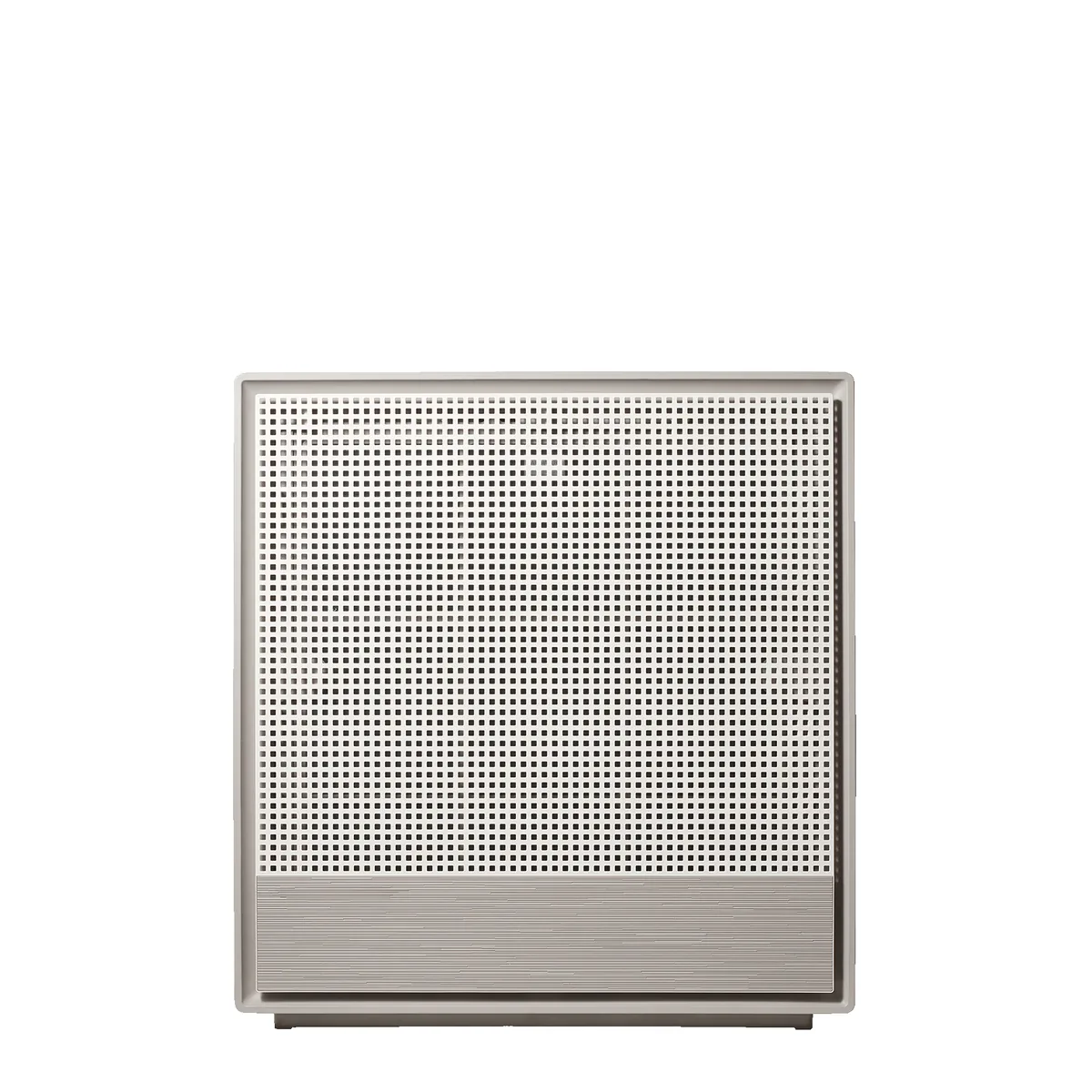
Coway Airmega 250
The Airmega 250 is Coway trading on its Mighty reputation in a wider, furniture-styled cabinet, and it's a case study in reading specs carefully. Coway advertises 930 sq ft, but the smoke CADR is 249 CFM - honest AHAM coverage is 386 sq ft, so the marketing figure assumes a leisurely 2 air changes per hour. Within that real footprint it's a genuinely refined machine: HouseFresh's review of the 250S praised the build and the smooth, quiet operation (22 dB on low), and the fabric-look design reads more like a soundbar than an appliance. The three-stage system pairs a washable mesh pre-filter with Coway's Max2 combined carbon/HEPA cartridge, and the particle sensor drives a responsive auto mode with a colored air-quality ring. The problem is price-to-airflow: at its common $300-400 street price you're paying Airmega 400 money for Mighty-class CADR, and a Levoit Core 600S delivers 65% more airflow for less. You buy the 250 for the quieter sound signature, the 5-year warranty, and the living-room looks, not for specs. Skip the Wi-Fi-less base model's premium unless it's on sale; owner regulars mostly point buyers to the 400 or a Levoit instead.
Mila
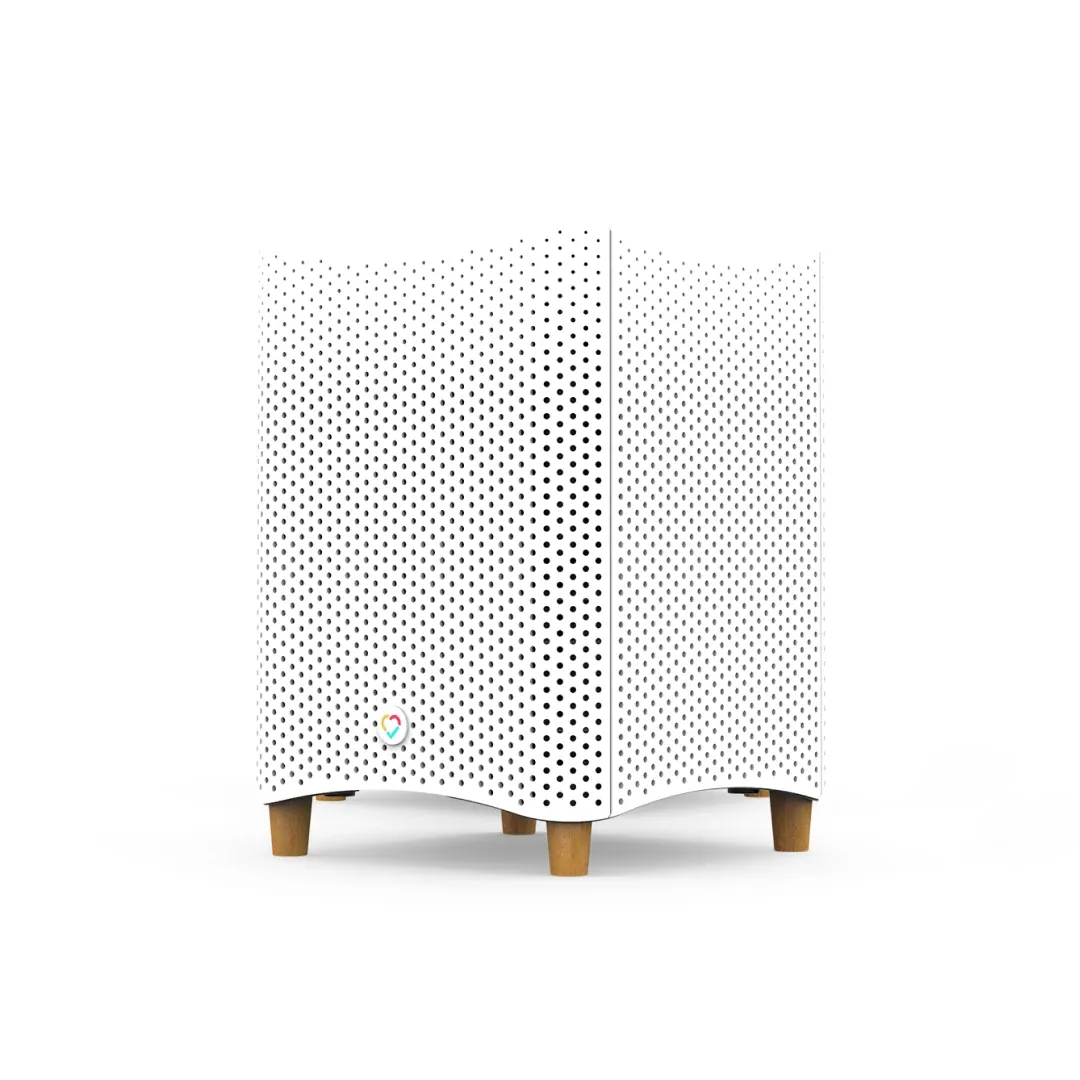
Mila Air 3
Mila is the purifier for people who wish their air cleaner were a Nest product: eight onboard sensors (PM, VOC, CO2, CO, humidity), Apple HomeKit/Alexa/Google support, and an 'Automagic' mode with genuinely useful sub-modes like Sleep and Housekeeping. The Air 3 (2024) fixed the original's two real flaws — it's about 16% quieter at full tilt and moves more air, with a claimed 460 m3/h (~263 CFM) CADR. Credit where due: Mila publishes per-filter CADR numbers showing how its carbon-heavy options gut airflow — the max-filtration Overreactor drops to ~150 CFM, cutting honest coverage from ~400 sq ft to ~230. That transparency is rare; the trade-off is real. The scrutiny Mila earns is on the business model: the $50 hardware discount and the 5-year warranty are both tied to a filter auto-refill subscription, and at $118-198/year those 6-month filters cost more than most rivals'. HouseFresh measured the original Mila at just 140 CFM smoke CADR and noted a Levoit Core 400S out-cleaned it at half the price — the Air 3 narrows but doesn't close that gap. Air-purifier owner discussions' verdict holds: the smartest purifier interface on the market, bolted to mid-pack airflow at a premium price.