Purifier, Humidifier, or Dehumidifier — and What None of Them Do
The 'air quality' aisle sells three machines that share a look and nothing else: a purifier removes particles and (with carbon) some gases, a humidifier adds water vapor, and a dehumidifier removes it. Buying the wrong one is the quietest money-waster in the category — and the combo units that promise two jobs in one box usually do both worse. Here's the sorting logic, plus the questions that always ride along: nursery safety, and the things no box on this aisle can fix.
Match the machine to the symptom
| Your symptom | The machine | Why |
|---|---|---|
| Allergies, dust haze, smoke, pet dander | Air purifier | Particles — HEPA's whole job |
| Dry winter air: static, cracked lips, nosebleeds | Humidifier | You need water vapor added, nothing filtered |
| Damp basement, condensation, musty smell, mold | Dehumidifier | Mold is a moisture problem — dry it below ~50% RH |
| Musty smell that persists after drying | Purifier with real carbon | Residual spores and MVOCs, after the moisture fix |
| Odors: cooking, pets, smoke smell | Purifier with carbon mass | Gases need adsorption; thin carbon layers are theater |
| Stuffy room, headaches in a closed office | Ventilation — a window, an HRV | That's CO2; see the last section |
The two that get cross-shopped most — purifier and humidifier — have literally opposite relationships with the same annoyances. Dry air makes dust more static-charged and airborne; humid air makes dust settle but feeds mites and mold. The forums' winter-bedroom consensus runs both: humidifier to ~40% RH for comfort, purifier for the particles, each doing its own job. What you should not do is buy either machine hoping it does the other's work — a humidifier cleans nothing, and a purifier moves humidity not one percent in either direction.
Combo units: two jobs, one compromised box
The purifier-plus-humidifier and purifier-plus-fan-plus-heater combos sell a tidy story — one footprint, one purchase — and the testing consistently finds the same tradeoff: you pay flagship money for a mediocre purifier welded to a mediocre second appliance. The purifier half usually posts modest airflow (the design constraints of the combo throttle it), the humidifier half holds a day's water where a dedicated unit holds three, and when one half fails or needs cleaning, both are down. Dyson's combos are the famous case — beautiful, genuinely nice fans, and per independent measurement, less particle cleaning per dollar than machines at a third the price — but the pattern holds across brands.
The honest exception is space: in a dorm or studio where two boxes genuinely won't fit, a combo beats owning only one function. Everywhere else, two single-purpose machines cost less, each does its job properly, and you can size — and replace — them independently. The combo's real product is the smaller shopping list, and it charges accordingly.
The nursery question, answered plainly
Running a purifier in a baby's room is fine and often helpful — nurseries collect dander, dust, and whatever the HVAC delivers, and a quiet machine doubles as white noise every sleep-training thread endorses. The anxiety underneath the question is ozone, and the answer has a clean rule: pure mechanical filtration (fan plus HEPA plus carbon) produces zero ozone, full stop. The units to scrutinize are the ones with ionizers, 'plasma' features, or UV — well-engineered versions stay under regulatory limits (California's CARB certification is the check), but 'under the limit' is a strange thing to optimize for in a nursery when dozens of excellent machines emit none at all. Buy a no-ionizer unit or one whose ionizer switches off, run it continuously rather than on a schedule (steady white noise beats cycling), keep it out of crib-cord reach, and put the display in night mode — the checklist ends there.
What none of these machines do
Radon: a radioactive gas from the soil, and no consumer air machine — purifier, ionizer, anything — meaningfully reduces it. Radon needs a $15 test kit and, if elevated, a mitigation system (sub-slab depressurization, a few hundred to a couple thousand dollars, permanent fix). Any purifier marketing that whispers about radon is selling you the wrong physics. CO2: the stuffy-room, afternoon-headache gas is exhaled breath accumulating in a closed space, and filtration recirculates it untouched — the fix is outdoor air, whether a cracked window, an ERV/HRV, or just opening the office door. A CO2 monitor is the cheap way to see it.
And the windows question that follows: run the purifier with windows closed for particles (smoke season especially — you're defending a sealed envelope), but don't let 'closed for the purifier' override ventilation entirely. The practical rhythm most owners land on: windows open when outdoor air is clean and the room feels stale, closed when pollen or smoke is up, purifier running either way. Air quality is particles AND humidity AND fresh air; the boxes on this aisle each handle exactly one of the three.
Units mentioned in this guide
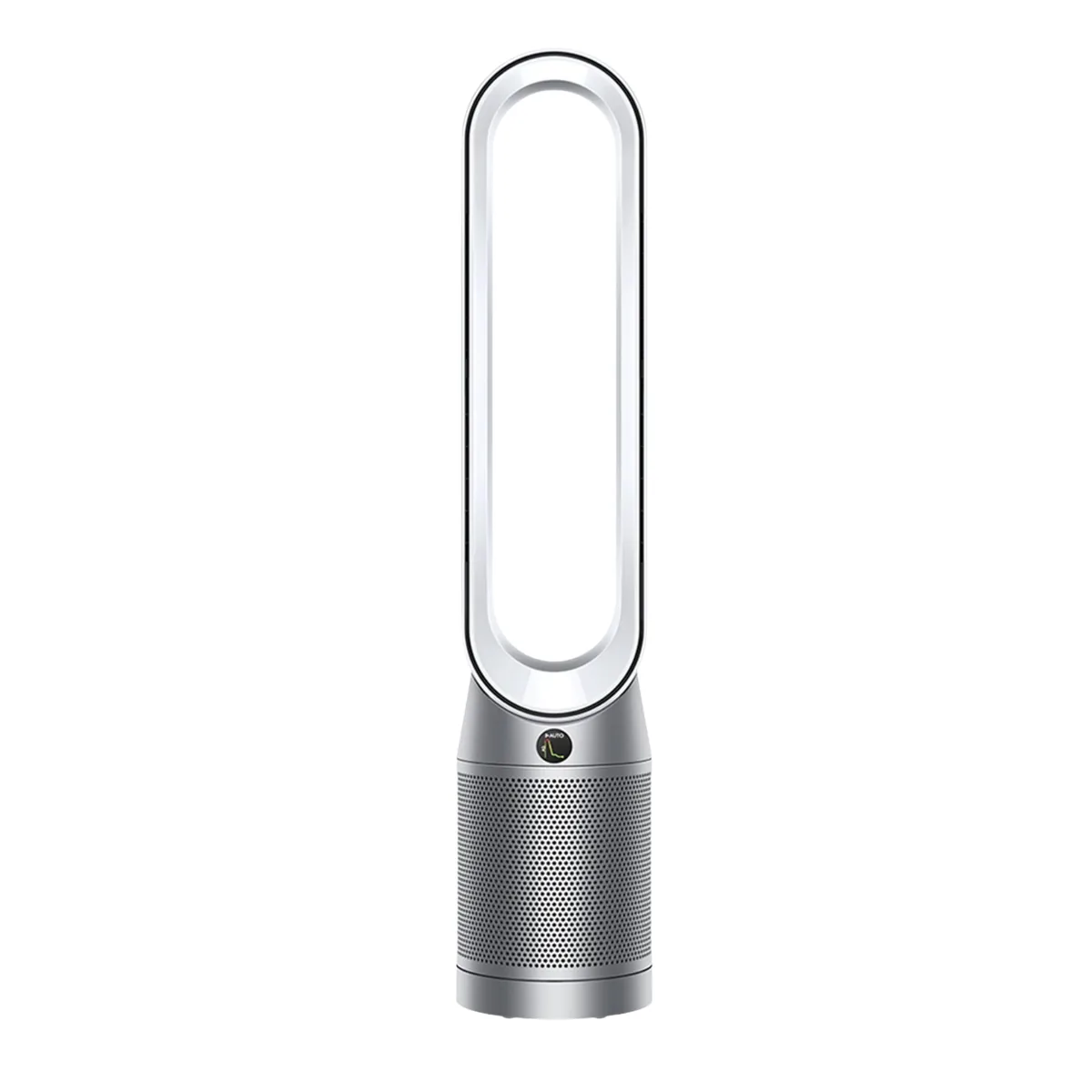
The TP07 is a beautifully engineered bladeless fan with a purifier attached — and that order matters. Dyson famously refuses to publish CADR, calling the metric unrepresentative; independent testing shows why. HouseFresh measured just 94 CFM of PM1 CADR at top speed — their 728 cu ft test room took 62 minutes to clear, and they concluded it's 'only as good at removing tiny particles as a $99 air purifier.' At real 4.8 ACH that's roughly 145 sq ft of honest coverage from a $550-650 machine (Lowe's own listing quietly discloses 99 sq ft). Air-purifier owner discussions treat Dyson as a running punchline for exactly this reason. What you do get: a genuinely sealed HEPA H13 system, a superb oscillating fan for summer, formaldehyde-free real-time air quality display, an excellent app, and a quiet 28 dB night mode. The filtration that occurs is high quality — there's just not much air moving through it. As a fan that also purifies a bedroom, it's defensible if you'd buy a $300 Dyson fan anyway. As an air purifier, three AirFanta 3Pros out-clean it for the same money — combined.
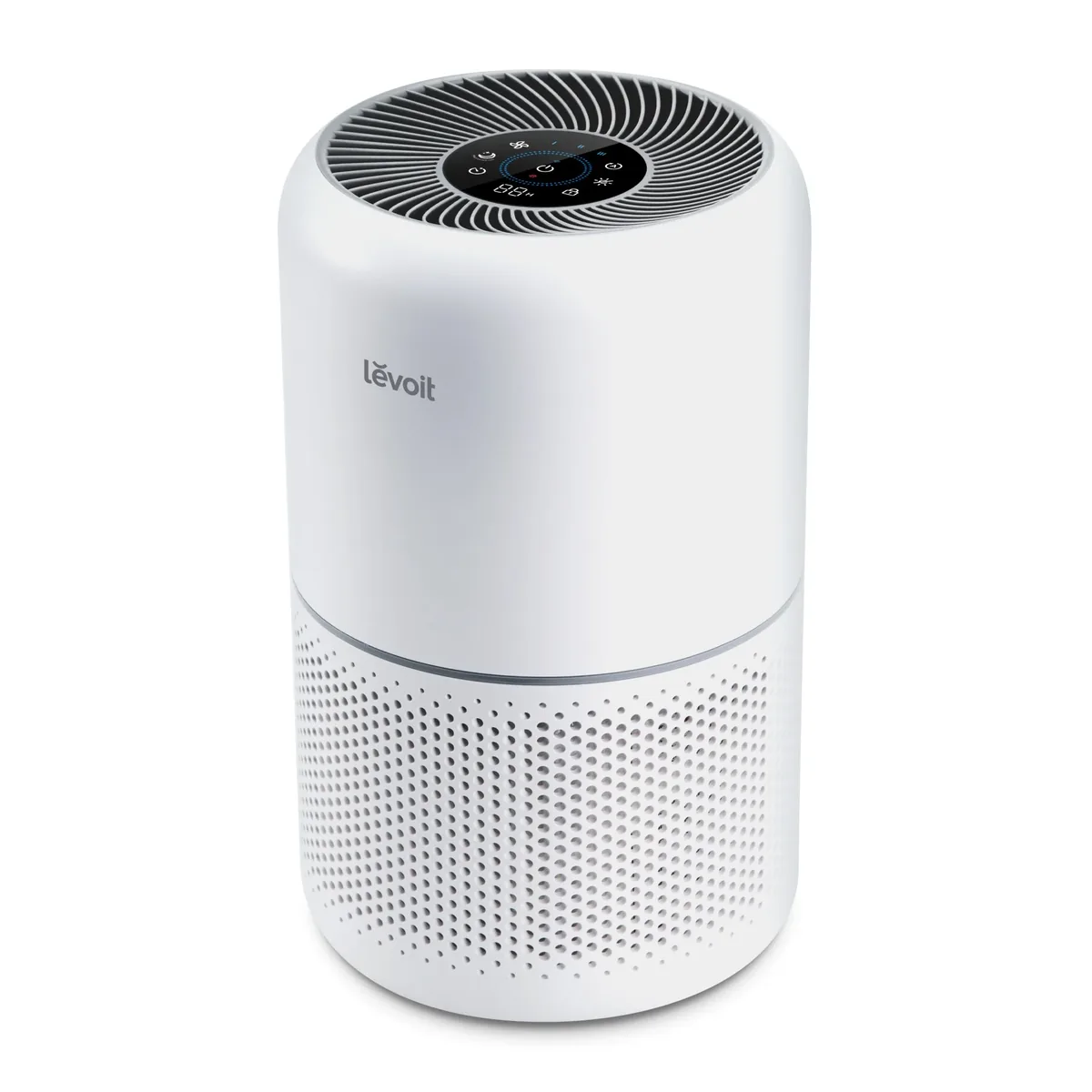
Levoit
Levoit Core 300S
The Core 300S is the smart version of the best-selling air purifier in America, and it earns the throne on value rather than raw power. AHAM-verified 141 CFM smoke CADR from a $110, six-pound cylinder is genuinely good, and HouseFresh's independent testing cleared their test room in 45 minutes — quicker than most rivals at this price. The auto mode is the real upgrade over the base Core 300: the PM2.5 sensor kicks the fan up when you're cooking or the dog shakes off, then drops back to a 22 dB sleep mode you truly cannot hear. The catch is the marketing math — Levoit's '1,095 sq ft' claim is a one-air-change-per-hour fantasy; honest coverage is about 219 sq ft. Air-purifier owner discussions generally recommend it for bedrooms and offices but points buyers to the Vital 100S or Winix 5500-2 for living rooms. Owner gripes are consistent: speed 3 is loud enough (about 50 dB) that most people never use it, the VeSync app nags about filter life on a timer rather than actual usage, and genuine filters at $26-40 mean maintenance can hit half the purchase price annually. Still the default recommendation for a first purifier, and it's earned that.
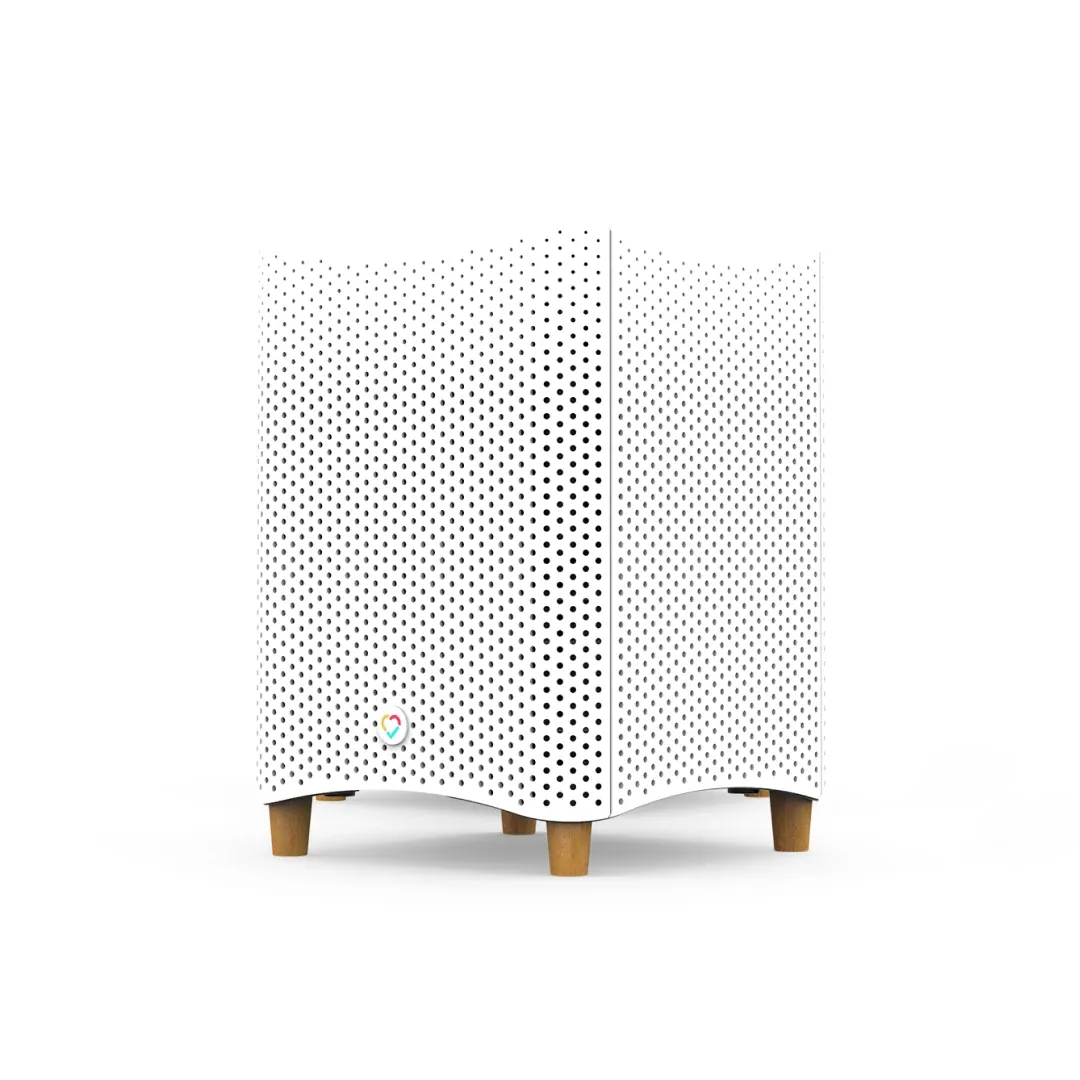
Mila
Mila Air 3
Mila is the purifier for people who wish their air cleaner were a Nest product: eight onboard sensors (PM, VOC, CO2, CO, humidity), Apple HomeKit/Alexa/Google support, and an 'Automagic' mode with genuinely useful sub-modes like Sleep and Housekeeping. The Air 3 (2024) fixed the original's two real flaws — it's about 16% quieter at full tilt and moves more air, with a claimed 460 m3/h (~263 CFM) CADR. Credit where due: Mila publishes per-filter CADR numbers showing how its carbon-heavy options gut airflow — the max-filtration Overreactor drops to ~150 CFM, cutting honest coverage from ~400 sq ft to ~230. That transparency is rare; the trade-off is real. The scrutiny Mila earns is on the business model: the $50 hardware discount and the 5-year warranty are both tied to a filter auto-refill subscription, and at $118-198/year those 6-month filters cost more than most rivals'. HouseFresh measured the original Mila at just 140 CFM smoke CADR and noted a Levoit Core 400S out-cleaned it at half the price — the Air 3 narrows but doesn't close that gap. Air-purifier owner discussions' verdict holds: the smartest purifier interface on the market, bolted to mid-pack airflow at a premium price.