Dyson
Dyson Purifier Cool TP07
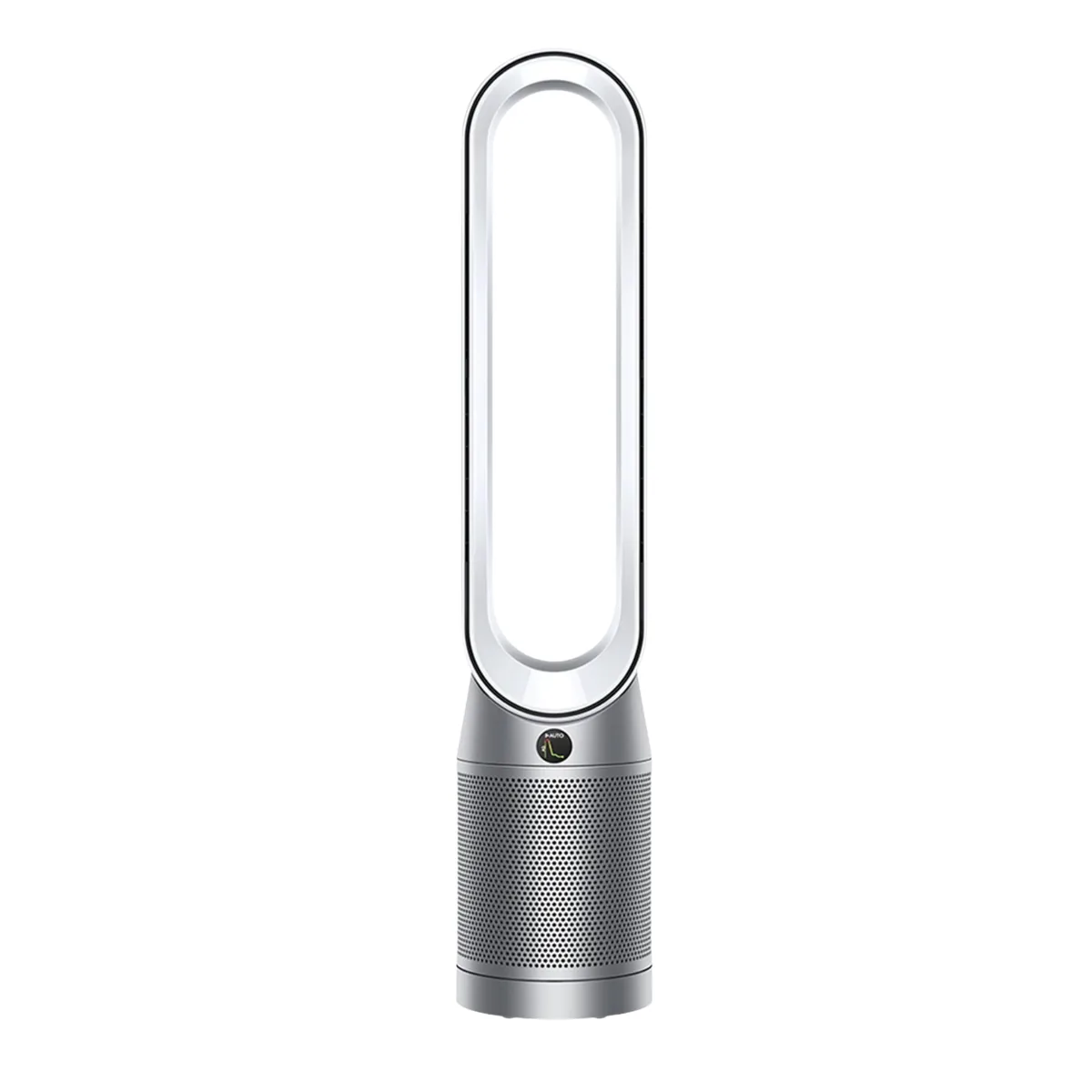
The TP07 is a beautifully engineered bladeless fan with a purifier attached — and that order matters. Dyson famously refuses to publish CADR, calling the metric unrepresentative; independent testing shows why. HouseFresh measured just 94 CFM of PM1 CADR at top speed — their 728 cu ft test room took 62 minutes to clear, and they concluded it's 'only as good at removing tiny particles as a $99 air purifier.' At real 4.8 ACH that's roughly 145 sq ft of honest coverage from a $550-650 machine (Lowe's own listing quietly discloses 99 sq ft). Air-purifier owner discussions treat Dyson as a running punchline for exactly this reason. What you do get: a genuinely sealed HEPA H13 system, a superb oscillating fan for summer, formaldehyde-free real-time air quality display, an excellent app, and a quiet 28 dB night mode. The filtration that occurs is high quality — there's just not much air moving through it. As a fan that also purifies a bedroom, it's defensible if you'd buy a $300 Dyson fan anyway. As an air purifier, three AirFanta 3Pros out-clean it for the same money — combined.
Specifications
Highlights
Pros
- ✓Excellent oscillating fan — genuinely useful summer cooling, unlike box purifiers
- ✓Sealed HEPA H13 + carbon filtration with no bypass leakage
- ✓Very quiet at low speeds (28 dB night mode) and only ~29W max power draw
- ✓Slick LCD + app air quality reporting with historical data
- ✓Cheap to run: ~$80/year genuine filters, ~$44/year electricity
- ✓Light (11 lbs), slim tower footprint, magnetized remote
Cons
- ✗Dyson refuses to publish CADR — HouseFresh measured a dismal 94 CFM PM1 at top speed
- ✗$99-purifier air cleaning at a $550+ price; worst CADR-per-dollar in the entire market
- ✗Honest coverage ~145 sq ft; the 'whole room' marketing is doing heavy lifting
- ✗Fan mode in winter is a liability — purifying blasts cold air at you
- ✗2-year warranty is short for a premium-priced device
Common Questions
Is the TP07 actually a good air purifier?
What room size should I use it in?
How much do filters cost, and can I use generics?
Is it useful in winter, or only summer?
How is it for sleeping and power use?
Compare the Dyson Purifier Cool TP07
Related air purifiers
Smart Air
Smart Air Sqair
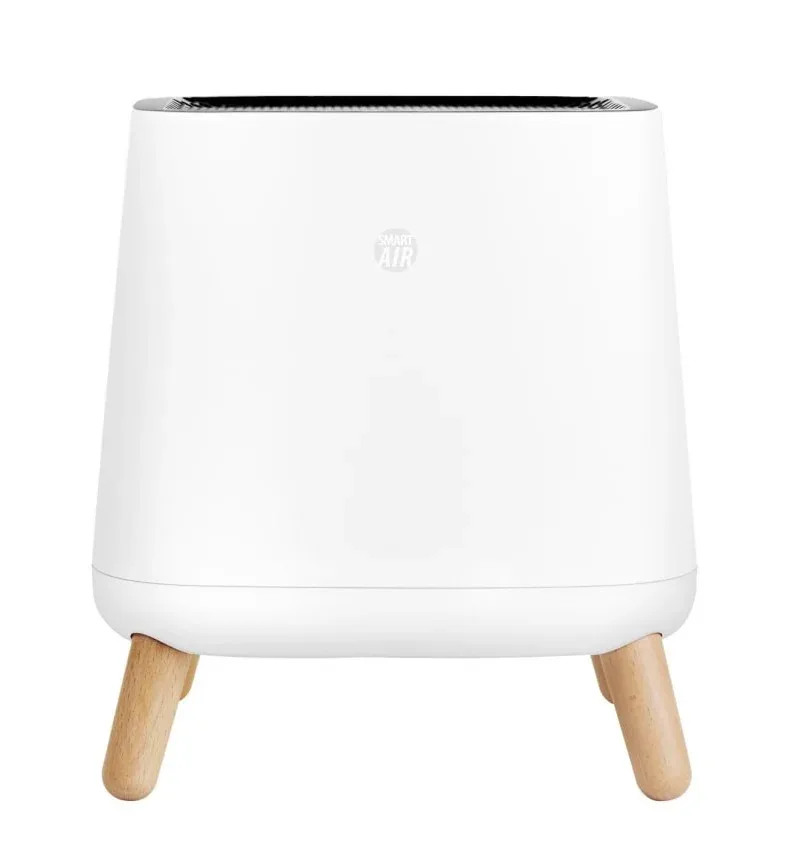
Our remaining value-nerd slot goes to the Sqair over the Levoit Sprout because it's the purifier that started the whole 'just buy CADR' movement: Smart Air crowdfunded it in 2019 as 'the world's most cost-effective air purifier,' it won a Dezeen Award for design, and it remains the cheapest credible sealed-HEPA machine from a company that publishes its own test data. HouseFresh measured 105 CFM smoke CADR — honest small-room performance (~163 sq ft at 4.8 ACH) that cleared their test room in 32 minutes, quicker than a Levoit Core 300 and, pointedly, ten minutes faster than the $399 Mila. At $1.42 per CFM it's one of the best value ratios HouseFresh has recorded, and the running costs stay boring: $74/year in filters, $41/year in electricity, zero standby draw. The honest caveats: the marketing's 430 sq ft figure assumes lax air-change math, speed 3 is a 58 dB roar you won't live with (real-world use is speeds 1-2), the carbon layer costs extra, and there's no sensor, auto mode, or timer of any kind. The beechwood-legged minimalist cube looks better in a bedroom than anything within $100 of it, which is precisely the pitch: Scandinavian-adjacent design and verified clean air, nothing else.
Honeywell
Honeywell HPA100
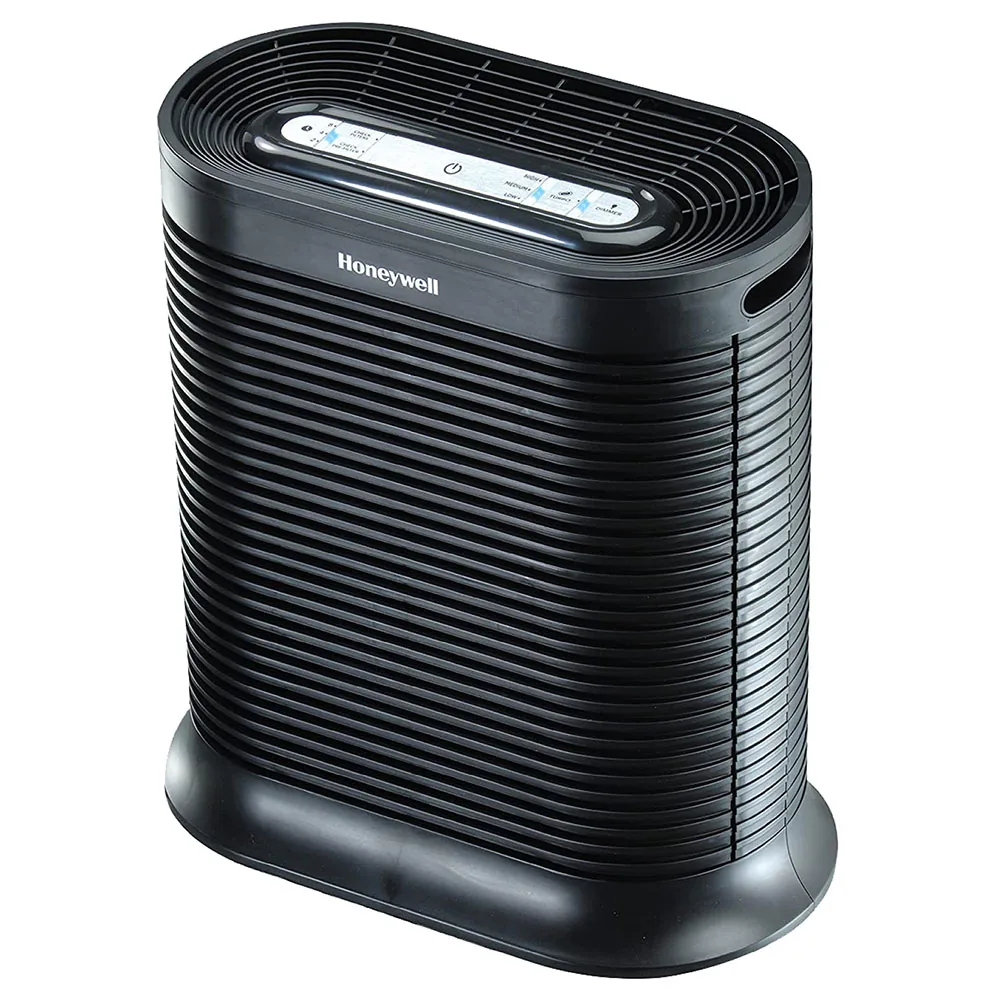
The HPA100 is the smallest of Honeywell's long-running Allergen Plus towers, and it's a study in old-school trade-offs. On the plus side, Honeywell publishes honest AHAM numbers - 100 CFM smoke CADR, 155 sq ft at 4.8 air changes per hour - and backs the unit with a 5-year warranty that dwarfs the 2 years typical of the budget class. Airpurifierfirst's testing confirmed it clears smoke quickly for its size. The problem is noise: there is no true quiet setting. Reviewers measured roughly 48 dB at the lowest of its four speeds - about the level rivals hit at medium - so this is a poor bedside pick unless you sleep with white noise anyway. The '750 sq ft in 1 hour' Amazon claim is single-air-change marketing; treat this strictly as a small-room unit. The fibrous Filter A carbon sheet does little against real odors, there's no auto mode, sensor, or app, and running costs stack up: a $27 HEPA annually plus quarterly pre-filter changes lands around $55/year on a $100 machine. Air-purifier owner discussions generally steer buyers to a Levoit or Winix for the same money, but the HPA100 remains a fair pick for allergy sufferers who value the long warranty and Honeywell's decade-plus parts availability.
Levoit
Levoit Core 200S
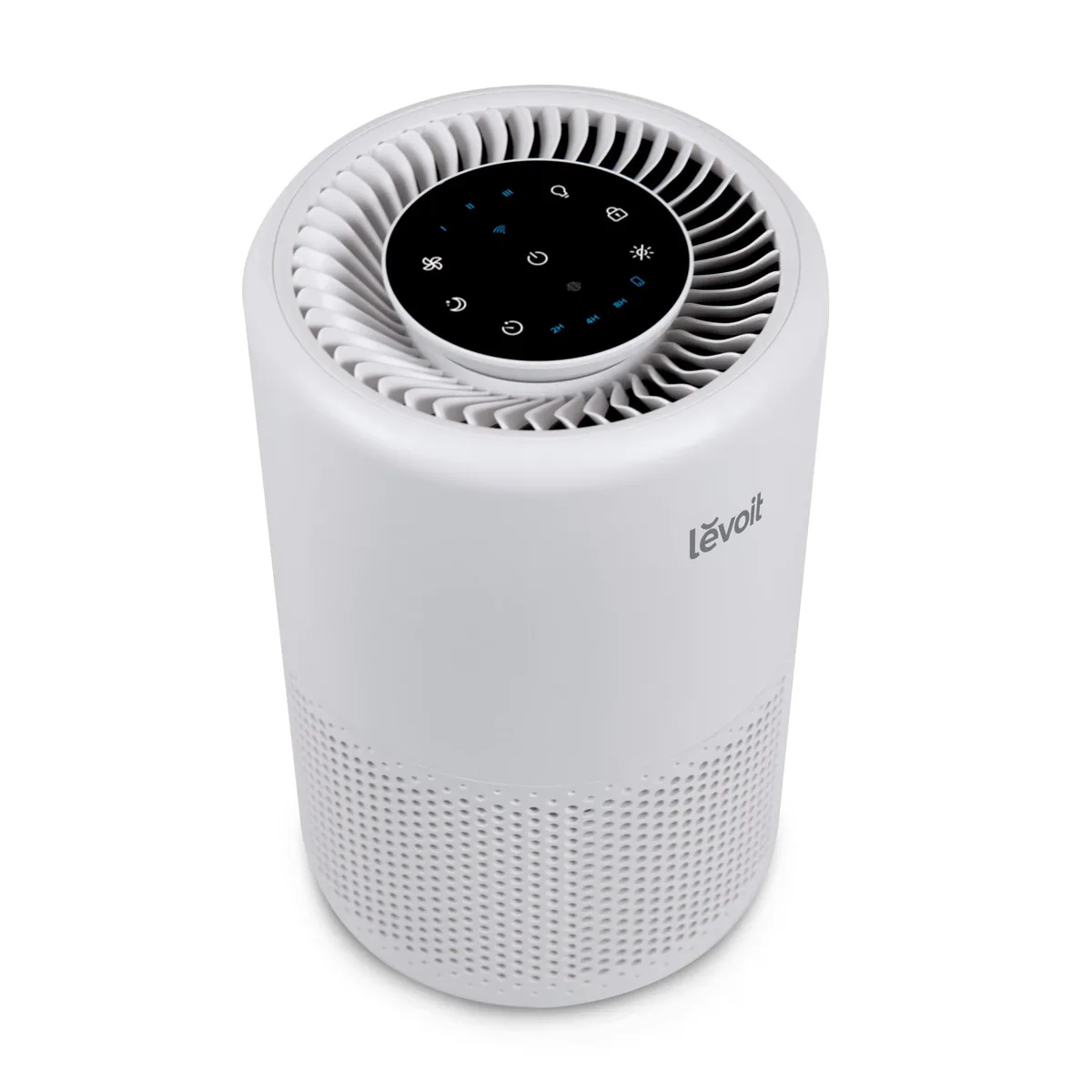
The Core 200S is Levoit's entry smart purifier, and it occupies an awkward middle seat: it costs $20 less than the Core 300S while delivering about 36% less clean air. Its 90 CFM smoke CADR works out to roughly 140 sq ft of honest coverage — a genuinely small bedroom, nursery, or office, not the 183 sq ft on the box. HouseFresh's test room took 61 minutes to clear versus 45 for the 300S, which is why nearly every reviewer and most of air-purifier owner discussions say the same thing: spend the extra $20. What the 200S does have is WiFi and app control, which the similarly-priced Core 300 (non-S) lacks, plus a very quiet 24 dB low speed. But here's the trap most listings gloss over: despite being a 'smart' purifier, it has no particle sensor, so there's no true auto mode — the app just lets you schedule speeds remotely. Filter costs are where the value math really breaks down: at ~$26 every six months you're spending over half the purchase price annually to keep a very small purifier running. It's a fine machine for a dorm room or nursery where the compact size and quiet matter, but the 300S is the better buy for almost everyone else.
GermGuardian
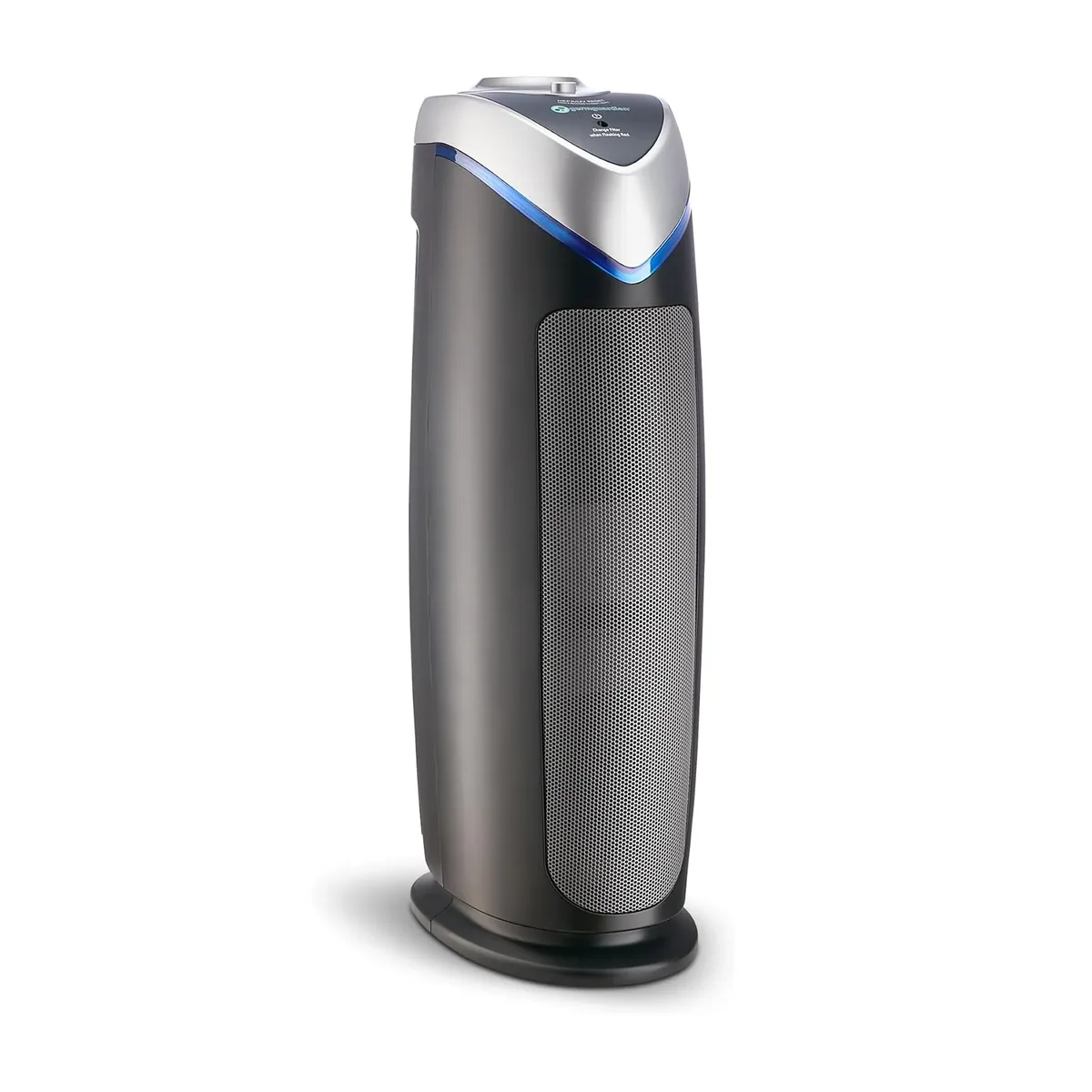
GermGuardian AC4825E
The AC4825E is the elder statesman of budget purifiers - this 22-inch tower has been a budget-aisle bestseller for over a decade, and its enormous owner base reflects an era when a sub-$100 True HEPA purifier was remarkable. In 2026 it's a harder sell, and HouseFresh's retest bluntly called it not worth the money against modern competition. The math explains why: 108 CFM smoke CADR is fine, but it takes 53 watts to produce it - the Levoit Core 300S delivers 30% more clean air on 22 watts. Even the quietest setting runs 40 dB, which light sleepers will notice, and max speed sounds like a window AC. The UV-C light is mostly marketing: air moves past the small bulb far too fast for meaningful germ kill, and Consumer Reports has long advised skipping such features. What keeps it relevant is street price - it dips to $70-80 regularly - plus a 3-year warranty that beats Levoit's 2, and a slim tower shape that fits where cylinders don't. Owners report the honest failure modes: a persistent plasticky smell from new units, filter costs (combo filter plus UV bulb) that rival the Levoit ecosystem, and no auto mode or timer conveniences. Buy it on deep discount or buy something newer.
Aroeve
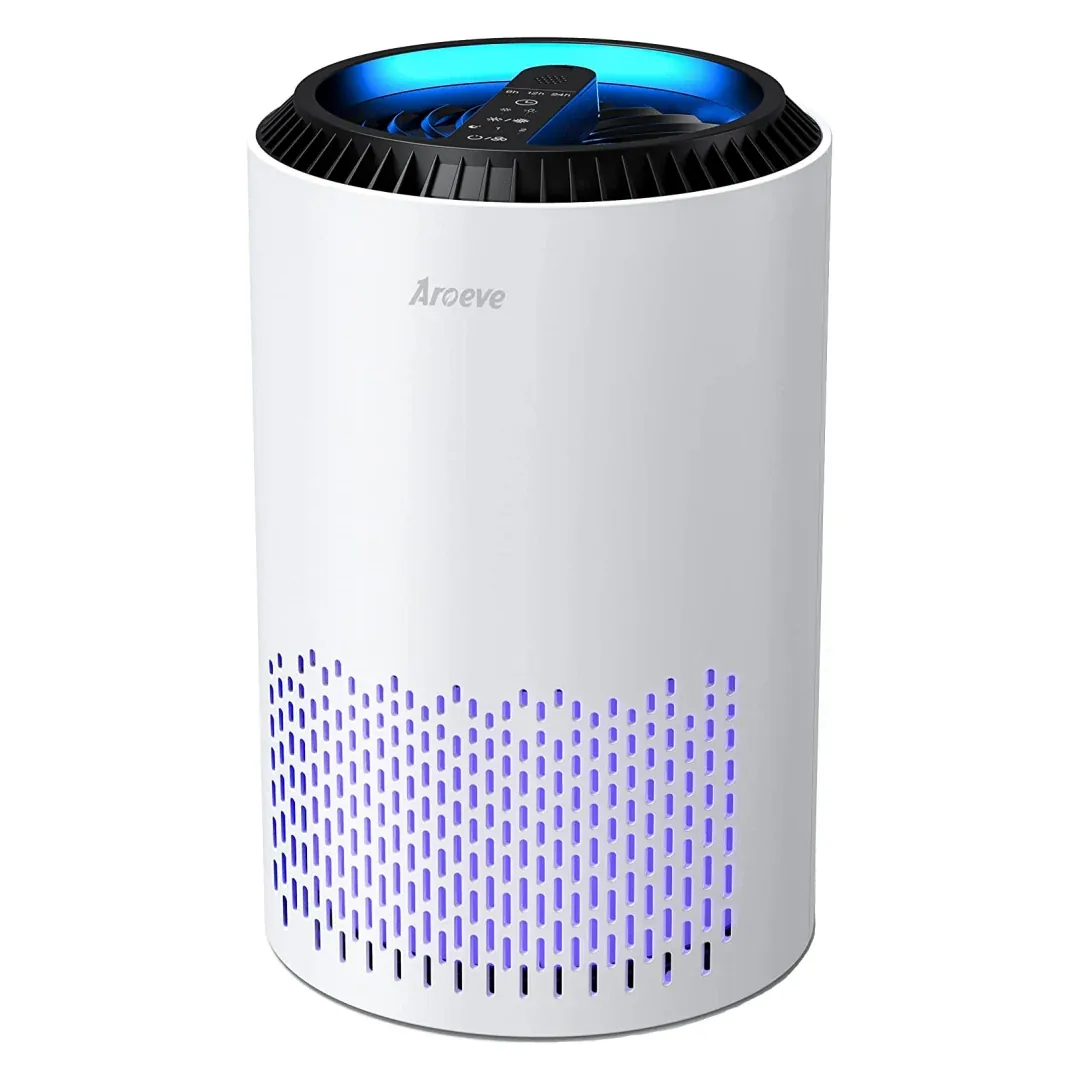
Aroeve MK01
The MK01 is a case study in why Amazon rank and real performance are different things. It has sat at or near the top of Amazon's air purifier bestseller list for years at around $60 on the strength of glowing marketplace ratings - and it is one of the worst purifiers HouseFresh has ever tested. Aroeve publishes no CADR, and independent measurements explain why: HouseFresh estimated roughly 25 CFM and airpurifierfirst measured about 30 CFM, numbers that work out to honest 4.8-air-change coverage of around 39 sq ft - a closet, not the claimed 215 sq ft room. In HouseFresh's standard test room the MK01 needed 2 hours 43 minutes just to reach breathable particle levels and never finished the job in five hours; a Levoit Core 300S does it in 45 minutes. Reviewers also flagged manipulation patterns in its marketplace reviews, with 'free product for review' phrasing recurring throughout the positive ones. Its measured 40 dB minimum is louder than purifiers ten times more powerful. The one honest use case is a desktop unit inches from your face with cheap $20/year filters, but a used or on-sale Levoit, Winix, or GermGuardian embarrasses it at the same price. HouseFresh's verdict was zero stars: avoid.
AirDoctor
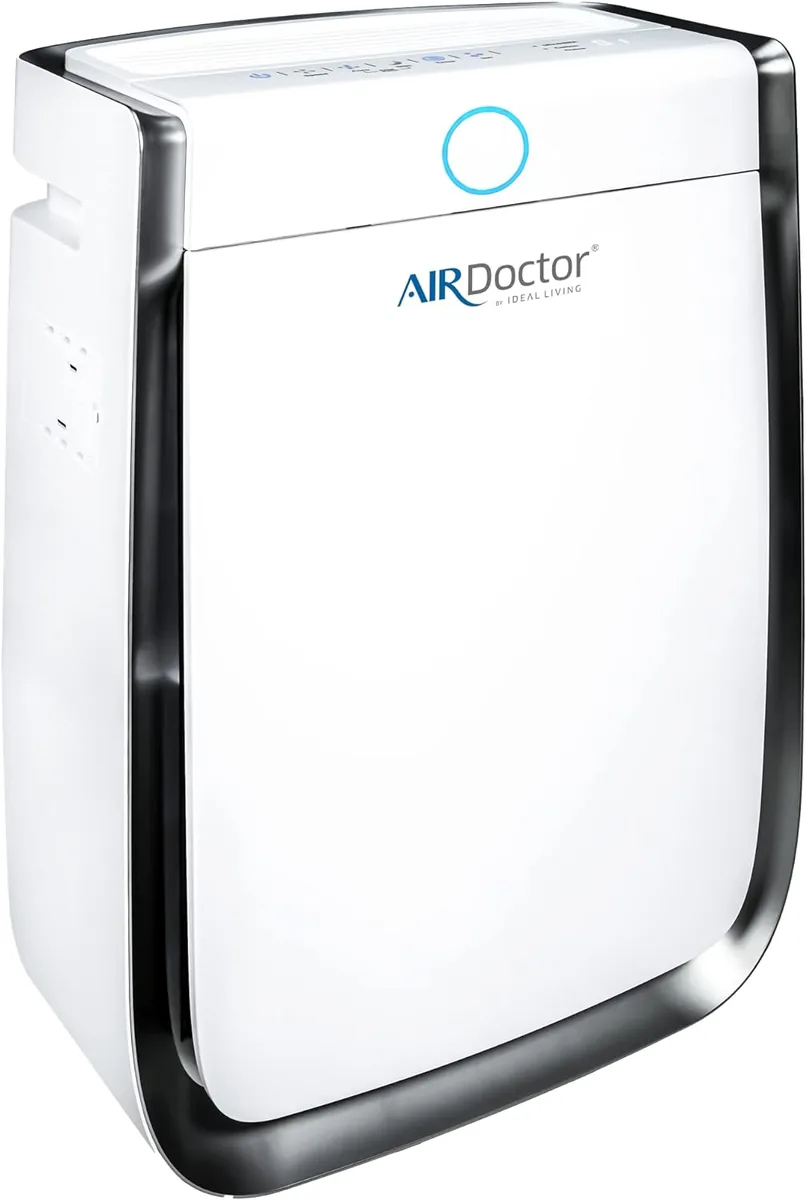
AirDoctor 3000
AirDoctor is the purifier of podcast ads and wellness-influencer affiliate links, and its marketing earns the skepticism: 'UltraHEPA captures particles 100x smaller than HEPA' is mostly a framing trick (ordinary HEPA also captures ultrafines via diffusion), the headline '1,274 sq ft' assumes just 2 air changes per hour, and the $629 list price exists mainly to be perpetually crossed out. Here's the fair part, though: the hardware checks out. HouseFresh independently verified the published CADR (336 CFM smoke), clearing their smoke test room in 14 minutes with the ionizer on and 16 without - a full minute faster than the Levoit Core 600S - and the honest AHAM coverage of 521 sq ft is genuinely large-room class. The dual-stage design also carries real pelletized carbon, not a token mesh, so it out-filters most rivals on VOCs and odors. The problem is what $519 doesn't buy: no Wi-Fi or app (that's the 3000i, $200 more), no Energy Star listing at a hefty 93 W, a loud 64 dB top speed, a bare 1-year warranty, and $157/yr in genuine filters. No major retailer shows a verifiable rating base since AirDoctor sells mostly direct. Verdict: a legitimately strong purifier wearing an overpriced infomercial costume - buy it on a real discount or buy the 600S.