LG
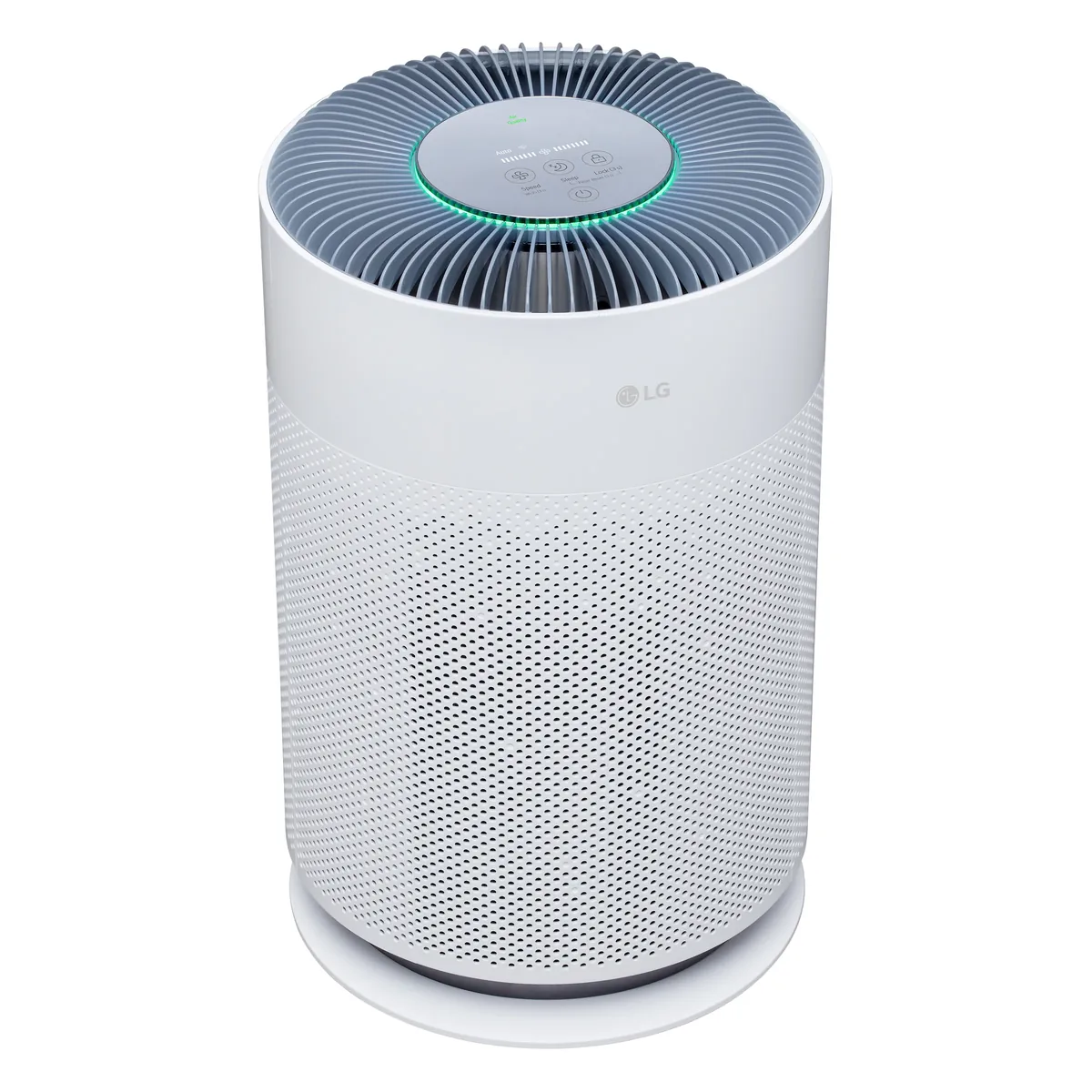
LG PuriCare 360 NanoFiber
LG's flagship consumer purifier is a genuinely well-engineered machine wrapped in one of the silliest coverage claims in the business. The good: a real 277 CFM smoke CADR from an inverter motor LG backs for 10 years, 360-degree intake in a slim 20-inch cylinder, a 25 dB low end that's legitimately bedroom-silent, and just 41W at full blast — one of the best CADR-per-watt figures on this site. The bad: the box says 2,059 sq ft, a number achieved only at a homeopathic 1 air change per hour. Even LG's fine print concedes 429 sq ft at a real 4.8 ACH — a fine large-room figure that didn't need a 5x embellishment. The ThinQ app covers scheduling and air quality history but draws the same connectivity grumbles as LG's other appliances, and there's no voice-assistant support. Air-purifier owner discussions rarely recommend LG because at MSRP the math loses to a Coway or Winix; at its frequent ~$300 street price, though, this is a legitimately competitive large-room machine with better industrial design than anything at that CADR. Buy it on discount, ignore the box, and stock a spare filter — LG's appliance divisions have short memories for last generation's consumables.
Specifications
Highlights
Pros
- ✓Verified 277/277/282 CADR (smoke/dust/pollen) — honest large-room airflow
- ✓Exceptional efficiency: full power at 41W keeps annual electricity trivial
- ✓10-year inverter motor warranty is rare at this price
- ✓Very quiet 25 dB floor with a dim-able nightlight mode
- ✓One-filter annual maintenance at ~$89 with no subscription
- ✓PM1.0 sensor with auto mode and ThinQ app scheduling
Cons
- ✗2,059 sq ft claim requires a meaningless 1 ACH — real coverage is ~429 sq ft
- ✗1-year general warranty and fast model churn raise long-term filter-supply questions
- ✗ThinQ app connectivity complaints are common across LG appliances
- ✗No voice assistant support and no Energy Star certification
- ✗MSRP is uncompetitive — this only makes sense at street price
Common Questions
Can it really cover 2,059 sq ft like the listing says?
Is it cheap to run 24/7?
Will replacement filters still exist in five years?
How good is the app and auto mode?
Is it quiet enough for a bedroom?
Compare the LG PuriCare 360 NanoFiber
Related air purifiers
Smart Air
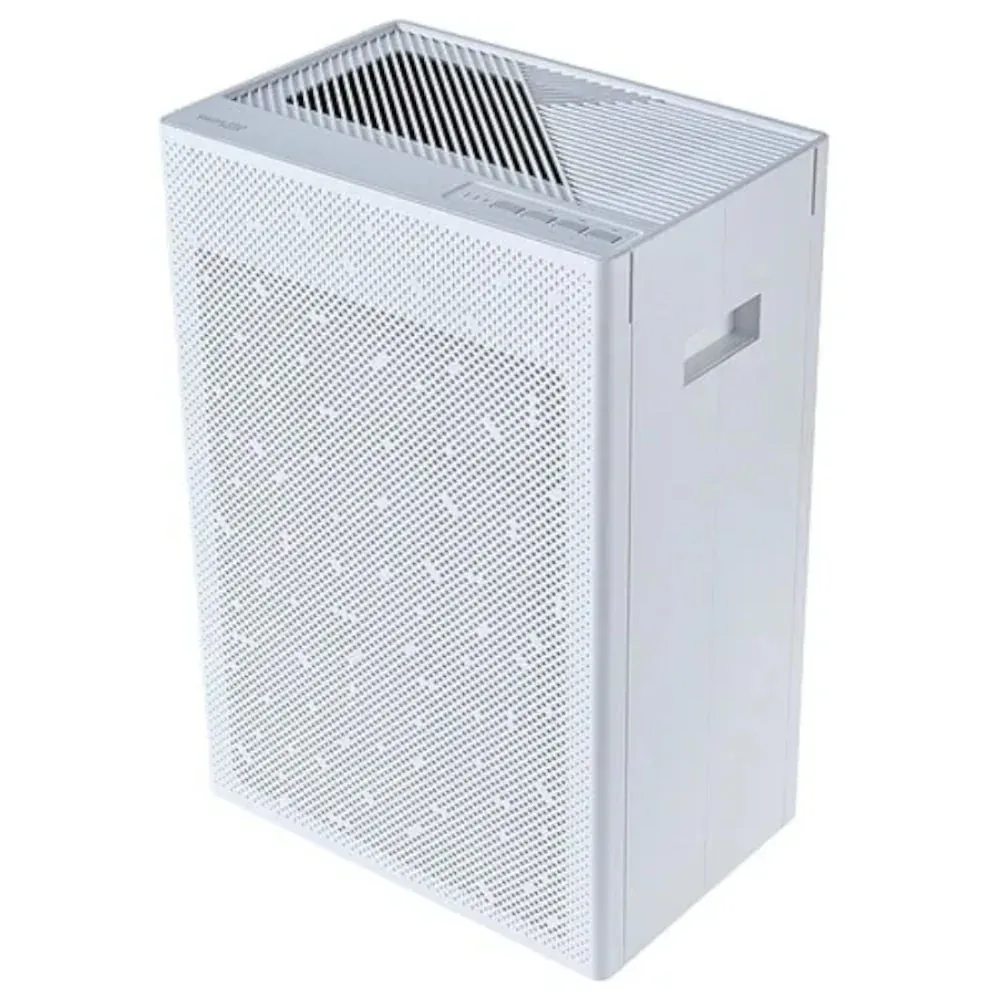
Smart Air SA600
Smart Air is the anti-marketing purifier company — a certified B-Corp founded by a University of Chicago professor who started strapping HEPA filters to box fans in Beijing and publishing the test data. The SA600 is their most refined machine: a dual-inlet design that pulls air through separate HEPA-plus-carbon stacks on each side, so it moves serious air (HouseFresh measured 287 CFM dust CADR and 249 CFM PM1) without the shriek of a single overworked fan. Three of its five speeds run under 45 dB, and its sub-45 dB PM1 CADR of 128 CFM embarrasses machines costing four times more — the $1,200 IQAir manages only 86 CFM at livable volume. HouseFresh's 728 cu ft test room cleared in 24 minutes, faster than the IQAir HealthPro Plus. What you give up is everything smart: no auto mode, no sensor, no app — deliberate omissions Smart Air argues add cost without cleaning air. At $280 with $71/year in 18-month filters, its only real value rival is the AirFanta 3Pro, which delivers more raw CADR for less money but with a rougher, boxier presence. The SA600 is what the air-purifier owner discussions crowd means when they say 'buy CADR, not features' — just in a housing you won't mind looking at.
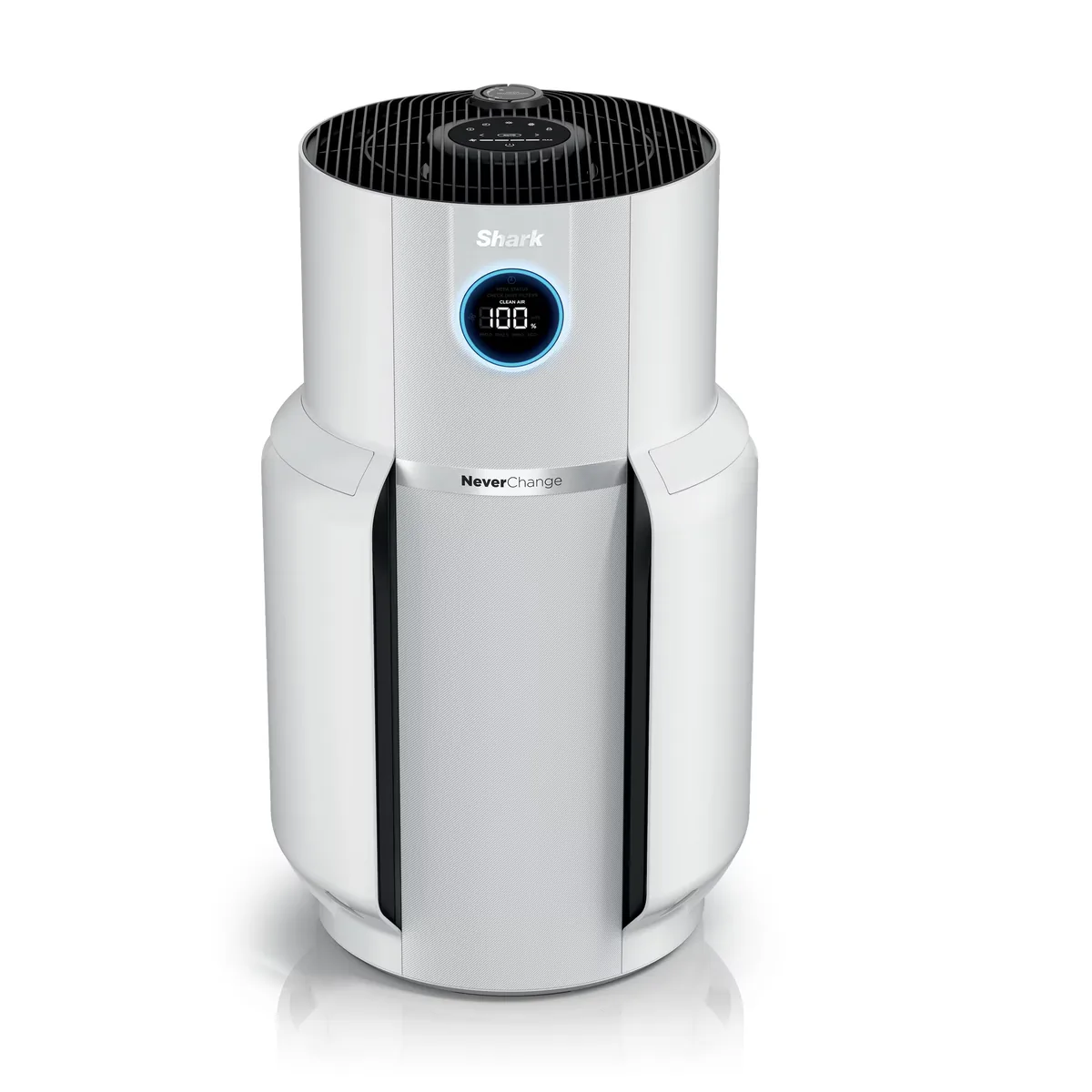
Shark's pitch - no filter replacements for 5 years - deserves scrutiny, and the fine print delivers: the claim is tested to a Chinese GB/T standard that counts the filter as alive until its CADR has fallen 50%, in a 300 sq ft room at 12 hours a day. In other words, 'lasts 5 years' partly means 'you'll tolerate half the airflow before you must replace it.' Shark also publishes no AHAM CADR at all - we flag that rather than estimate one - and the 1,400 sq ft banner is the usual 1-air-change arithmetic. And yet independent testing keeps landing in Shark's favor: Modern Castle's data-driven tests, TechGearLab, and Consumer Reports all found genuinely strong particle clearance, at a measured 21.7 W and a top-speed 53 dB that's quieter than most rivals' medium settings. The washable pre-filter does the heavy lifting to protect the dense sealed HEPA, the Clean Sense IQ sensor runs a competent auto mode, and running costs of roughly $40/yr (mostly the every-6-months Odor Neutralizer scent cartridge - fragrance masking, not VOC removal - plus the amortized HEPA) undercut most purifiers on this site; only the Aroeve MK01 and Blueair 411i Max cost less to keep running. Treat it as an honest ~300-450 sq ft purifier with ultra-low upkeep and a satisfied owner base, not the 1,400 sq ft claim, and skip it if you need serious carbon for odors.
Coway
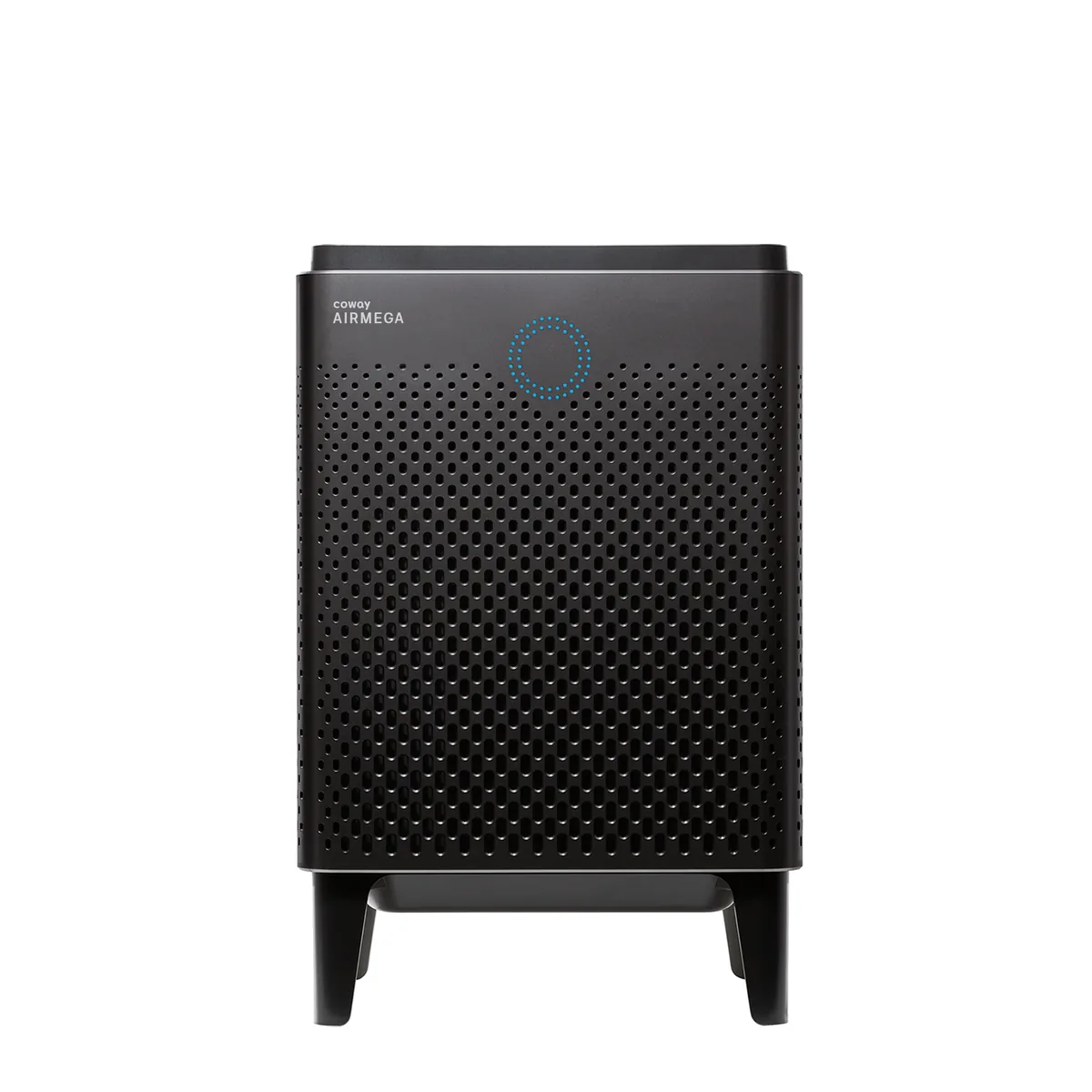
Coway Airmega 400
The Airmega 400 has been the quiet-workhorse pick for open-plan spaces since 2017, and it remains current in Coway's 2026 lineup alongside the Wi-Fi 400S. The dual-sided intake feeds two Max2 carbon/HEPA cartridges, producing a smoke CADR of 328 CFM - honest AHAM coverage around 508 sq ft, not the advertised 1,560 (that figure assumes just 2 air changes per hour). What the spec sheet undersells is how pleasant it is to live with: 22 dB on low, a muted 52 dB even at max (rare for this much airflow - the Honeywell HPA300 hits 63 dB doing less), a good particle sensor with a glanceable LED ring, and a smart mode that drops to fan-off eco when air stays clean. The twin cartridges also carry roughly double the carbon of most rivals, so it out-punches Levoit on kitchen and smoke odors. Costs are the trade-off: ~$130/yr in filters is more than double a Core 600S, and street price bounces between $300 and $450. long-term owners report 5+ years of uneventful service, which the 5-year motor warranty backs up. If the 600S is the spreadsheet winner, the 400 is the one people keep recommending after living with both.
Honeywell
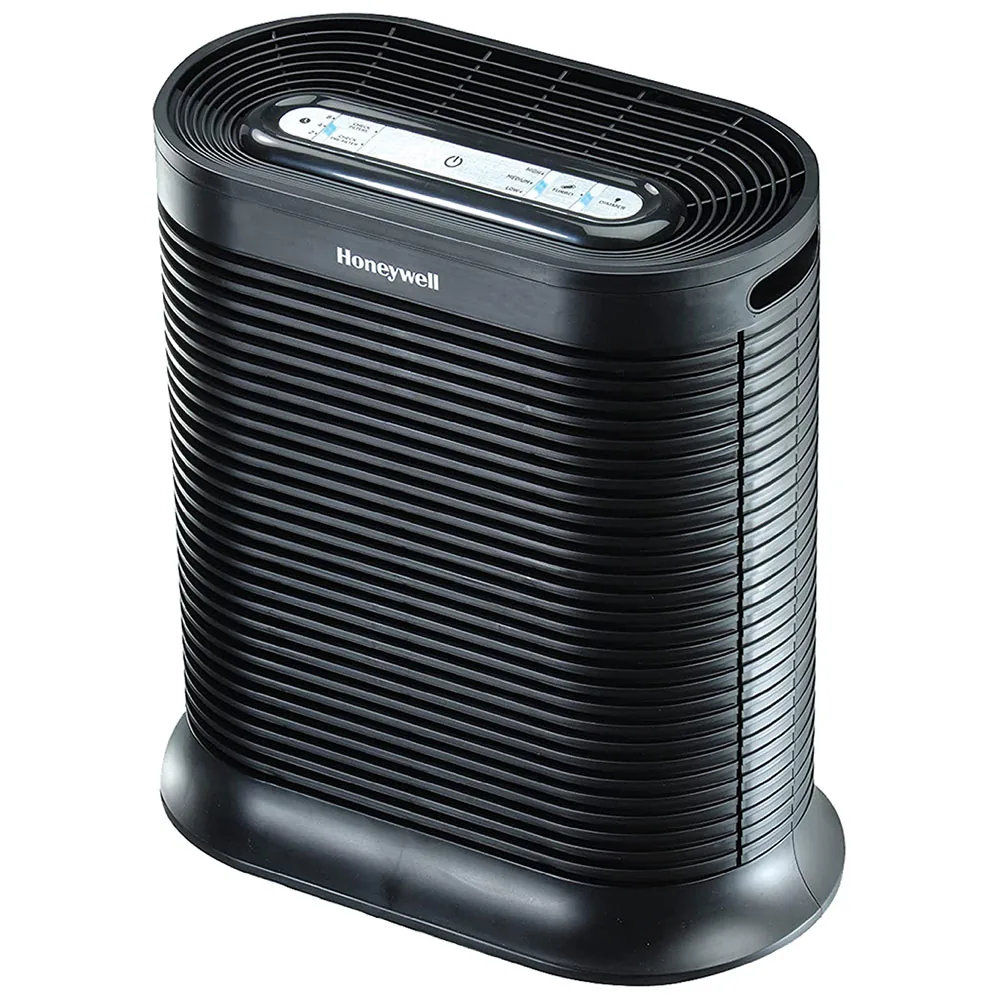
Honeywell HPA300
The HPA300 has been the big-box default for over a decade, and the core numbers are legitimately honest: Honeywell's own 465 sq ft figure IS the AHAM number (300 CFM smoke CADR x 1.55), a rare case of a brand not inflating - though Amazon's listing still tacks on a '2,250 sq ft in 1 hour' banner, which is the usual 1-air-change fiction. HouseFresh's test backs the hardware: 20 minutes to clear their smoke-filled room on Turbo, within two minutes of the fastest unit they'd tested at the time and matching purifiers near twice the price. What you give up is everything else. There's no particle sensor, no auto mode, no Wi-Fi, no remote - just four buttons and a loud fan: 44 dB at minimum (louder than most rivals' mid speeds) climbing to about 60 dB on Turbo, with an older motor design pulling 76 W. Consumer Reports has long scored it well for raw performance, and the Amazon base holds a 4.6-star average across tens of thousands of ratings. Filter upkeep is quarterly (carbon pre-filter) plus annual (three HEPA cartridges) at ~$89/yr genuine, with a thriving third-party market that halves it. If you want a proven, warrantied (5-year) workhorse and don't mind noise or babysitting speeds manually, it's still a solid buy at its frequent sub-$200 sale price.
Medify Air
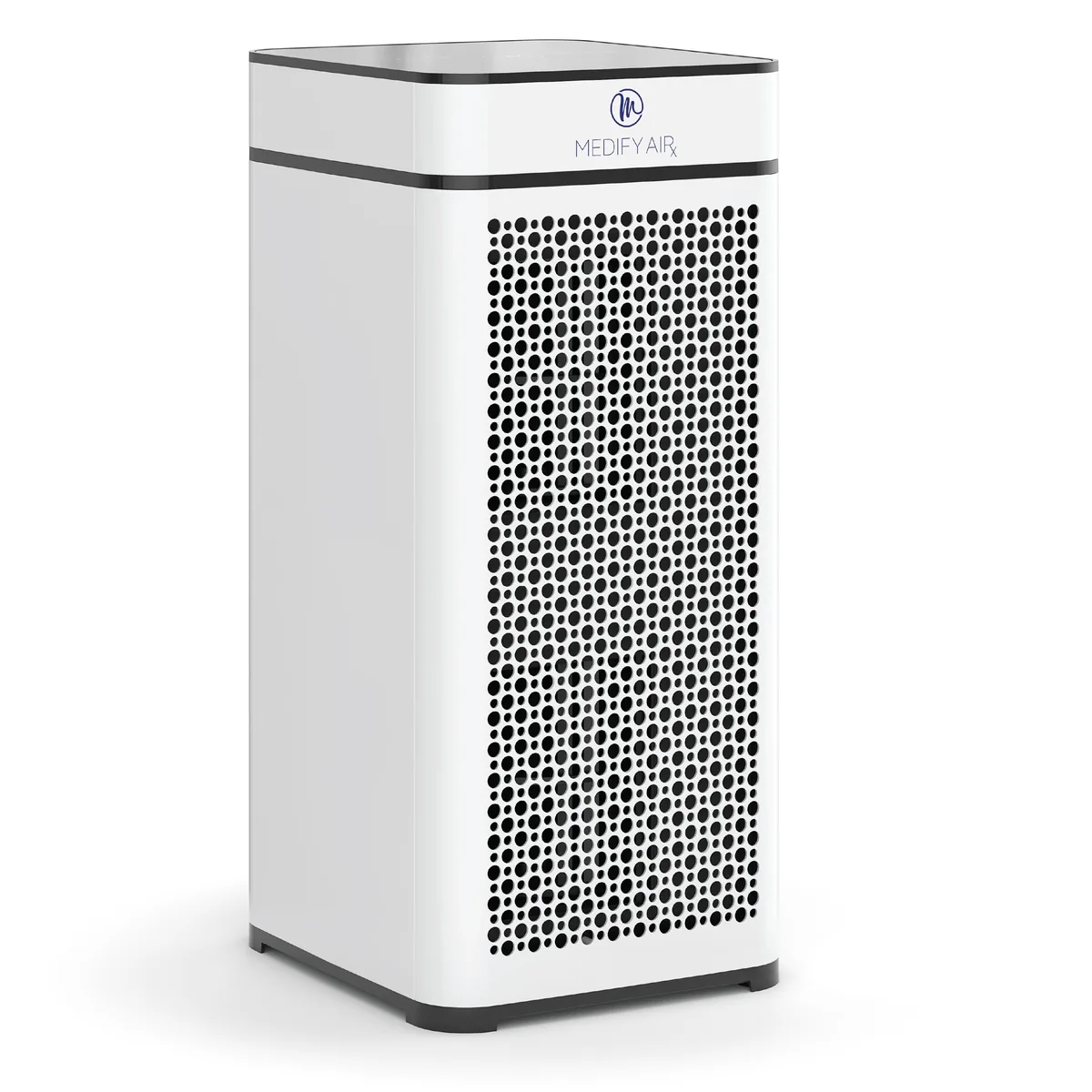
Medify MA-40
The MA-40 is a decent mid-size purifier wearing extra-large marketing. Amazon listings headline '1,793 sq ft in 1 hour' - the 1-air-change fiction - and Medify's own 840 sq ft figure still assumes only 2 changes per hour. The AHAM-style smoke CADR is 241 CFM, which honestly covers about 374 sq ft at 4.8 ACH; Medify's unlabeled 'CADR 380' spec adds confusion by mixing metric and imperial units. The 'medical grade' branding deserves similar scrutiny: H13 media in a loosely gasketed consumer tower doesn't make it a cleanroom device, and some variants advertise 'H14' with no independent verification - air-purifier owner discussions regularly flags the brand for exactly this. What the MA-40 actually offers: a sleek glass-touch tower HouseFresh found pleasant to live with, a switchable ionizer, child lock, timer, and a lifetime warranty (conditional on registration and genuine filters). The running costs undercut the sticker appeal - 6-month filter life at $59.99 means ~$120/yr, and the 46 dB minimum speed is louder than many rivals' mediums, with 66 dB at max. The strong owner sentiment is real, but so is the math: a Winix 5500-2 or Core 600S delivers equal or more verified airflow for less money and half the filter cost. Buy it on deep discount, for the looks, or not at all.
Blueair
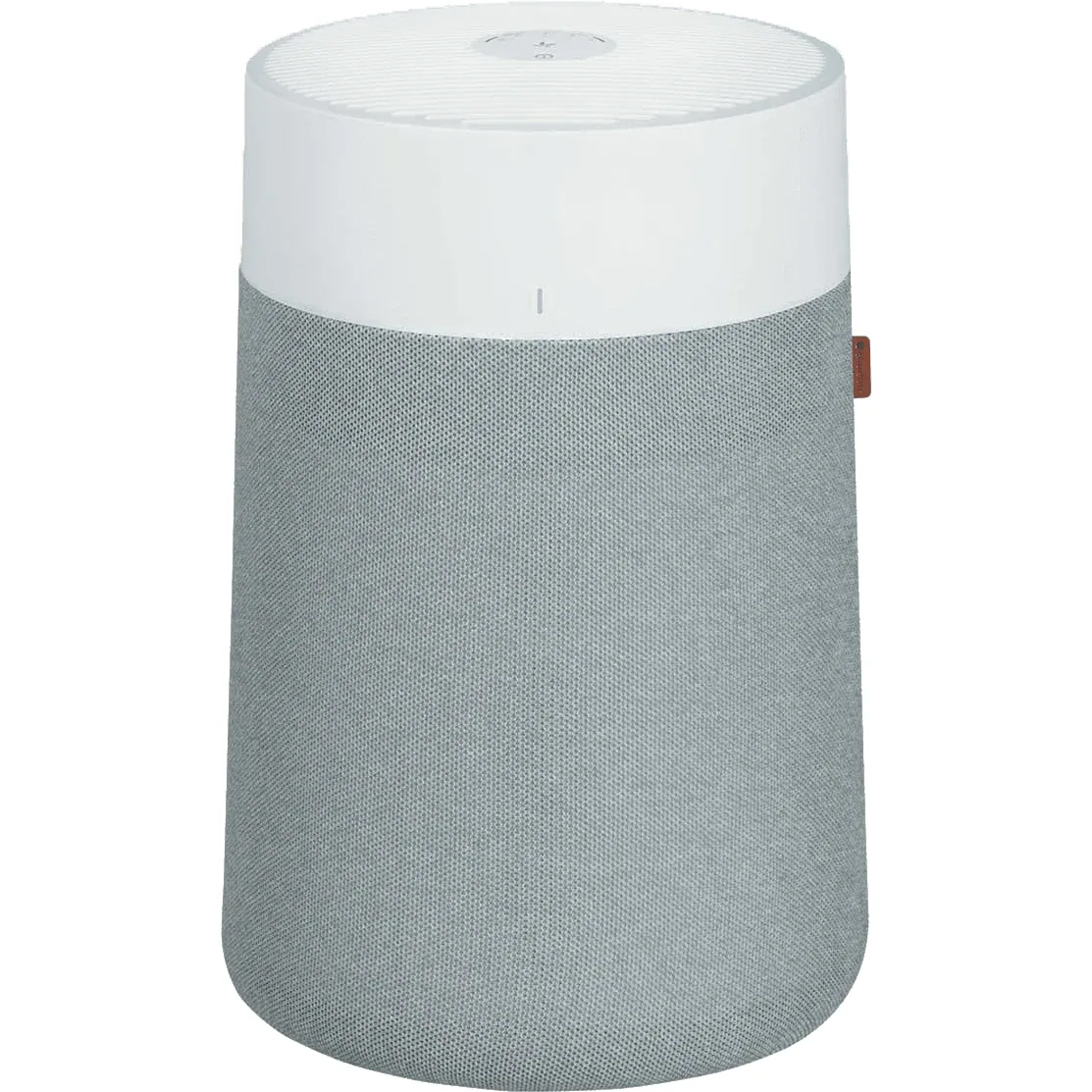
Blueair Blue Pure 311i Max
The 311i Max is the quiet-per-CFM champion of the mid-size class. Blueair's HEPASilent design charges particles electrostatically before a lower-density filter catches them, which lets the fan spin slower for the same clean-air output: 250 CFM smoke CADR from a machine that measures 23 dB on low, tops out around 50 dB, weighs 8 lbs, and sips 29 watts flat-out — Energy Star and QuietMark certified. HouseFresh and TechGearLab both found it clears rooms about as fast as the Coway/Winix 232-CADR crowd while being dramatically easier to live with at night, and the honest AHAM number is actually higher: 387 sq ft at 4.8 ACH. The 2,107 sq ft headline is 1-ACH marketing at its most aggressive — ignore it. The particle-charging happens entirely inside the unit (it is not a room ionizer and there's nothing to switch off; Blueair publishes near-zero ozone results). Caveats: the combo filter runs ~$60/yr and there's no cheap third-party ecosystem yet, the LED indicator shows color-coded quality rather than a PM2.5 number (details live in the app), and the 1-year warranty only becomes 3 if you register within 60 days. Watch for sales — it dips well under $200, where it's arguably the best bedroom-first pick here.