Air Purifiers for Wildfire Smoke: What Works When the AQI Goes Purple
Wildfire smoke is what air purifiers are truly for. Allergies are seasonal and dust is cosmetic, but a smoke event parks hazardous PM2.5 outside your walls for days and feeds it through every crack — and a correctly sized purifier really can hold a room at healthy levels through an AQI-300 week. Undersized, it loses the rate war and you smell why. Here's the smoke-specific playbook, including the part where a $60 DIY build outperforms machines at five times the price.
Why smoke is the hard case
Three things make wildfire smoke the category's stress test. The particles are the worst kind — fresh smoke skews toward 0.1-0.5 microns, deep-lung territory, which is exactly the range HEPA still catches efficiently but marginal filters don't. The source never stops — unlike a cooking event that ends, smoke infiltrates continuously through the building envelope for as long as the plume sits, so your purifier fights a running battle where CADR is the entire game. And events run long — the practical week-plus of a bad fire season means noise, filter loading, and runtime economics all get tested at once. This is why the 4-5 ACH sizing target from our sizing guide is non-negotiable for smoke where you might shade it for dust: at 2 ACH against continuous infiltration, indoor AQI settles at maybe half of outdoor — better, not healthy.
The gases are a separate problem from the particles. HEPA removes the PM2.5 — the health threat — but the smoky smell is molecular and rides straight through; that's carbon's job, and smoke events are where thin 'odor layer' carbon exposes itself in a day while real pelletized carbon (see our filter-cost guide) keeps adsorbing. Set expectations accordingly: a HEPA-only machine can make smoke air healthy but still smoky-smelling. If the smell matters to you, buy carbon mass; if you're triaging on budget, protect lungs first and noses second.
The smoke playbook: house prep plus purifier
The purifier is half the system; the envelope is the other half. When smoke arrives: close everything and seal the leaks you can reach (a rolled towel under a door gap is real mitigation), switch HVAC to recirculate and upgrade its intake filter to MERV 13 if the blower handles it — the furnace fan moves more air than any room purifier, making it your whole-house prefilter. Then concentrate purifier CADR in one or two clean rooms — bedrooms first, since you'll spend eight unconscious hours there — rather than diluting coverage across the house. Run units on high while AQI climbs and drop to the highest speed you can sleep near once levels stabilize; auto modes with decent sensors earn their keep in exactly this scenario, and a $30 standalone PM2.5 monitor settles arguments about whether any of it is working.
Expect to sacrifice filters. A week of heavy smoke can load a HEPA filter like six months of normal duty and saturate a carbon stage outright — sniff the outlet after the event; if it smells like the fire, the carbon is done and re-emitting. Stock one spare filter set per machine before fire season, because retailers sell out during events with the same reliability that generators sell out in hurricanes. Prefilter vacuuming mid-event extends the HEPA; nothing extends saturated carbon.
The other smoke problem: a neighbor's cigarette or weed
The most common smoke thread on the forums isn't wildfire — it's 'my neighbor's smoke is coming through the wall and I'm desperate.' Honest framing first: this is an infiltration problem wearing an air-quality costume, and a purifier is the mitigation, not the cure. Smoke rides pressure differences through shared walls, outlets, plumbing penetrations, and hallway door gaps, and it keeps coming as long as the source keeps smoking. The playbook that actually moves the needle: seal what you can reach (outlet gaskets are $10 and comically effective, painter's tape on unused penetrations, a door-sweep on the hallway door), then park a purifier with real carbon in the affected room and run it continuously — HEPA gets the particles, and only carbon mass touches the smell, which is the part that drives people crazy.
Set expectations by mechanism: owners in this situation consistently report 70-90% improvement, not eliminated — a purifier can't create positive pressure or un-share a wall. Cannabis smoke behaves like cigarette smoke with a stickier odor profile; the same playbook applies with more carbon and more patience. If the infiltration is through shared HVAC (some apartment buildings), a MERV-13 filter taped over your supply registers is the crude fix the threads swear by. And document-then-escalate remains the only complete solution in a rental: lease clauses and building rules solve what physics can't.
The honest word on DIY: CR boxes are real
A Corsi-Rosenthal box — four MERV-13 furnace filters taped into a cube with a box fan on top — costs $60-90 and delivers 300-600 CFM of measured cleaning: genuinely more smoke CADR than most machines on this site, validated by EPA and university testing during the 2020-2023 fire seasons. The catches are livability, not performance: it's loud (a box fan has no sleep mode), it's an unlovely 20-inch cube of duct tape, there's no auto mode or filter light, and MERV-13 isn't HEPA-grade per pass (it compensates with sheer airflow — the system beats the spec, same lesson as always). For a smoke emergency, a garage, a classroom budget, or a 'the flagship is sold out' week, it's the best value in the entire category and we say so without embarrassment.
The commercial version of that logic exists too: a small class of products (AirFanta's 3Pro most prominently) essentially productizes the CR box — huge CADR per dollar, filters as the whole machine, minimal electronics — and the same value math applies with better acoustics. The honest hierarchy for smoke, then: any purifier at 4-5 ACH beats no purifier by a mile; a CR box or CADR-per-dollar machine beats an underpowered premium unit at any price; and the premium machines earn their keep on noise, sensors, and living-with-it polish, not on smoke performance per dollar. Buy CADR first, comfort second, brand story never.
Units mentioned in this guide
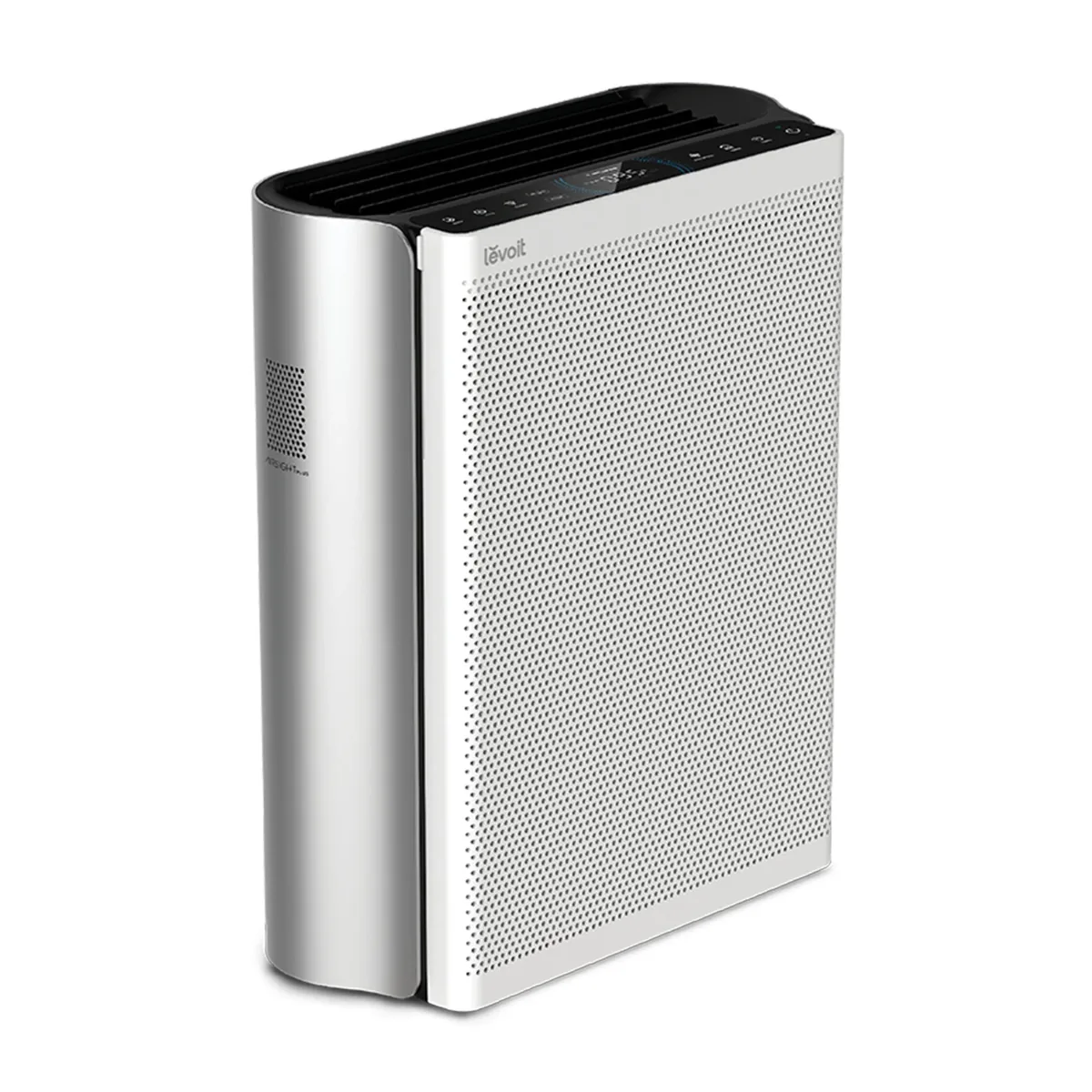
Levoit
Levoit EverestAir
The EverestAir is Levoit's flagship, and HouseFresh's independent testing backs the hardware: 360 CFM smoke CADR from a side-intake tower that cleared their test room in 16 minutes, making it one of the fastest purifiers they'd tested. The design is genuinely premium - a tilted control deck, magnetic front panel, washable pre-filter, and a 3-channel laser sensor that displays PM1.0, PM2.5, and PM10 separately rather than a single vague number. The catch is the marketing math: Levoit advertises 2,790 sq ft, but that's at a meaningless 1 air change per hour. At the AHAM standard of ~4.8 changes per hour, honest coverage is 558 sq ft - still excellent, but a fifth of the claim. The bigger problem is price. At the $499 MSRP it competes with the Coway Airmega 400 and Blueair 211i Max; meanwhile Levoit's own Core 600S delivers more CADR (410 vs 360) for roughly half the money, trading only the nicer sensor suite, lower sleep-mode noise floor, and looks. The EverestAir is frequently discounted to $300-350, where it becomes an easy recommendation. At full price, air-purifier owner discussions consensus is that you're paying a steep premium for aesthetics over airflow.
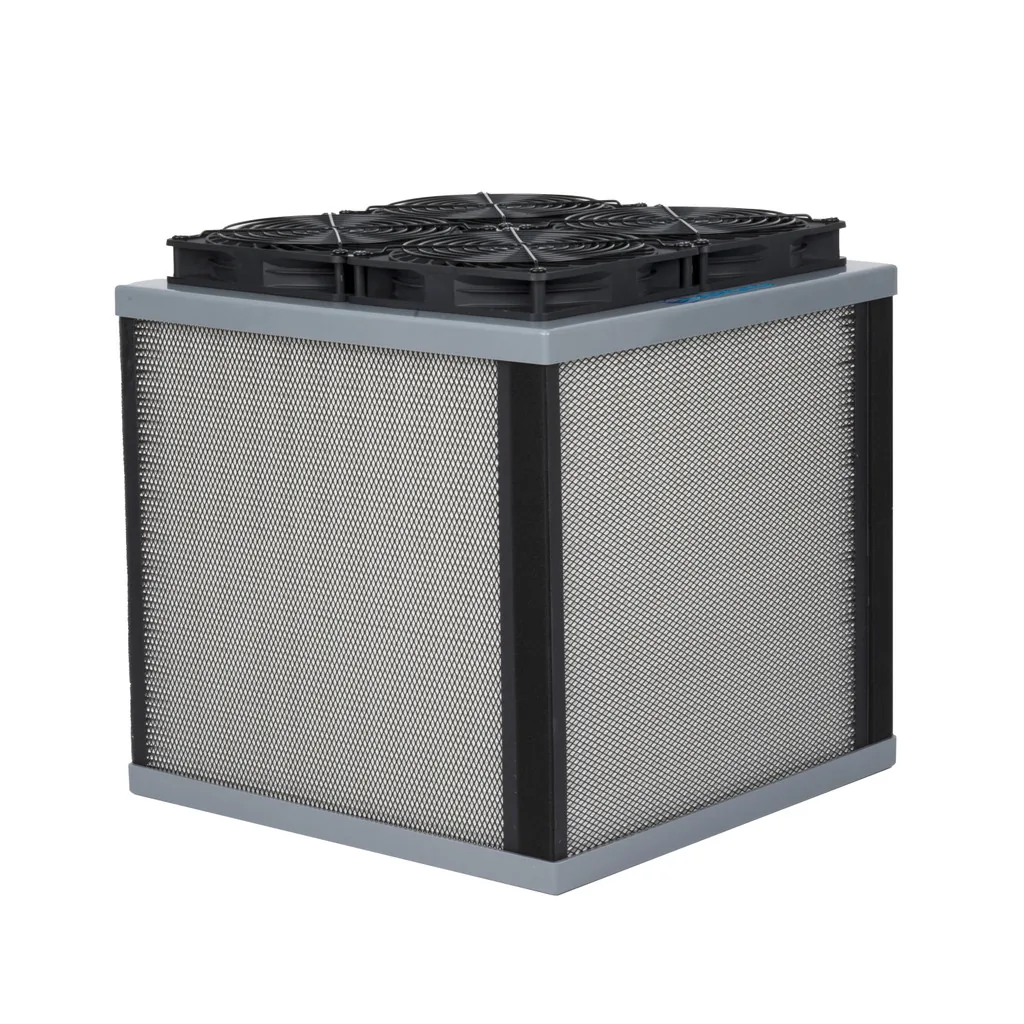
AirFanta
AirFanta 3Pro
The 3Pro is the Corsi-Rosenthal box graduated from duct-tape science project to actual product: four HEPA panels clipped into a cube with four PC fans on top, disassembling flat enough to fit in a carry-on. The numbers are silly for the price. HouseFresh measured 353 CFM of PM1 CADR — more measured clean air than the $1,200 IQAir HealthPro Plus, the $1,015 Molekule Air Pro, and the $550 Dyson TP07 combined margin of error — and their test room cleared in 17 minutes, quicker than machines costing $450+. Even throttled below 45 dB it still delivers 213 CFM, and max power draw is a modest 43W. This is the machine air-purifier owner discussions mean by 'CADR per dollar,' and it's become the default rebuttal to every premium purifier thread. Now the honesty: the 3,100 sq ft claim assumes a uselessly lenient 1 ACH (real 4.8 ACH coverage is ~530 sq ft), it's louder at full blast than DIY PC-fan kits, the H11 panels are proprietary rather than hardware-store spec, and it looks like lab equipment because it is. No sensor, no auto mode, no app — you turn a voltage knob. As pure clean-air-per-dollar engineering, nothing else on this site is close.
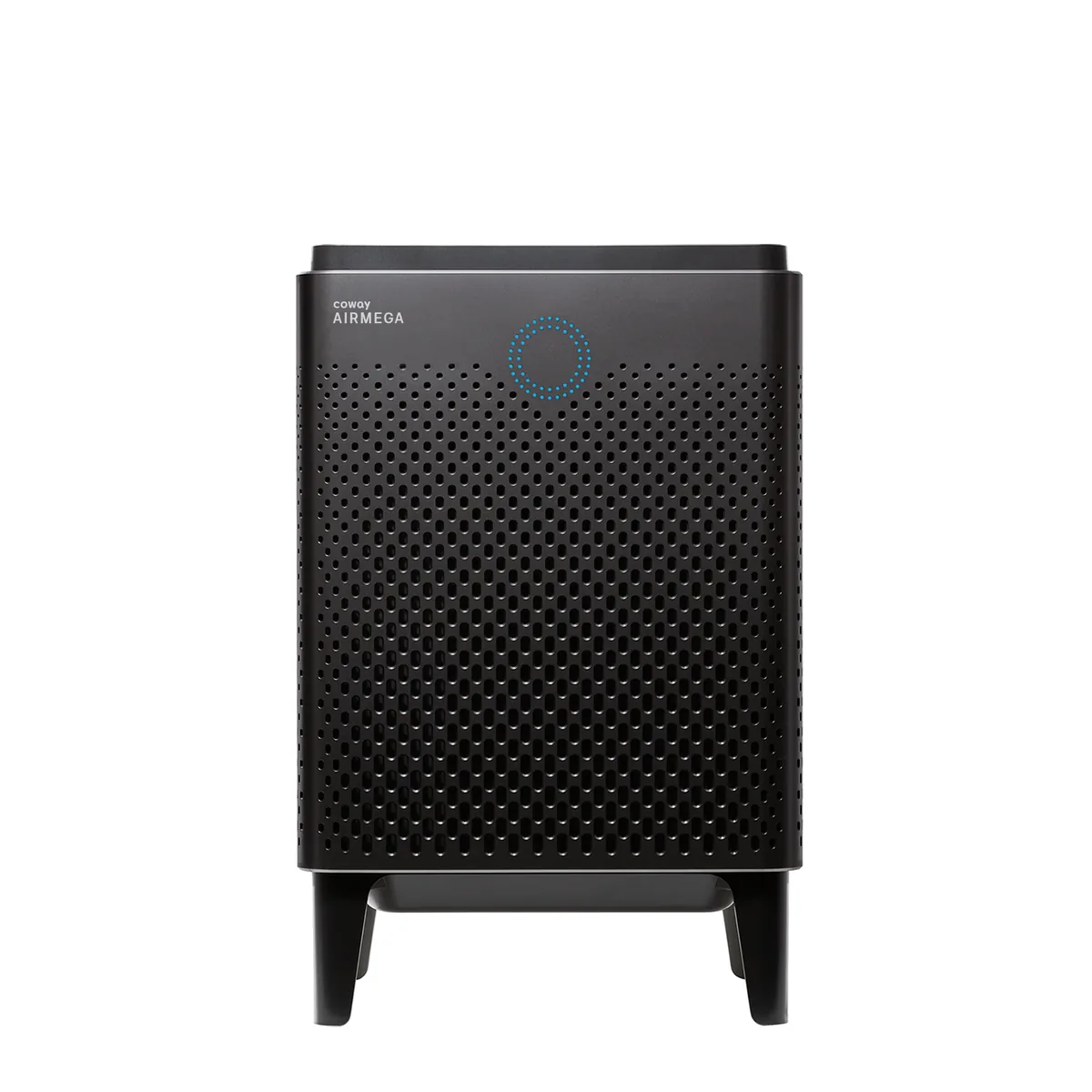
Coway
Coway Airmega 400
The Airmega 400 has been the quiet-workhorse pick for open-plan spaces since 2017, and it remains current in Coway's 2026 lineup alongside the Wi-Fi 400S. The dual-sided intake feeds two Max2 carbon/HEPA cartridges, producing a smoke CADR of 328 CFM - honest AHAM coverage around 508 sq ft, not the advertised 1,560 (that figure assumes just 2 air changes per hour). What the spec sheet undersells is how pleasant it is to live with: 22 dB on low, a muted 52 dB even at max (rare for this much airflow - the Honeywell HPA300 hits 63 dB doing less), a good particle sensor with a glanceable LED ring, and a smart mode that drops to fan-off eco when air stays clean. The twin cartridges also carry roughly double the carbon of most rivals, so it out-punches Levoit on kitchen and smoke odors. Costs are the trade-off: ~$130/yr in filters is more than double a Core 600S, and street price bounces between $300 and $450. long-term owners report 5+ years of uneventful service, which the 5-year motor warranty backs up. If the 600S is the spreadsheet winner, the 400 is the one people keep recommending after living with both.