CADR vs Coverage Claims: The Honest Number the Box Buries
Every air purifier box carries a square-footage claim, and most of them are technically-true nonsense. A purifier that honestly handles a 250 sq ft bedroom gets marketed as 'covers 1,075 sq ft' — same machine, different arithmetic. The difference is air changes per hour, and understanding it takes two minutes. Those two minutes are the entire skill of buying an air purifier, so here they are.
What CADR actually measures
CADR — Clean Air Delivery Rate — is the one independent, standardized performance number in this industry. Developed by AHAM (the appliance manufacturers' own association, to its credit) and measured in a sealed test chamber, it reports how many cubic feet per minute of genuinely clean air a purifier delivers against three particle types: smoke (the smallest, hardest particles), dust, and pollen. The smoke number is the headline spec because it's the toughest test and the one that maps to wildfire smoke, cooking fumes, and the fine PM2.5 particles that health research actually worries about. A purifier with 250 smoke CADR delivers 250 CFM of smoke-free air, full stop — fan speed, filter quality, and leakage all priced in.
What makes CADR trustworthy is that it punishes the two classic cheats simultaneously. A powerful fan pushing air through a leaky, mediocre filter scores poorly because the output air isn't clean; a superb filter strangling a weak fan scores poorly because there isn't much output air. The number is the product of airflow and filtration efficiency, which is exactly what your lungs experience. It's not a perfect metric — it's measured at max fan speed (where you won't run it at night), and it says nothing about gases and odors, which need carbon mass instead — but for comparing particle cleaning between two machines, nothing else comes close.
The coverage-claim shell game
AHAM's standard for converting CADR to room size assumes 4.8 air changes per hour — the room's full volume of air cleaned nearly five times every hour, which is what it takes to hold particle levels meaningfully down against continuous sources like smoke seeping in during a fire event. The convenient rule of thumb: multiply smoke CADR by about 1.55 to get honest square footage at 8-foot ceilings. A 141-CADR Levoit Core 300S is a ~219 sq ft machine. An AHAM Verifide seal on the box means this math specifically was independently checked.
Marketing coverage claims quietly swap in one air change per hour — a standard that means your air gets fully cleaned once every 60 minutes, which against any ongoing particle source is close to decorative. Same 141-CADR machine, '1,095 sq ft' on the listing. That's a 5x inflation with no lie told, and nearly every brand plays some version of it; the worst offenders push 6-7x. On every unit page on this site, we show both numbers side by side — the AHAM figure as 'honest coverage' and the marketing figure as 'claimed' — because the gap itself tells you how a brand talks to you.
Then there are the brands that decline to publish CADR at all — Dyson and Molekule most famously. Both sell heavily on design and proprietary-technology stories, and both have been repeatedly measured by independent testers (HouseFresh, Wirecutter, Consumer Reports) delivering a fraction of the particle cleaning of same-priced CADR-published rivals. There are legitimate quibbles with CADR, but a company that won't submit its $700 purifier to the industry's one standardized test has made a choice, and on our unit pages that refusal is flagged in red, because for a spec-driven purchase the missing spec is the finding.
Reading the numbers like an owner
Smoke CADR is the number to compare machines on, but two derived figures matter more for daily life. First, CADR-per-dollar: dividing smoke CADR by street price instantly reveals that the market's best value lives in the unglamorous middle — Winix and Levoit's mid-size units routinely deliver 3-4x the CADR-per-dollar of design-forward flagships, and one XL machine is usually cheaper per CFM than two smalls. Second, CADR-at-tolerable-noise: max-speed CADR is a showroom number, because nobody sleeps next to 54 dB. The machines that win long-term are the ones that still move serious air at 40 dB — which is why our comparison pages put sleep-mode noise right next to CADR, and why a physically bigger unit run at half speed beats a small unit screaming at max. Buy the CADR you need at the noise you'll accept, not the CADR the spec sheet peaks at.
The honest-coverage cheat sheet
| Smoke CADR | Honest coverage (AHAM, ~4.8 ACH) | Typical marketing claim |
|---|---|---|
| 100 CFM | ~155 sq ft — small bedroom, office | '450-800 sq ft' |
| 150 CFM | ~230 sq ft — standard bedroom | '700-1,100 sq ft' |
| 250 CFM | ~390 sq ft — living room, primary suite | '1,200-1,900 sq ft' |
| 350 CFM | ~540 sq ft — open living area | '1,700-2,600 sq ft' |
| 450+ CFM | ~700+ sq ft — great room, small open plan | '3,000+ sq ft' |
If a listing gives only a coverage claim and no CADR, work backwards: divide the claim by 4 to 5 and you'll usually land near the honest number. And if you can't find a CADR anywhere — not on the box, not in the manual, not in AHAM's directory — treat the product as unrated, because everyone who measured one of those independently found out why.
Units mentioned in this guide
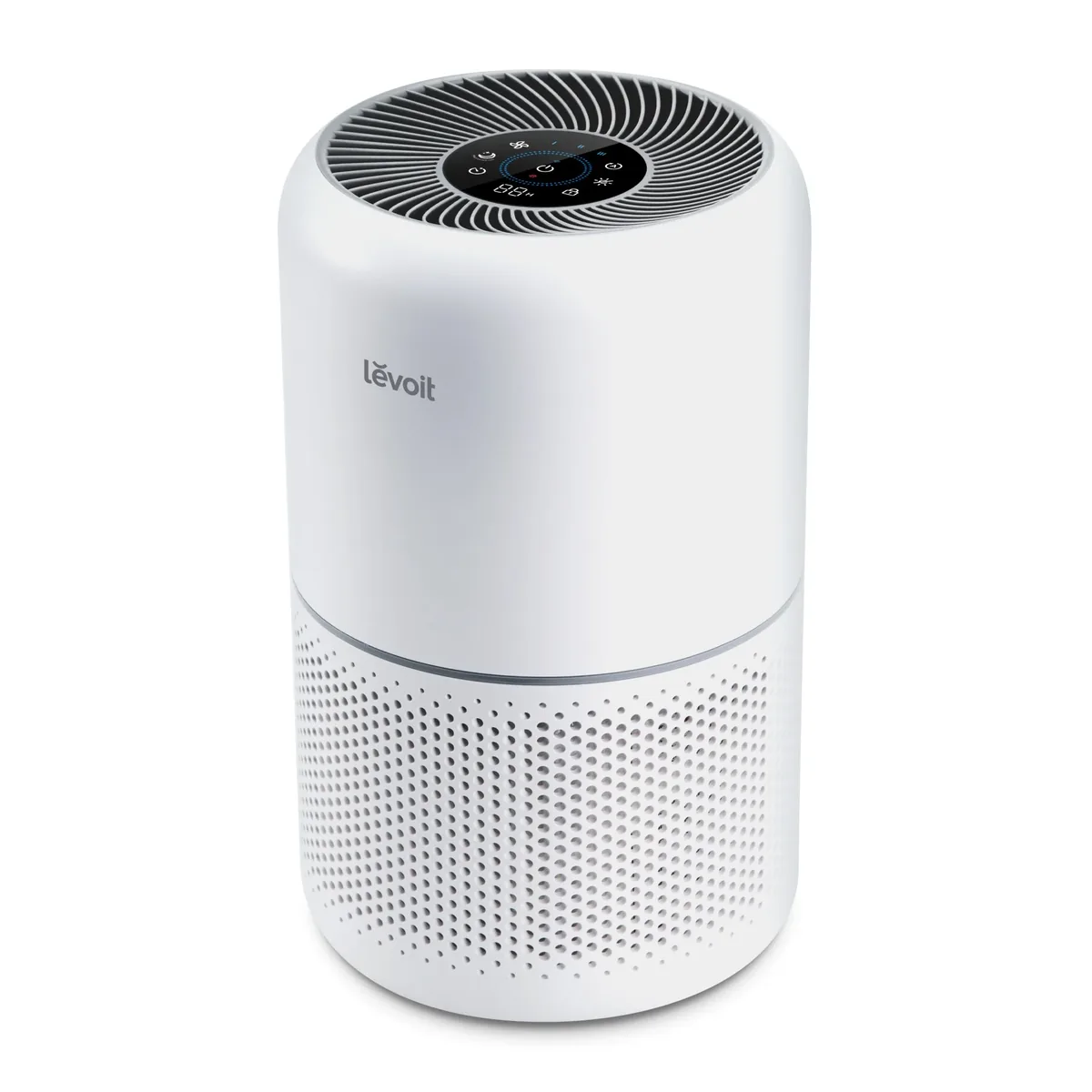
Levoit
Levoit Core 300S
The Core 300S is the smart version of the best-selling air purifier in America, and it earns the throne on value rather than raw power. AHAM-verified 141 CFM smoke CADR from a $110, six-pound cylinder is genuinely good, and HouseFresh's independent testing cleared their test room in 45 minutes — quicker than most rivals at this price. The auto mode is the real upgrade over the base Core 300: the PM2.5 sensor kicks the fan up when you're cooking or the dog shakes off, then drops back to a 22 dB sleep mode you truly cannot hear. The catch is the marketing math — Levoit's '1,095 sq ft' claim is a one-air-change-per-hour fantasy; honest coverage is about 219 sq ft. Air-purifier owner discussions generally recommend it for bedrooms and offices but points buyers to the Vital 100S or Winix 5500-2 for living rooms. Owner gripes are consistent: speed 3 is loud enough (about 50 dB) that most people never use it, the VeSync app nags about filter life on a timer rather than actual usage, and genuine filters at $26-40 mean maintenance can hit half the purchase price annually. Still the default recommendation for a first purifier, and it's earned that.
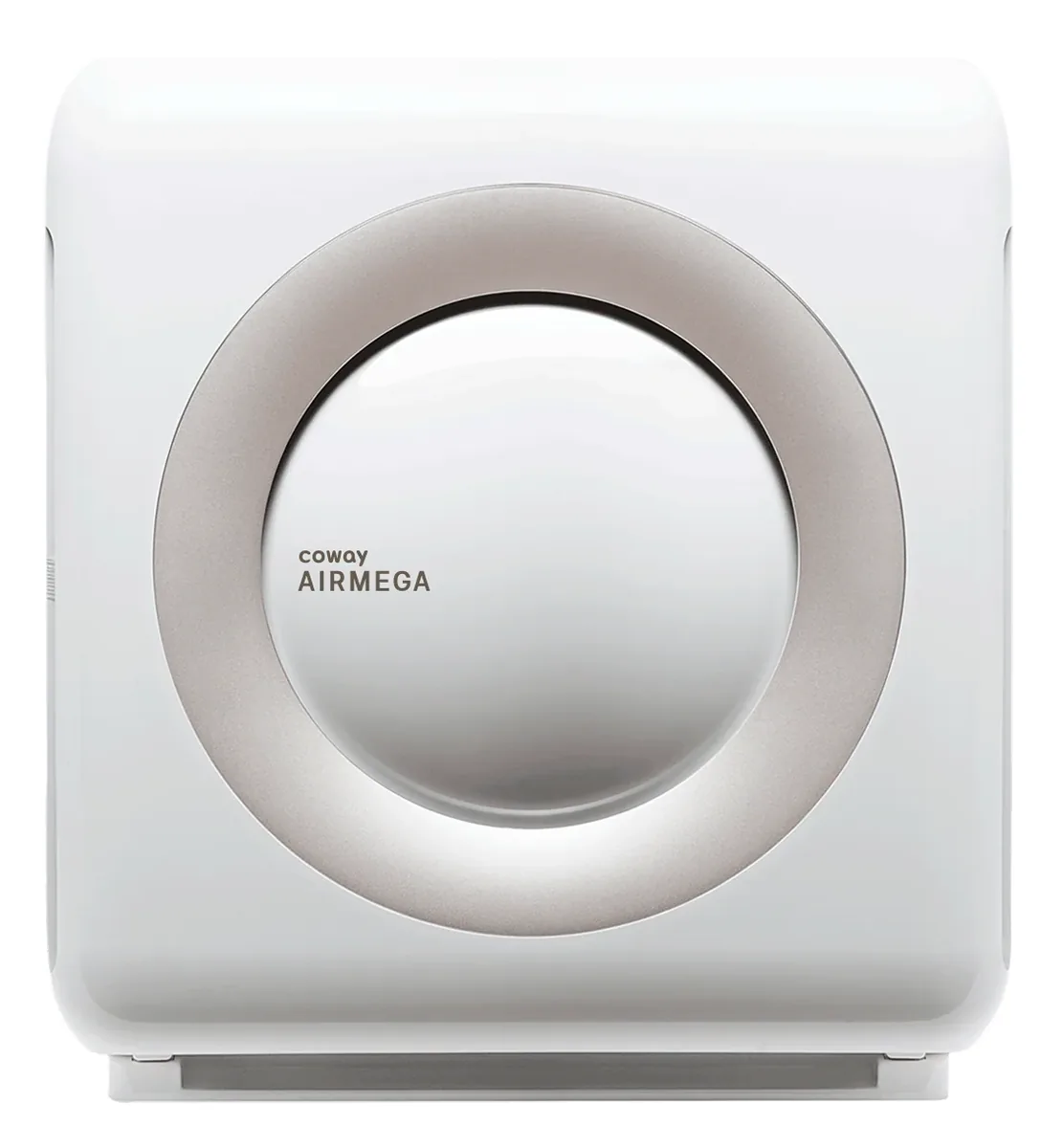
The AP-1512HH is the air purifier the entire industry gets measured against — a Wirecutter top pick for over a decade and still the default air-purifier owner discussions recommendation for a 300-400 sq ft room. The formula hasn't changed: AHAM-verified 233 CFM smoke CADR, a genuinely quiet 24 dB low speed, an eco mode that shuts the fan off when air is clean, and a decade-long track record of motors that simply don't die. HouseFresh's long-term testing repeatedly confirms it outperforms newer, pricier rivals per dollar. The honest caveats: the air quality sensor is dated and slower to react than a Levoit 400S or Winix auto mode, the bright AQ ring needs a manual lamp-off press at night (it doesn't dim automatically on older units), and max speed is audible at 54 dB. The switchable ion feature ('Vital Ion') is best left off. Coway launched a successor, the Airmega Mighty2 (AP-1512N), in March 2026, but the original remains in production and is usually cheaper — buy whichever is on sale. Versus the Winix 5500-2 it trades washable-carbon economy for a longer 3-year warranty and lighter body.
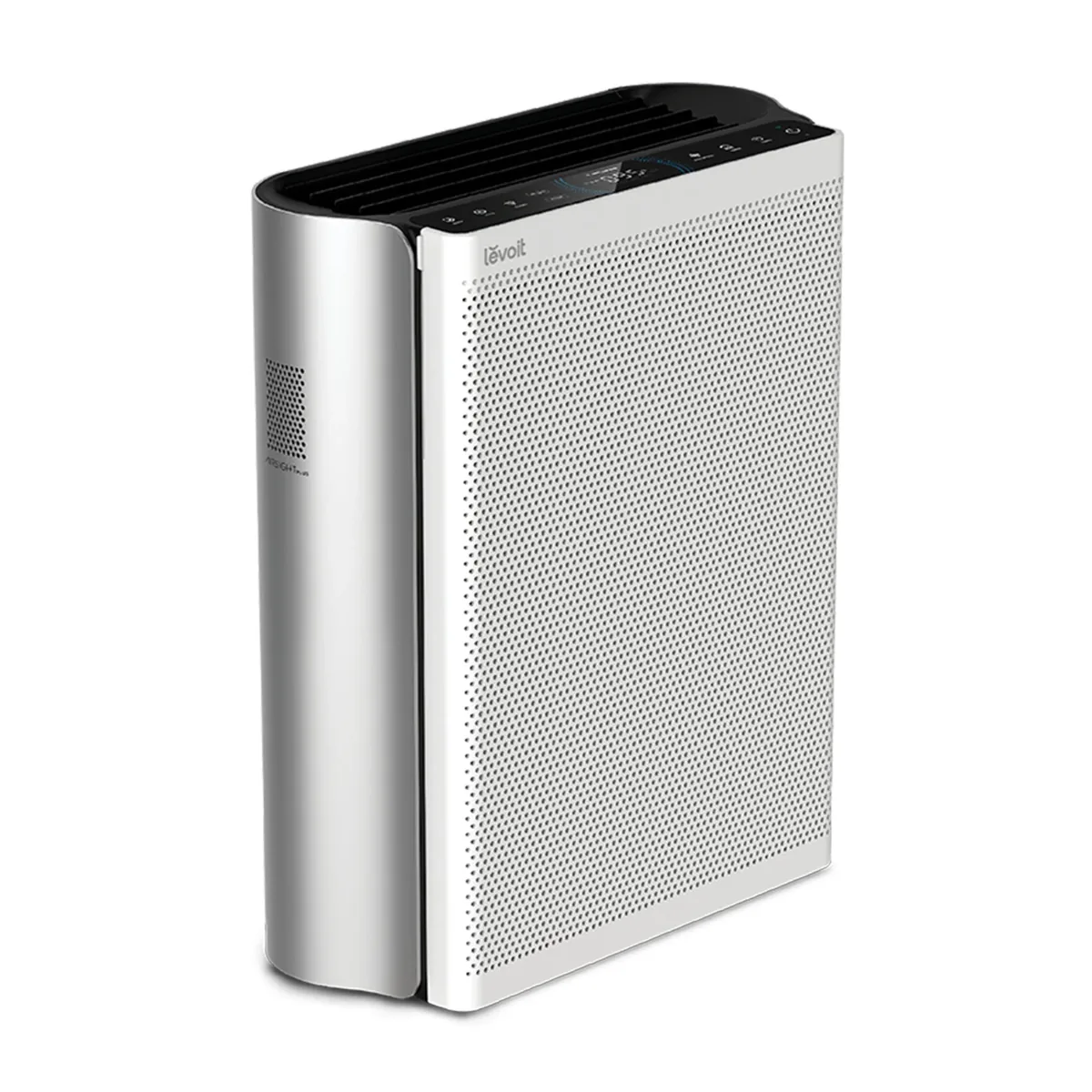
Levoit
Levoit EverestAir
The EverestAir is Levoit's flagship, and HouseFresh's independent testing backs the hardware: 360 CFM smoke CADR from a side-intake tower that cleared their test room in 16 minutes, making it one of the fastest purifiers they'd tested. The design is genuinely premium - a tilted control deck, magnetic front panel, washable pre-filter, and a 3-channel laser sensor that displays PM1.0, PM2.5, and PM10 separately rather than a single vague number. The catch is the marketing math: Levoit advertises 2,790 sq ft, but that's at a meaningless 1 air change per hour. At the AHAM standard of ~4.8 changes per hour, honest coverage is 558 sq ft - still excellent, but a fifth of the claim. The bigger problem is price. At the $499 MSRP it competes with the Coway Airmega 400 and Blueair 211i Max; meanwhile Levoit's own Core 600S delivers more CADR (410 vs 360) for roughly half the money, trading only the nicer sensor suite, lower sleep-mode noise floor, and looks. The EverestAir is frequently discounted to $300-350, where it becomes an easy recommendation. At full price, air-purifier owner discussions consensus is that you're paying a steep premium for aesthetics over airflow.