Air Purifiers for Allergies, Pets, and Dust: What They Fix and What They Can't
Most air purifiers aren't bought for wildfire season — they're bought because someone's allergies are miserable, the cat box announces itself, or the dresser grows a fur coat two days after dusting. These are the right reasons to buy one, and also the categories where marketing writes checks the machine can't cash. Here's what a purifier genuinely does for each, per the studies and ten thousand owner threads — and what needs a different tool entirely.
Allergies and asthma: real relief, honestly sized
The evidence is better than skeptics think and smaller than the boxes imply. Controlled studies of HEPA filtration in bedrooms show measurable reductions in allergy symptoms and some asthma markers — enough that allergists commonly recommend bedroom filtration alongside (never instead of) medication and allergen avoidance. The mechanism is straightforward: pollen, dander, and dust-mite debris are exactly the particle sizes HEPA eats, and cutting the airborne load your immune system fights all night measurably lowers the morning misery. The community's consistent report matches the literature: the bedroom unit run 24/7 is the one that changes lives; the living-room unit is a nice-to-have.
The honest caveats: dust-mite allergen mostly lives in bedding and carpet, going airborne only when disturbed — so a purifier helps but washing bedding hot and encasing the mattress helps more. Symptom relief takes weeks of continuous running to notice, not days, which is why 'no difference after the weekend' reviews say more about timelines than machines. And for asthma specifically, avoid anything with an ionizer even at 'safe' ozone levels — ozone is a trigger, and every unit here carries an ionizer flag for exactly this shopping trip. What a purifier will never do: touch symptoms caused by food, contact, or anything else that isn't airborne. It cleans air; it isn't an antihistamine.
Pets: dander is a particle problem, smell is a carbon problem
Pet dander — the microscopic skin flakes that carry cat and dog allergens — is a legitimate purifier win: it's small, it floats for hours, and HEPA captures it. A right-sized unit in the bedroom (door closed, cat evicted from the pillow) is the standard advice on every allergy sub, and partnered-with-an-allergic-person threads report it makes cohabitation possible more often than any other single purchase. Buy by CADR like always, add a washable prefilter you'll actually vacuum — pet hair loads prefilters weekly, not monthly — and expect filter life on the short end of the stated range in a multi-pet home.
Pet smell is a different molecule, literally: odors are gases, gases sail through HEPA, and only activated carbon mass adsorbs them. The thin carbon 'odor layer' on budget units is theater against a litter box; the machines with real pelletized carbon by the pound (Winix's washable-carbon designs, Austin Air's steel boxes) genuinely dent it. Even then, physics sets the ceiling: a purifier removes the smell that reaches it, while the litter box keeps manufacturing more at the source. Scoop more, place the unit near (not over) the box, and treat carbon as mitigation, not magic. If a listing promises to 'eliminate' pet odors, you've learned something about the listing.
Dust: your room will be less dusty, and you will still dust
'I bought a purifier and there's still dust on my dresser' is the most common disappointment thread in the category, and it's a physics misunderstanding the boxes encourage. Dust you see on furniture is the heavy fraction — particles big enough to settle in minutes, faster than any purifier can drag them across the room. What a purifier removes is the fine airborne fraction: the haze in a sunbeam, the stuff you inhale, the slow feeders of that dresser layer. Run one 24/7 and owners consistently report the same result the physics predicts: noticeably slower dust accumulation — many say half the dusting frequency — and visibly cleaner sunbeams, but never a dust-free shelf.
Two ways to move the needle further: run higher fan speeds when the room is occupied and being stirred up (walking, bed-making, and vacuuming are what launch settled dust back into the air where the purifier can finally get it), and attack sources — a HEPA-bag vacuum and hard-surface floors do more for the dresser than a second purifier. If dust is extreme and the house is forced-air, check the furnace filter first: a MERV-13 in the air handler filters the whole house on equipment you already own, and it's the highest-CADR-per-dollar upgrade in this entire guide.
Mold and musty rooms: spores yes, colony no
A purifier captures airborne mold spores — genuinely useful for spore-allergic people — and does absolutely nothing about the colony producing them, because mold is a moisture problem wearing an air-quality costume. The musty basement smell is microbial off-gassing (MVOCs), which needs carbon to adsorb and, more to the point, needs the moisture fixed to stop. The honest order of operations every remediation thread converges on: find and fix the water (leak, condensation, humidity above ~60%), run a dehumidifier to hold 45-50%, clean up existing growth, and then a purifier with real carbon handles the residual spores and smell. A purifier bought instead of a dehumidifier for a damp basement is the wrong tool purchased first — and the most common mold-adjacent buying mistake on the forums.
VOCs and off-gassing: carbon helps, ventilation wins
New mattress, fresh paint, new flooring, that new-car smell in furniture form — volatile organic compounds are gas-phase, so this is carbon territory again, and the dose makes the tool. For mild cases, a machine with substantial carbon (multiple pounds, not a dusted mesh) meaningfully accelerates the fade. For headache-grade off-gassing, ventilation embarrasses adsorption: opening windows for twenty minutes exchanges more contaminated air than a carbon bed adsorbs in a day, and off-gassing sources emit for weeks, saturating carbon that then needs replacing. The playbook that works: ventilate hard early (when emission is highest), let the new thing off-gas somewhere unoccupied if you can, and use the carbon machine for the long tail and the rooms you can't air out. Formaldehyde specifically is the hardest case — it's barely adsorbed by plain carbon; the few machines with real formaldehyde-specific media are premium, and honesty requires saying most 'removes formaldehyde' claims ride on trace-level tests.
Units mentioned in this guide
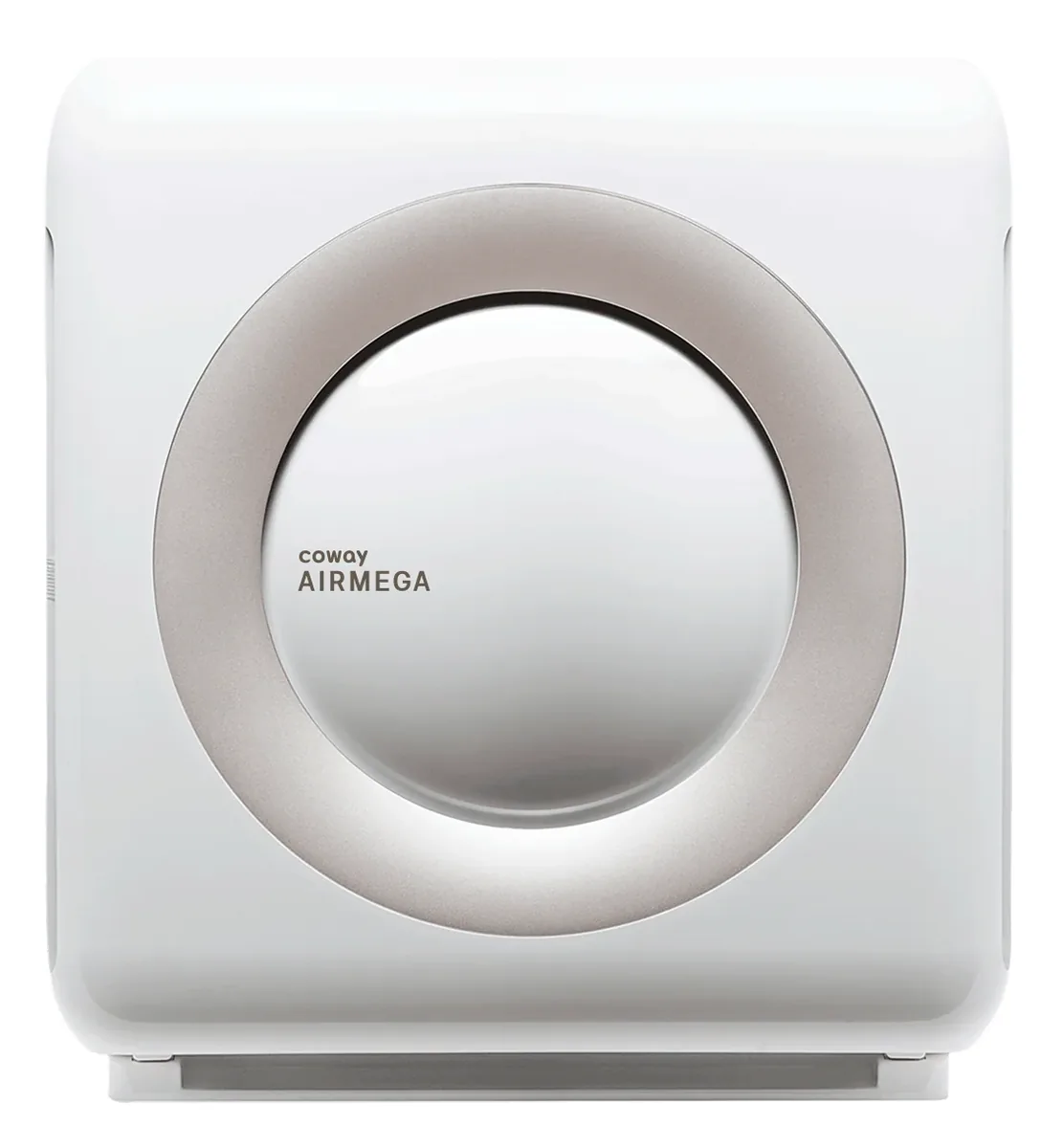
The AP-1512HH is the air purifier the entire industry gets measured against — a Wirecutter top pick for over a decade and still the default air-purifier owner discussions recommendation for a 300-400 sq ft room. The formula hasn't changed: AHAM-verified 233 CFM smoke CADR, a genuinely quiet 24 dB low speed, an eco mode that shuts the fan off when air is clean, and a decade-long track record of motors that simply don't die. HouseFresh's long-term testing repeatedly confirms it outperforms newer, pricier rivals per dollar. The honest caveats: the air quality sensor is dated and slower to react than a Levoit 400S or Winix auto mode, the bright AQ ring needs a manual lamp-off press at night (it doesn't dim automatically on older units), and max speed is audible at 54 dB. The switchable ion feature ('Vital Ion') is best left off. Coway launched a successor, the Airmega Mighty2 (AP-1512N), in March 2026, but the original remains in production and is usually cheaper — buy whichever is on sale. Versus the Winix 5500-2 it trades washable-carbon economy for a longer 3-year warranty and lighter body.
Winix
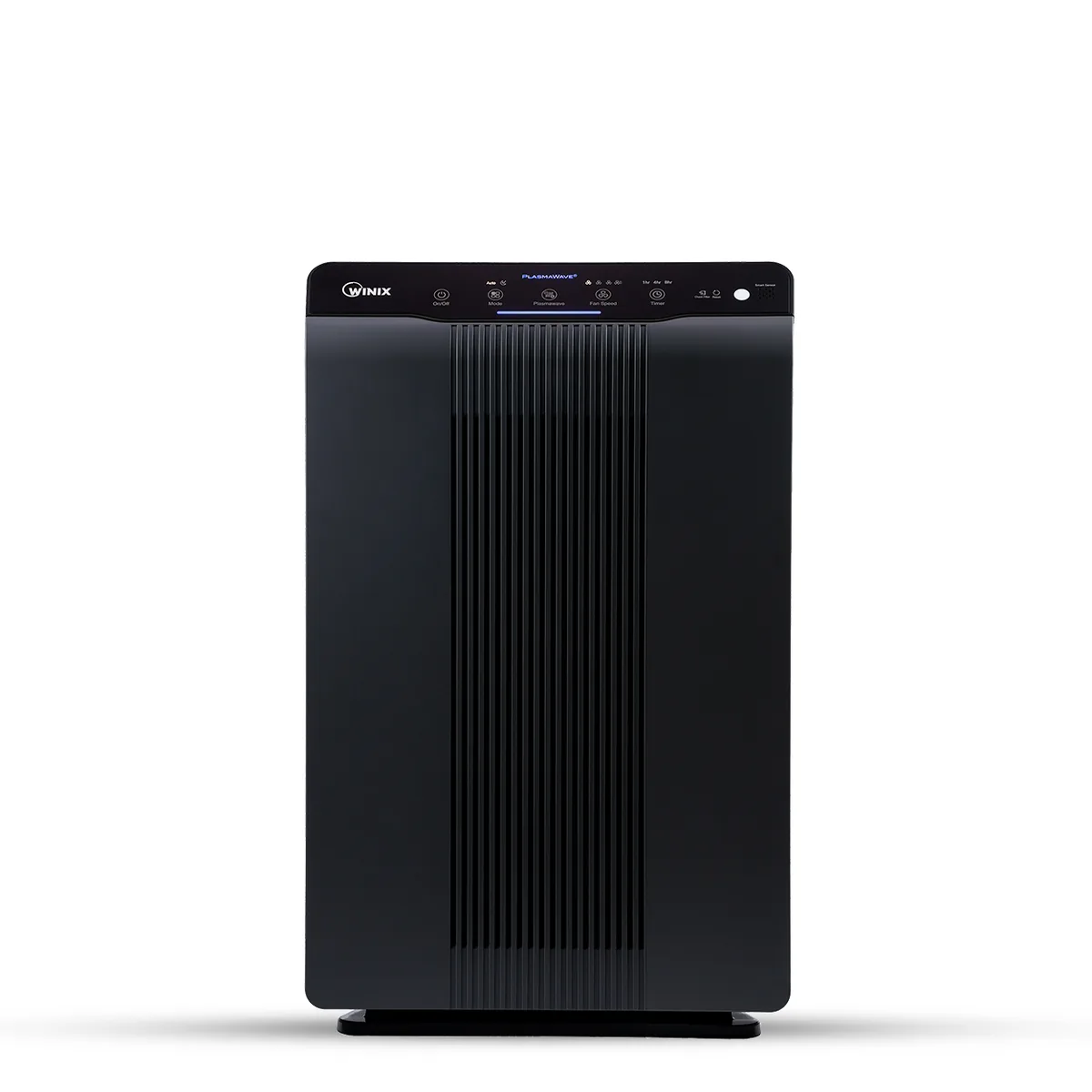
Winix 5500-2
The 5500-2 is air-purifier owner discussions' undisputed value king — the answer to roughly every third 'what should I buy' thread for years. Its AHAM-verified 232 CFM smoke CADR matches the Coway Mighty, but it adds a genuinely useful washable AOC carbon filter (real pelletized-carbon odor removal, not a dusted sheet) and one of the best auto modes at any price, backed by HouseFresh testing that clocked it clearing their test chamber faster than machines costing $100 more. Now the asterisk: Winix confirmed in 2025 that the 5500-2 and 5300-2 are discontinued in North America once inventory sells through, replaced by the Winix 5510. Filters will keep shipping until 2032, so buying one today is still safe, and street prices around $160 (often $130 on sale) remain the class's best CADR-per-dollar. Compared with the Coway you give up a year of warranty and a few dB at the top end (65 dB turbo is loud), and gain better odor handling and the superior sensor. PlasmaWave is Winix's plasma ionizer — it's switchable, and most owners run with it off. If you see it on clearance, this is still the smart-money buy of the entire mid-size class.
Levoit
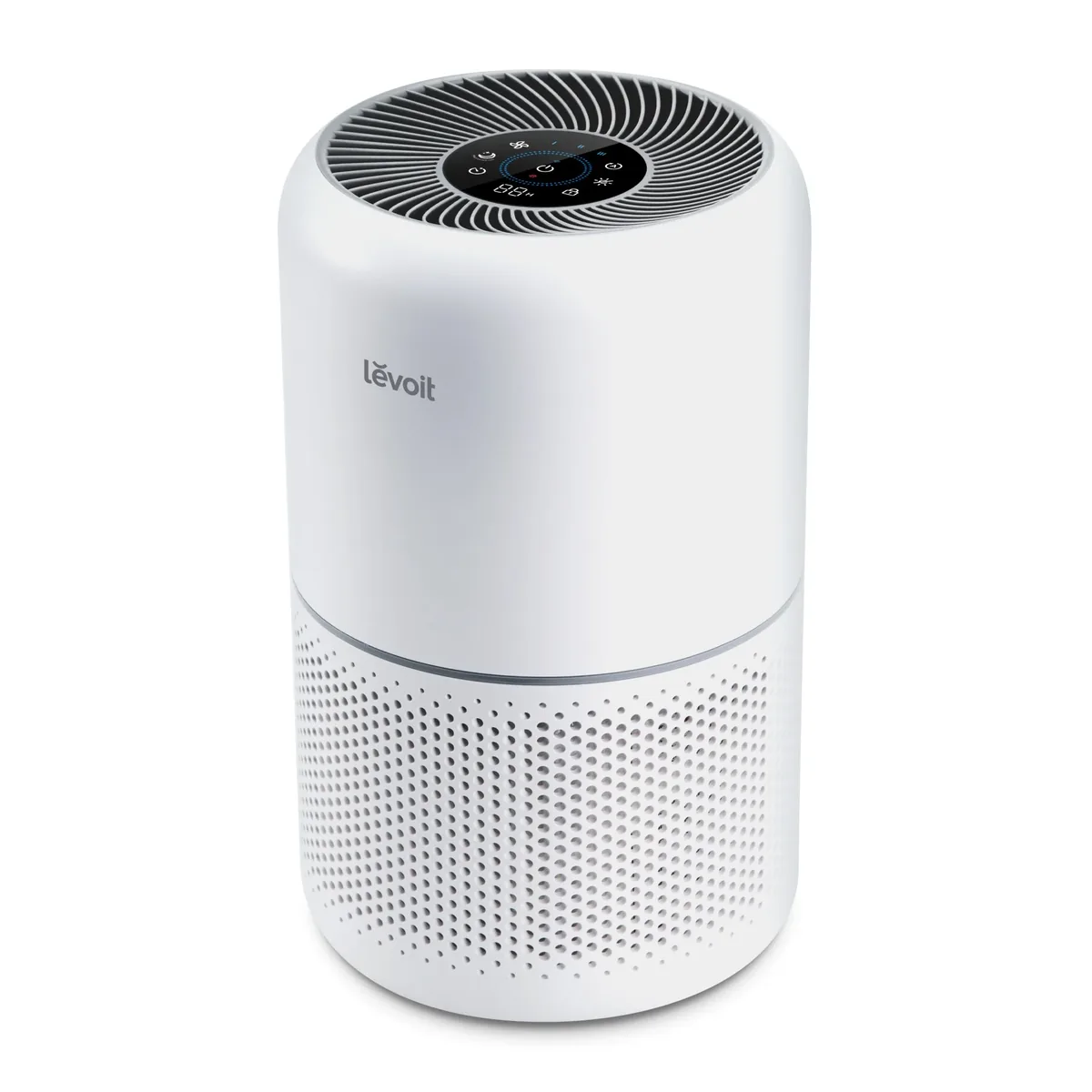
Levoit Core 300S
The Core 300S is the smart version of the best-selling air purifier in America, and it earns the throne on value rather than raw power. AHAM-verified 141 CFM smoke CADR from a $110, six-pound cylinder is genuinely good, and HouseFresh's independent testing cleared their test room in 45 minutes — quicker than most rivals at this price. The auto mode is the real upgrade over the base Core 300: the PM2.5 sensor kicks the fan up when you're cooking or the dog shakes off, then drops back to a 22 dB sleep mode you truly cannot hear. The catch is the marketing math — Levoit's '1,095 sq ft' claim is a one-air-change-per-hour fantasy; honest coverage is about 219 sq ft. Air-purifier owner discussions generally recommend it for bedrooms and offices but points buyers to the Vital 100S or Winix 5500-2 for living rooms. Owner gripes are consistent: speed 3 is loud enough (about 50 dB) that most people never use it, the VeSync app nags about filter life on a timer rather than actual usage, and genuine filters at $26-40 mean maintenance can hit half the purchase price annually. Still the default recommendation for a first purifier, and it's earned that.