Smart Air
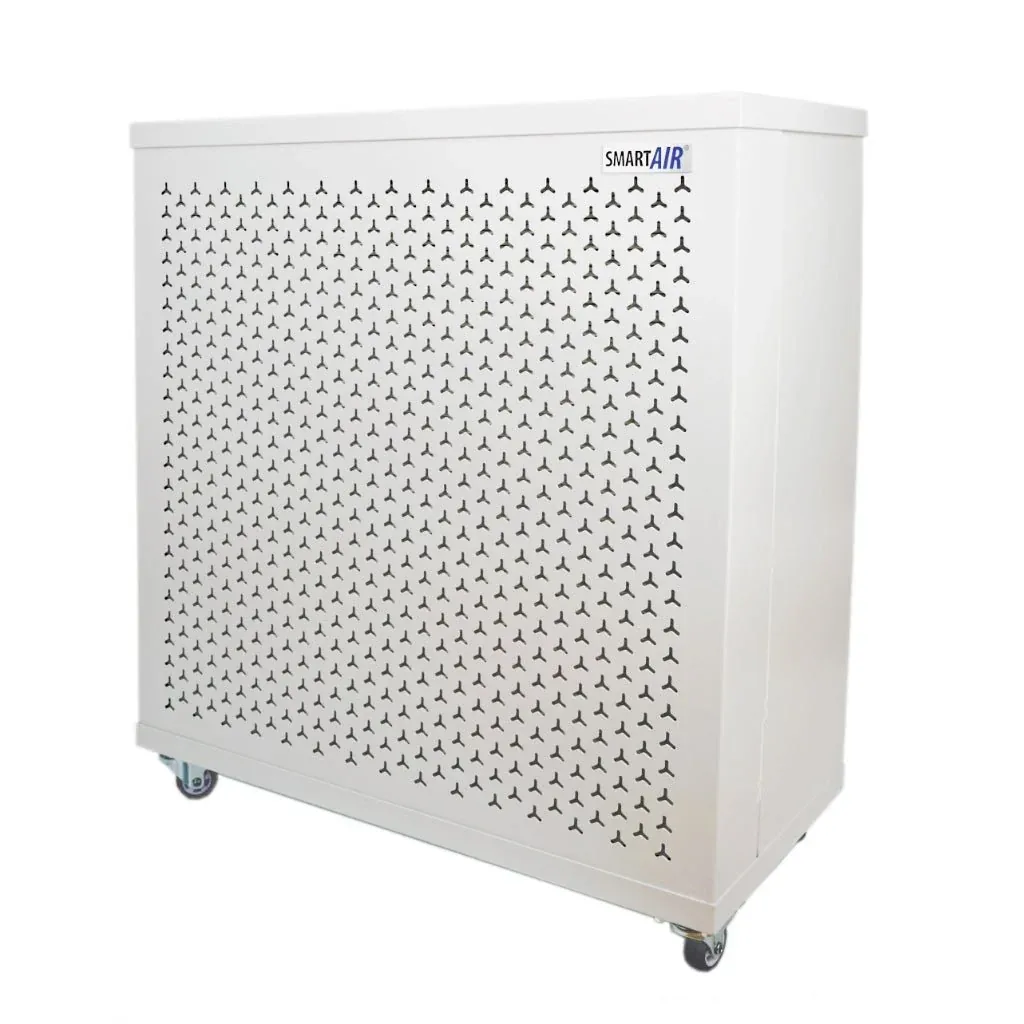
Smart Air Blast Mini Mk II
The Blast Mini is what happens when an engineering-first company decides the answer to big spaces is simply a bigger filter: a 59-pound powder-coated steel cabinet on lockable wheels pushing air through a single HEPA panel the size of a bar stool. It is the most powerful purifier HouseFresh has ever tested — 400 CFM of measured PM1 CADR, clearing their 728 cu ft test room in 15 minutes, faster than the Levoit EverestAir, AirDoctor 3000, and the $1,200 IQAir HealthPro Plus. The party trick is quiet bulk cleaning: 272 CFM of PM1 CADR while staying under 45 dB, more sub-45 dB clean air than any other unit HouseFresh measured here and triple what the IQAir manages at the same loudness. That's the fan-filter physics of a huge, low-restriction filter doing its thing. The trade-offs are physical and philosophical: it's furniture-sized, 45 dB is its floor (no whisper mode), there are zero smart features, and 123W at full tilt shows up on your power bill. Schools and clinics in the UK's Safe Air Schools program spec this machine for classrooms, which is exactly its natural habitat — open-plan offices, studios, great rooms, basements. For a normal bedroom it's absurd. For 600+ honest square feet, almost nothing touches it per dollar.
Specifications
Highlights
Pros
- ✓Fastest room-clearing performance in HouseFresh's entire test database
- ✓Sub-45 dB CADR of 272 CFM — cleans more air quietly than premium rivals do at full blast
- ✓One oversized H13 panel lasts 13 months; filter changes are a once-a-year event
- ✓Steel construction with a decade-long service outlook, like a commercial FFU
- ✓No ionizer, no ozone, no proprietary electronics to brick the machine
- ✓Out-cleans the IQAir HealthPro Plus while costing half as much upfront
Cons
- ✗59 lbs and the footprint of an end table — this is furniture, not an appliance you tuck away
- ✗45 dB minimum means it is never silent; wrong tool for a small bedroom
- ✗122.7W at top speed makes it the most power-hungry unit here (~$136/year electricity)
- ✗No auto mode, sensor, app, or timer at $599
- ✗Direct-order only in the US with a 1-year warranty and no retail review base
Common Questions
What kind of space is the Blast Mini built for?
How loud is it?
What does filter maintenance look like?
How much electricity does it burn?
How does it stack up against premium machines like the IQAir HealthPro Plus?
Compare the Smart Air Blast Mini Mk II
Related air purifiers
More from Smart Air →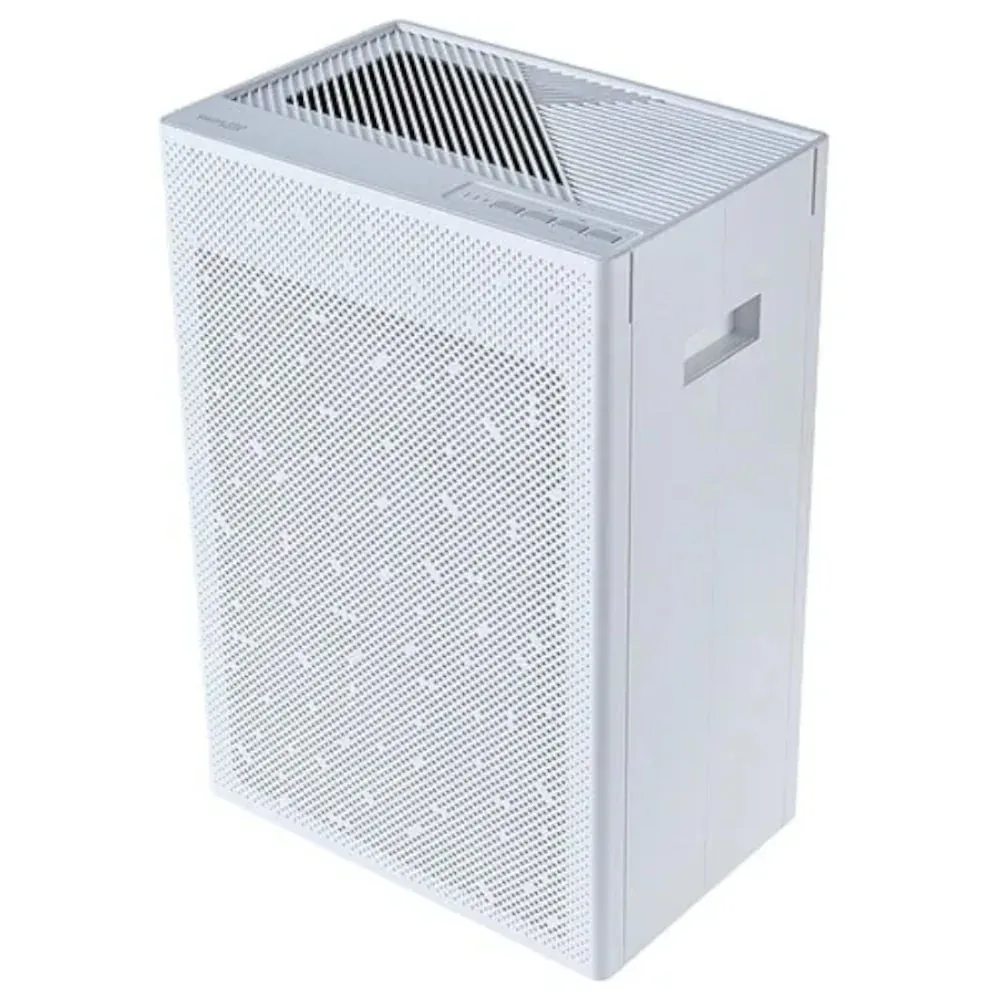
Smart Air
Smart Air SA600
Smart Air is the anti-marketing purifier company — a certified B-Corp founded by a University of Chicago professor who started strapping HEPA filters to box fans in Beijing and publishing the test data. The SA600 is their most refined machine: a dual-inlet design that pulls air through separate HEPA-plus-carbon stacks on each side, so it moves serious air (HouseFresh measured 287 CFM dust CADR and 249 CFM PM1) without the shriek of a single overworked fan. Three of its five speeds run under 45 dB, and its sub-45 dB PM1 CADR of 128 CFM embarrasses machines costing four times more — the $1,200 IQAir manages only 86 CFM at livable volume. HouseFresh's 728 cu ft test room cleared in 24 minutes, faster than the IQAir HealthPro Plus. What you give up is everything smart: no auto mode, no sensor, no app — deliberate omissions Smart Air argues add cost without cleaning air. At $280 with $71/year in 18-month filters, its only real value rival is the AirFanta 3Pro, which delivers more raw CADR for less money but with a rougher, boxier presence. The SA600 is what the air-purifier owner discussions crowd means when they say 'buy CADR, not features' — just in a housing you won't mind looking at.
Smart Air
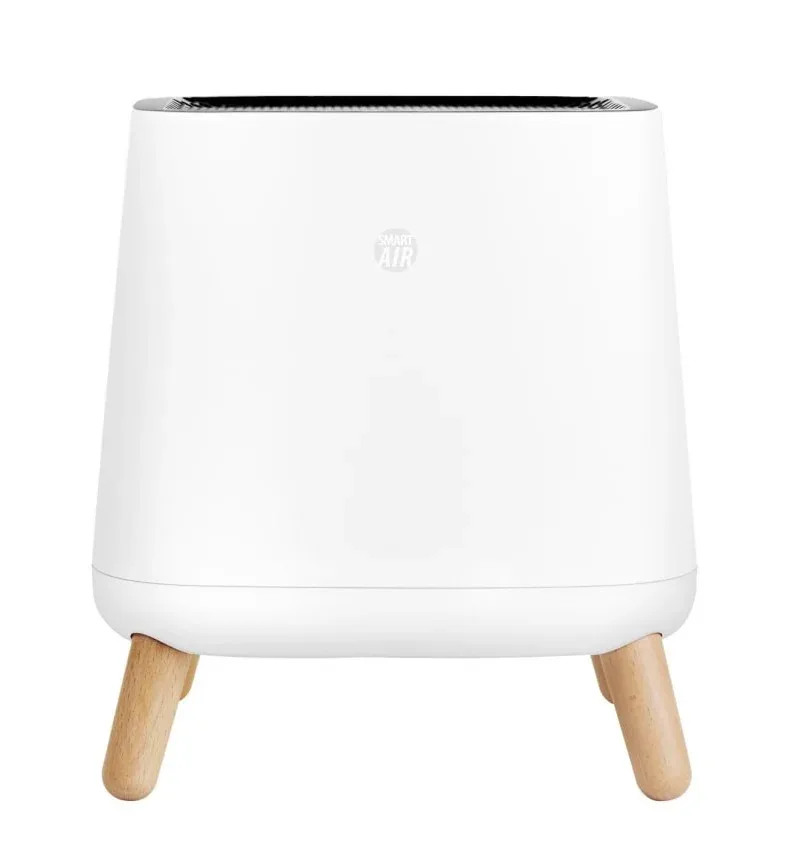
Smart Air Sqair
Our remaining value-nerd slot goes to the Sqair over the Levoit Sprout because it's the purifier that started the whole 'just buy CADR' movement: Smart Air crowdfunded it in 2019 as 'the world's most cost-effective air purifier,' it won a Dezeen Award for design, and it remains the cheapest credible sealed-HEPA machine from a company that publishes its own test data. HouseFresh measured 105 CFM smoke CADR — honest small-room performance (~163 sq ft at 4.8 ACH) that cleared their test room in 32 minutes, quicker than a Levoit Core 300 and, pointedly, ten minutes faster than the $399 Mila. At $1.42 per CFM it's one of the best value ratios HouseFresh has recorded, and the running costs stay boring: $74/year in filters, $41/year in electricity, zero standby draw. The honest caveats: the marketing's 430 sq ft figure assumes lax air-change math, speed 3 is a 58 dB roar you won't live with (real-world use is speeds 1-2), the carbon layer costs extra, and there's no sensor, auto mode, or timer of any kind. The beechwood-legged minimalist cube looks better in a bedroom than anything within $100 of it, which is precisely the pitch: Scandinavian-adjacent design and verified clean air, nothing else.
Medify Air
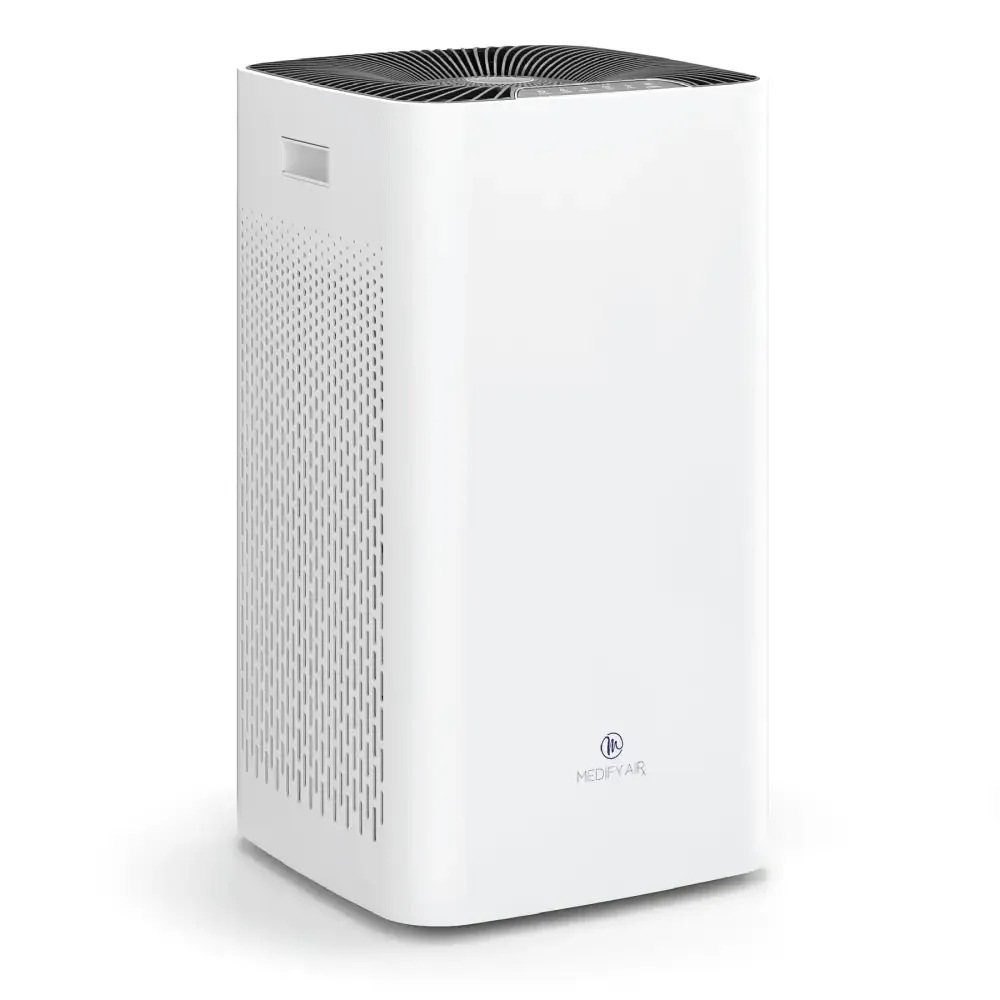
Medify MA-112
The MA-112 moves a genuinely huge amount of air - the V3.0's AHAM figures are 561 CFM smoke CADR and 869 sq ft of verified coverage, which puts it in Airmega ProX territory for half the money. Then the marketing takes over: Amazon's listing headline is '5,948 sq ft in 1 hour,' a 1-air-change figure nearly seven times the honest number, stacked on top of 'medical grade H13/H14' language that air-purifier owner discussions have been rolling its eyes at for years. The real costs live in the filters. The dual intakes each take a filter, sets are rated at just 2,500-3,000 hours, and genuine replacements are ~$137 a set - about $274/yr, the highest running cost in this class by a wide margin - while the lifetime warranty is written to require exactly that genuine-filter cadence. It's also a big, loud machine: 33.5 lbs, 95 W, and around 70 dB at max (reviewers measured 72), though the 35 dB sleep floor is livable. There's a particle sensor with auto mode, but no Wi-Fi at a price where Coway and Levoit include it, and no Energy Star listing. If you need maximum CFM per purchase dollar for a big open space and accept the filter bill, it delivers; most buyers are better served by a Core 600S or two.
Blueair
Blueair Blue Signature
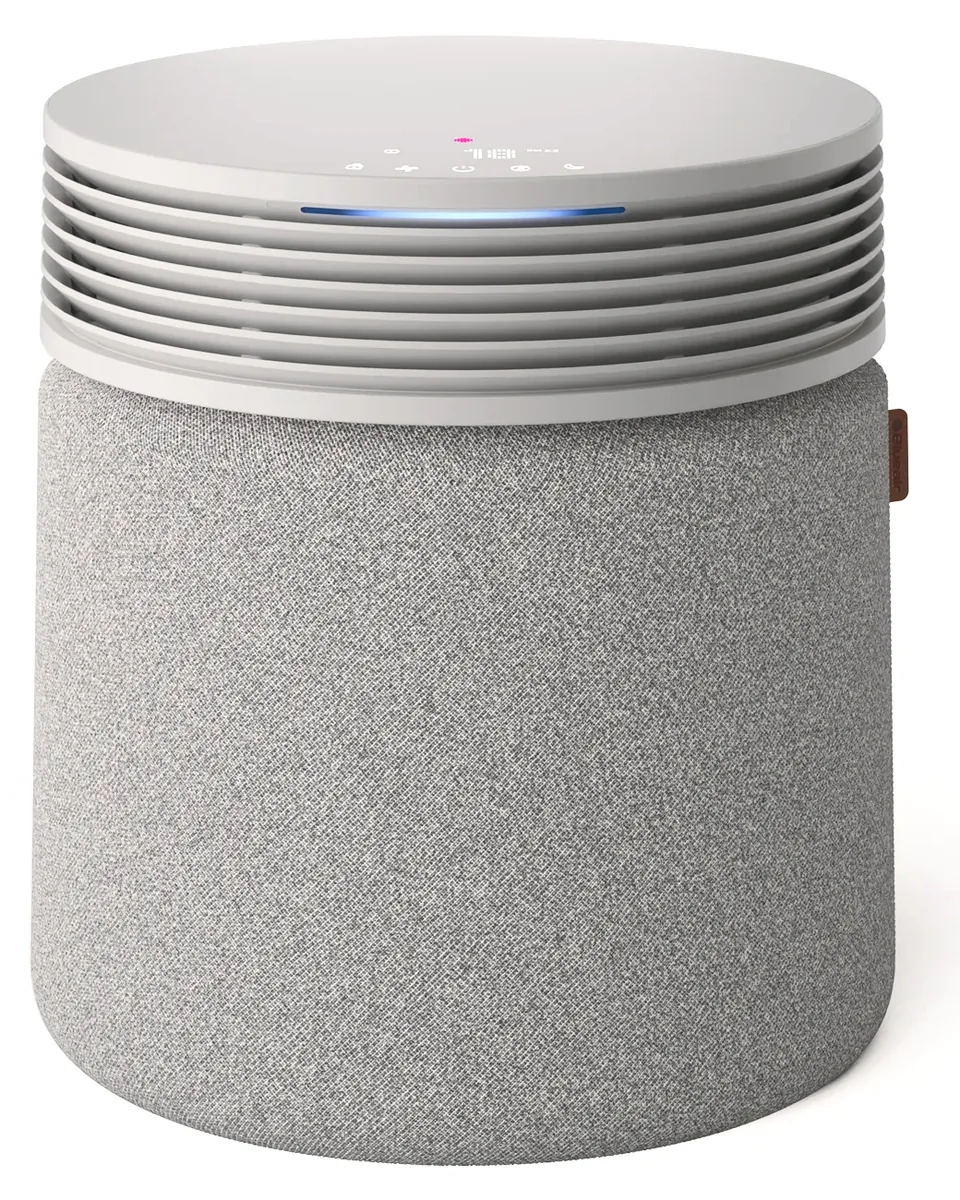
Substitution note: this replaces the discontinued HealthProtect 7470i and Classic 605 on our list - Blueair retired both, and the Blue Signature is the brand's current 2026 flagship. It's the rare premium purifier where independent testing beats the skepticism: HouseFresh measured a 400 CFM PM1 CADR at top speed, cleared their test room in 15 minutes, and - crucially - found it still moved ~229 CFM at its 40 dB Speed 2, meaning it cleans seriously fast at a volume you can live with. Official AHAM figures are 455 CFM smoke CADR and 705 sq ft at ~5 air changes per hour; Amazon's 3,385 sq ft headline is the 1-ACH fiction, off by nearly 5x. The furniture-style flat top doubles as a side table, it weighs a startling 13 lbs, and max power draw is just 40 W. The pelletized carbon layer is more substantial than the token dusting in the Blue Pure line. Caveats: at $450 you're paying a design premium over a Core 600S with similar airflow, the bipolar ionization stage cannot be disabled (HouseFresh's main criticism, though they measured ozone at a negligible 3 ppb), filters run ~$100 every 9-12 months, and the product is new enough that no retailer rating base has matured - we show no rating rather than guess.
Blueair
Blueair Blue Pure 211i Max
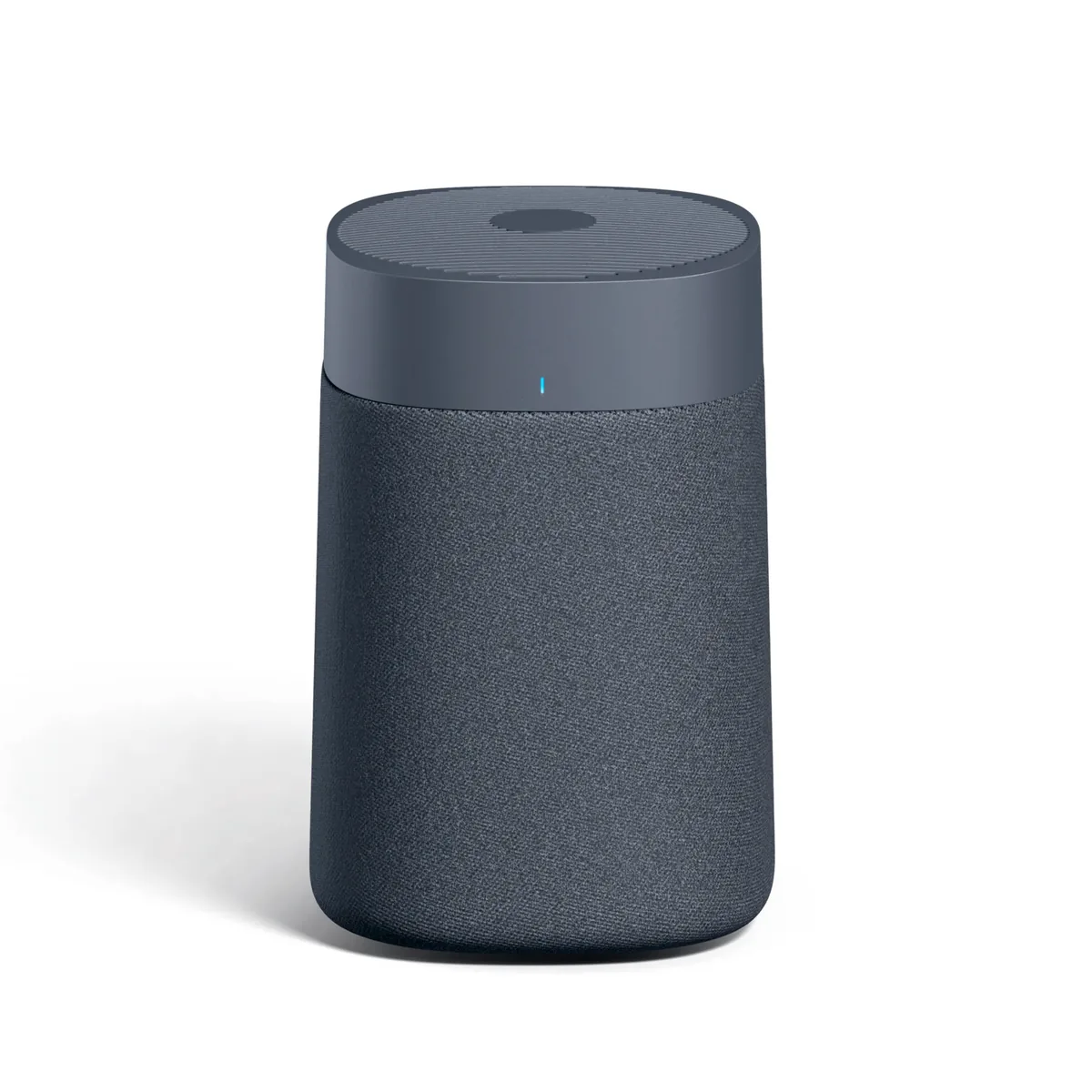
The 211i Max is why Blueair retired the Classic 605: it delivers flagship airflow - 435 CFM smoke CADR, more than a Levoit Core 600S - from a 16-lb fabric-wrapped drum that sips 46 W and idles at 23 dB. The trick is HEPASilent, which electrostatically charges particles before a looser, lower-resistance filter catches them, so Blueair gets big CADR without big fan noise. That's also the asterisk: the charging stage is a form of ionization that cannot be disabled. It's CARB-certified and independent testing of Blueair's implementation measures ozone below detection thresholds, but strictly-mechanical purists should look at Levoit or Coway instead. Coverage marketing is the usual game - Amazon listings tout 3,235 sq ft, which is the 1-air-change-per-hour figure; Blueair's own honest spec is 674 sq ft at 4.8 ACH, still comfortably extra-large. Consumer Reports rates the 211i Max highly, air-purifier owner discussions treat it as the quiet-large-room default alongside the 600S, and the Amazon base (4.5 stars, 11,000+ ratings) is consistent with that. Weak points are modest: a single-number air quality readout, filters that cost ~50% more per year than Levoit's, and a stingy 1-year base warranty you must register to extend.
Levoit
Levoit Core 600S
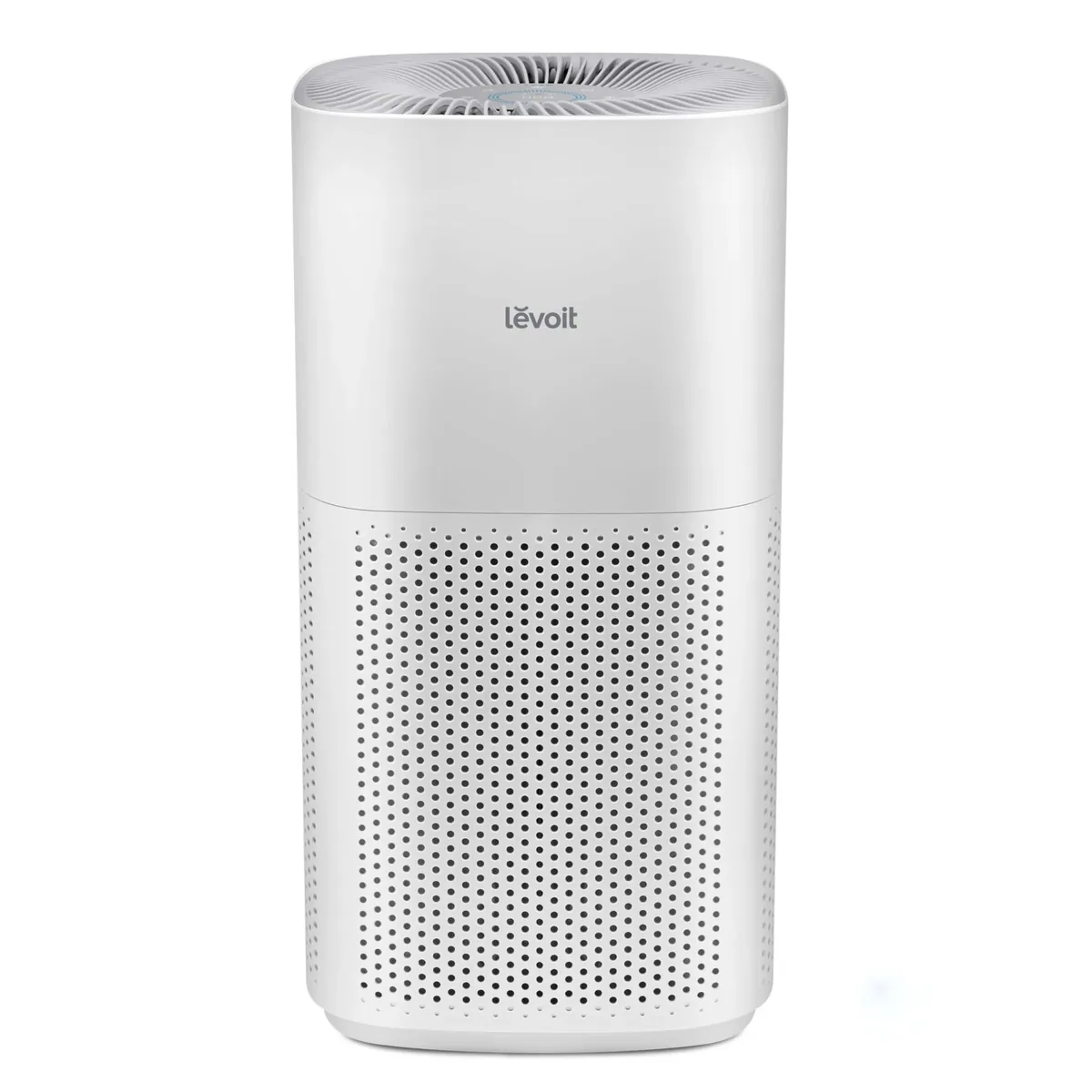
The Core 600S is the value benchmark in large-room purification, and it's the unit air-purifier owner discussions most often recommends when someone asks how to clean serious square footage without spending $500. The AHAM-verified numbers are real: 410 CFM smoke CADR - more than the EverestAir that costs twice as much - which honestly covers 635 sq ft at 4.8 air changes per hour. HouseFresh called it the best cheap option for large rooms, measuring 24 dB on sleep mode and about 48-49 W at full tilt, and Levoit's claimed figures held up under their testing, which is not something every brand in this class can say (see AirDoctor and Medify). The 3,175 sq ft marketing claim is the usual 1-ACH nonsense - divide by five. Compromises are cosmetic rather than functional: it's a plain white drum that looks like a shop vac next to a Rabbit Air A3, the display shows only a single PM2.5 number from a decent laser sensor, and max speed is a whooshy 55 dB. Filters are cheap ($60/yr), the VeSync app works well, and there's no subscription or DRM anywhere. If you don't care about looks, this is the large-room purifier to beat under $300.